

The Suzlon Foundation, the corporate social responsibility (CSR) arm of Suzlon Energy, has launched a biodiversity project in Kutch, Gujarat, to restore native Guggal species on community grazing lands. While this initiative is non-commercial, institutional investors often monitor such projects as part of a company's long-term Environmental, Social, and Governance (ESG) strategy.
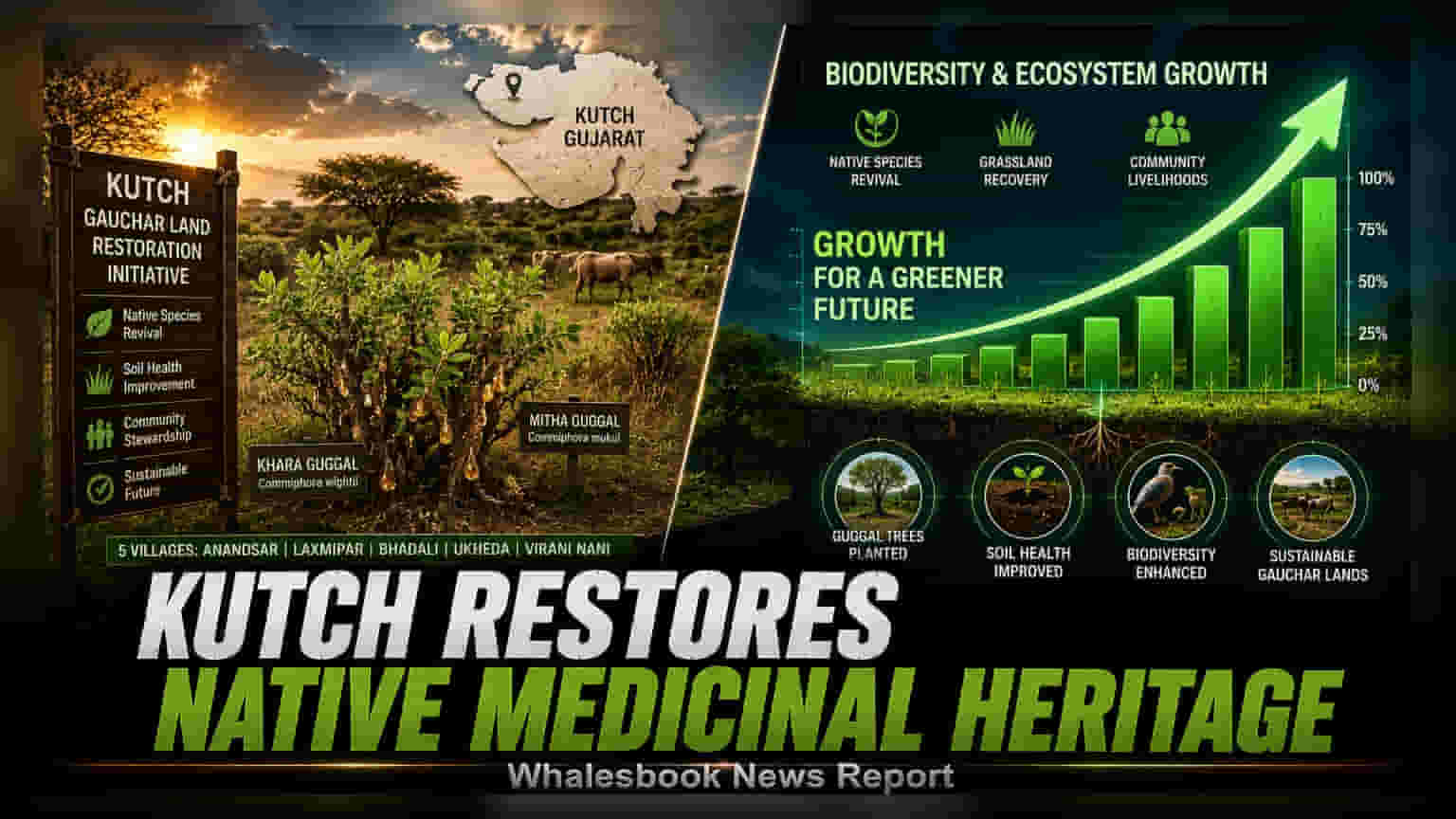
The Suzlon Foundation, in collaboration with the local Nature Foundation, has initiated a new environmental restoration program in Kutch, Gujarat. The project focuses on reintroducing two native Guggal species—Khara Guggal and Mitha Guggal—across five villages including Anandsar, Laxmipar, Bhadali, Ukheda, and Virani Nani. The effort aims to restore the ecological balance of community grazing lands, often referred to as Gauchar lands, by planting native trees and grasses rather than relying on conventional monoculture.
For investors, this development falls under the company's broader Environmental, Social, and Governance (ESG) framework. While such CSR activities do not generate direct financial revenue and are not expected to impact near-term stock performance or quarterly earnings, they serve as a marker for how a company manages its local ecosystem and community relations. Suzlon Energy has extensive wind power operations in the Gujarat region, making community-focused initiatives a key part of maintaining the social license to operate in those areas.
Institutional investors frequently assess ESG initiatives when evaluating a company's risk management and long-term sustainability. Projects like the SuCharagah initiative, which aims to improve soil health and support local livelihoods through better land use, are designed to create a positive footprint in regions where the company operates large-scale infrastructure projects. By integrating traditional knowledge with conservation, the foundation aims to foster long-term community stewardship over these grazing lands.
From a financial monitoring perspective, shareholders generally track CSR spending as part of the company's annual expense profile. While these projects involve capital allocation, they are part of mandated CSR commitments and strategic community engagement rather than core business expansion. There are no material financial risks associated with this specific environmental drive, and the primary indicator of its success will be the long-term survival of the plantation and the maintenance of positive community engagement in the Kutch region.