

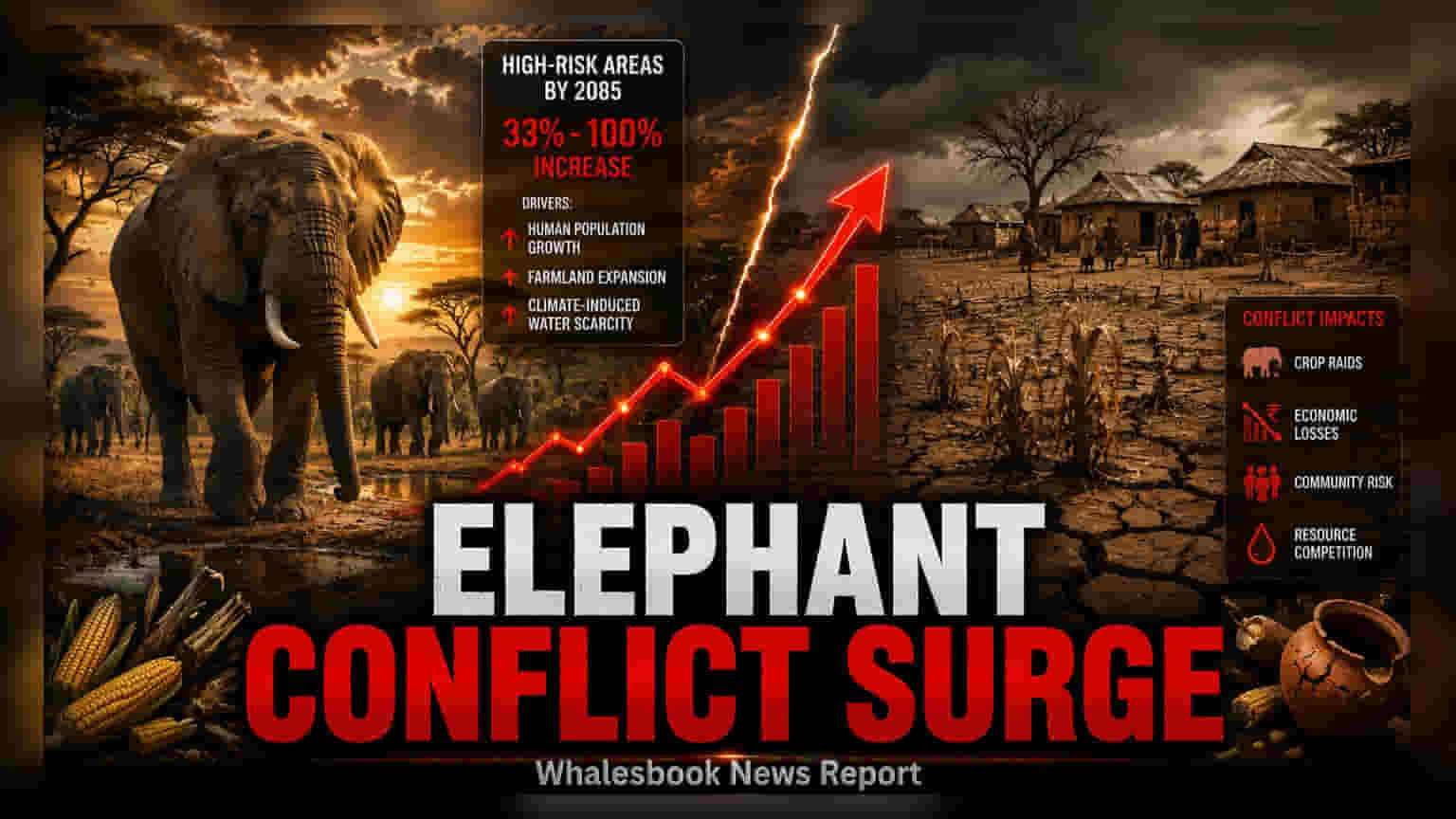
A new scientific study warns that human-elephant conflict zones in Southern Africa could expand by up to 100% by 2085. Driven by human population growth, agricultural expansion, and climate change, this shift presents complex challenges for regional land-use planning and agricultural stability.
A new scientific study has forecasted a significant rise in high-risk areas for human-elephant conflict across Southern Africa by 2085. Researchers predict that conflict zones could expand between 33% and 100% over the next several decades. This projection is based on a combination of escalating human population growth, the continued expansion of farmlands, and climate-induced water scarcity, which is expected to intensify over the coming years.
Factors Driving Conflict Projections
The research, which analyzed data from 2004 to 2020, utilized machine-learning models to understand why these conflicts occur. It identified human population growth and the conversion of land for agricultural use as the strongest predictors of future conflict. While climate change plays a role by creating water deficits in elephant habitats, the study suggests that direct human pressure—such as building settlements near wildlife corridors—is a primary factor in the increasing frequency of incidents.
Southern Africa remains a vital habitat for African savanna elephants, hosting approximately 290,000 individuals, or about 70% of the continent's population. As these elephant numbers have stabilized or recovered in many regions, their natural movement often puts them in direct competition with growing human communities for water and food. The study points to crop raiding as a frequent and economically damaging result of this overlap, particularly during the wet season when agricultural activity is at its peak.
Regional Economic and Policy Implications
The projections highlight specific areas of concern, particularly near the northern boundary of Namibia's Etosha National Park and regions near Botswana's Okavango Delta. These high-risk zones are critical for both wildlife conservation and local rural economies. For stakeholders in the region, the findings underscore that current land-use practices may become increasingly difficult to sustain without proactive intervention.
From an economic standpoint, the study highlights the need for effective land-use planning and the development of early-warning systems for local communities. As agriculture remains a major contributor to regional livelihoods, the potential for increased crop damage poses a risk to food security and rural income stability. Policymakers and conservation groups are expected to use these long-term forecasts to adjust strategies, focusing on creating buffers between human settlements and wildlife habitats to mitigate potential economic losses.
The findings serve as a reminder of the global trend where human and wildlife populations are increasingly occupying the same territory. As these trends continue, the ability of regional governments to balance conservation goals with agricultural development will be a key factor in long-term economic and environmental sustainability.