

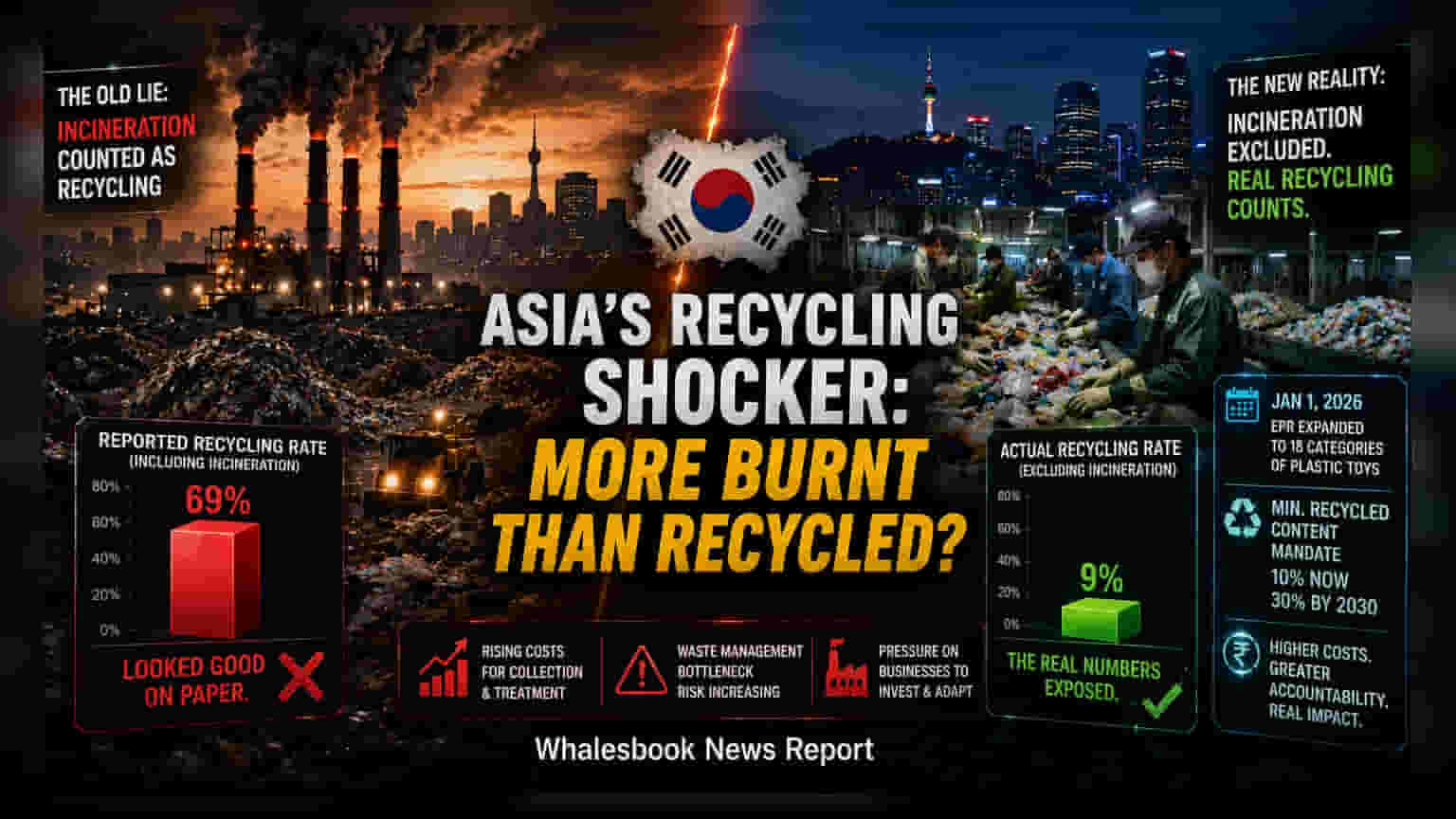
South Korea is tightening its recycling rules after realizing that counting 'thermal recycling' or burning plastic was inflating its official recycling numbers. For businesses and investors, this move to align with international standards means stricter compliance requirements and higher demand for actual material processing.
South Korea is taking steps to fix its long-standing recycling statistics. For years, the nation reported high recycling success by including the incineration of plastic—burning it for energy—as a form of recycling. This practice effectively masked the reality that only a small portion of plastic waste was being rematerialized into new products. In October 2025, the government officially decided to exclude incineration from national recycling statistics to better align with international OECD standards.
Stricter Mandates for Producers
This policy shift forces a change in how companies approach waste. Starting January 1, 2026, the Extended Producer Responsibility (EPR) system has expanded to include 18 categories of plastic toys. These items were previously often sent to landfills or incinerated because they were considered difficult or expensive to process. Now, manufacturers are held directly accountable for the disposal and recycling of these products.
Beyond just collection, the government has introduced mandates for recycled content. Producers are now required to use a minimum of 10% recycled material in products like colorless PET beverage bottles, with targets set to rise to 30% by 2030. This creates a direct regulatory push for companies to invest in or source secondary raw materials, rather than relying on virgin plastic.
Operational Risks and Costs
For businesses and investors, these regulatory changes introduce new monitorables. While the move toward genuine circularity is a global trend, it places economic pressure on small and mid-sized recycling operators. The costs of collecting, transporting, and treating waste are rising rapidly, often outpacing the fees currently collected under the EPR framework.
There is also a growing risk of a waste management bottleneck. As the government restricts the use of landfills and pushes for higher material recovery, the existing infrastructure may struggle to keep up. A potential shortage of incineration capacity, combined with more stringent material recovery mandates, could lead to temporary supply chain disruptions for companies that depend on smooth waste disposal and recycling logistics.
Lessons for the Indian Market
For the Indian market, South Korea’s experience offers a practical preview of what maturing EPR frameworks look like. As India continues to refine its own waste management and EPR guidelines, companies in the FMCG and packaging sectors may face similar shifts. Regulators may move from broad 'recovery' definitions—which often include waste-to-energy projects—toward stricter 'material recycling' targets. This evolution is likely to increase compliance costs and ESG reporting requirements for corporations, making the efficiency of their waste management partners a key factor for long-term sustainability.