

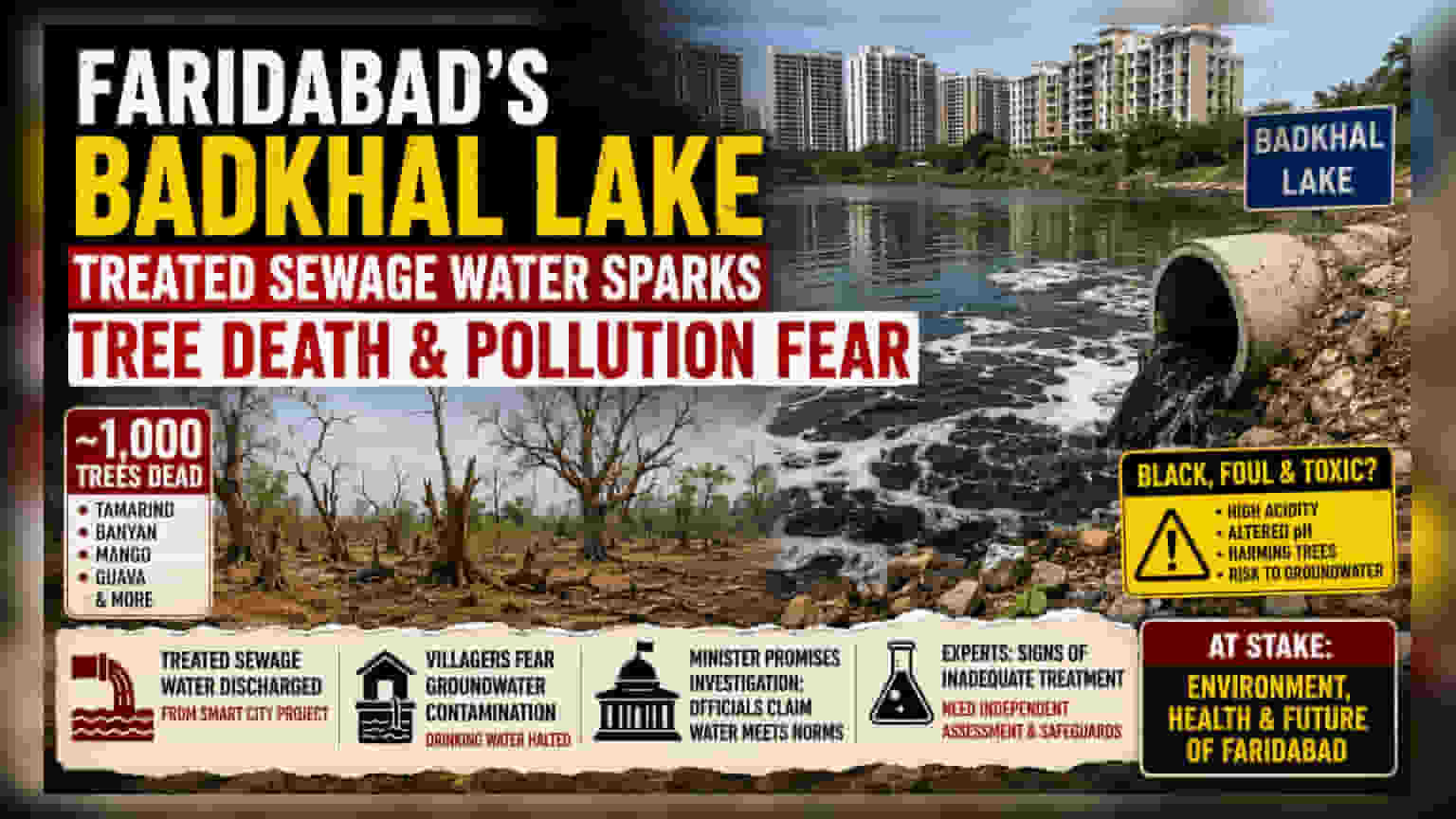
Environmentalists in Faridabad allege treated sewage water from a Smart City project has killed nearly 1,000 trees near Badkhal Lake. Concerns are also rising over potential groundwater contamination in nearby villages, with residents reporting foul-smelling, black water. Officials maintain the treated water meets standards, citing water hyacinth and dumping as potential causes.
Faridabad Lake Becomes Environmental Concern
Environmentalists in Faridabad are sounding the alarm over the state of Badkhal Lake, alleging that treated sewage water discharged from a new Smart City project has led to the death of approximately 1,000 trees. The affected trees, including medicinal and fruit varieties like tamarind, banyan, mango, and guava, are located in the Parson Temple forest area and surrounding temple complexes.
Water Quality Dispute
Local activists claim the water released into the lake is black, emits a foul odor, and possesses a high acidity and altered pH level, which is toxic to the vegetation. Kailash Bidhuri, a trustee of Save Aravalli, stated that repeated complaints about the water quality have been ignored. He asserted that these trees, some unique and brought from various parts of India and abroad, have perished due to exposure.
Groundwater Contamination Fears
Residents of the adjacent Badkhal village have expressed serious concerns about the potential for groundwater contamination. They report a halt in drinking groundwater due to suspected pollution, which they believe began after the lake was filled with treated sewage water. Environmental journalist Chandrakant Yadav has escalated the issue to Haryana's Forest and Environment Minister, Rao Narbir Singh, who has promised a thorough investigation.
Official Response and Expert Opinion
Sanjeev, an executive engineer with Faridabad Smart City Limited, defended the project, stating the discharged water adheres to all prescribed norms, with continuous monitoring in place. He suggested that the water's appearance might be due to water hyacinth and that waste dumping and bathing in the lake could also degrade water quality. However, water experts, including Sushmita Sengupta from the Centre for Science and Environment, noted that the water's color and foam suggest inadequate treatment. They emphasize the need for independent assessment and highlighted the risks associated with using treated wastewater for recharge without stringent monitoring and safeguards, particularly concerning high total dissolved solids and potential industrial chemical contaminants.