

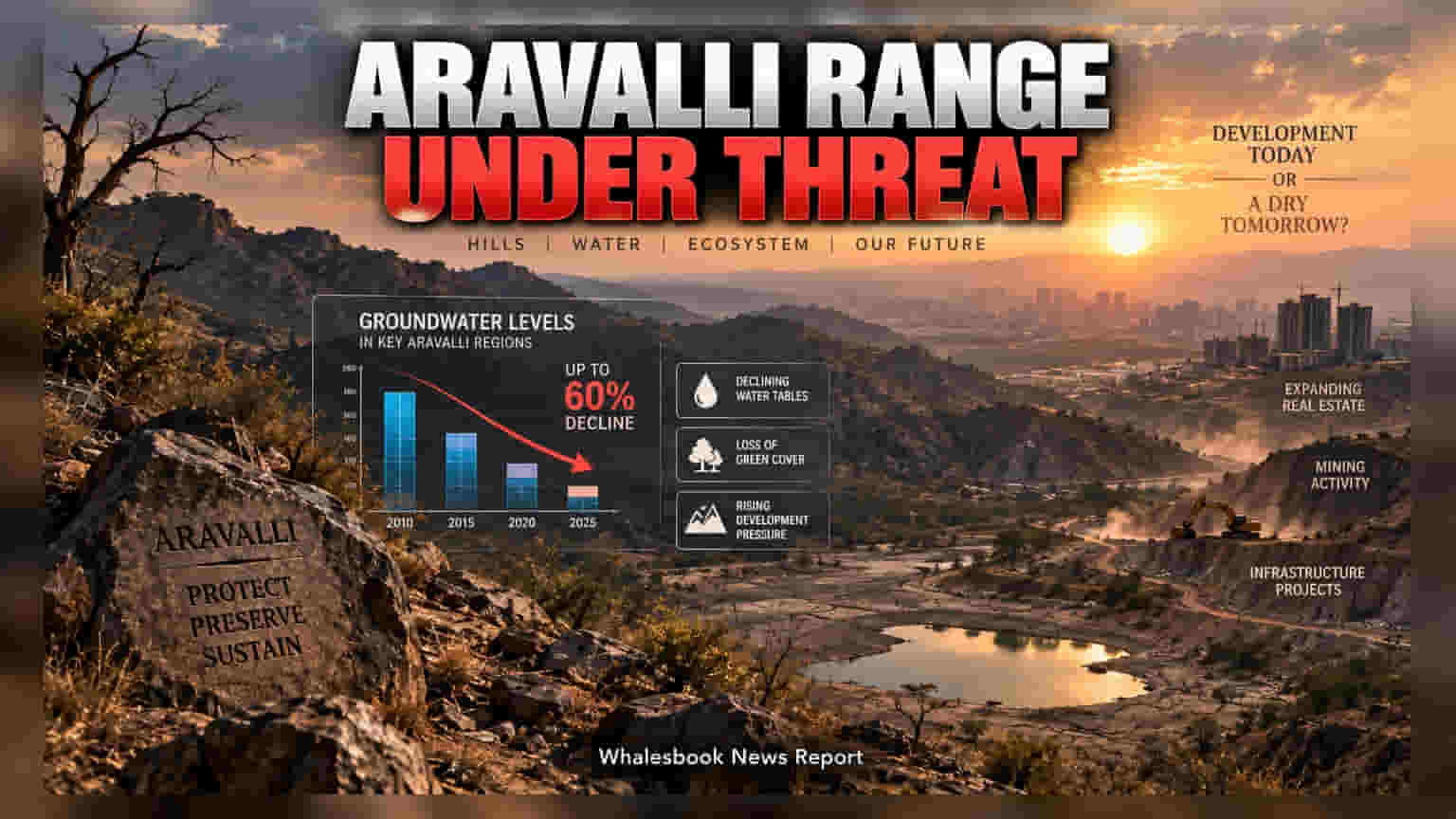
The Supreme Court has tasked a High Powered Committee with evaluating a government proposal to redefine the Aravalli range by November 30, 2026. This review follows concerns over potential impacts on mining, real estate, and water security. For investors, the outcome will determine the regulatory future for infrastructure and industrial projects across north-west India.
The Supreme Court of India has appointed a High Powered Committee to assess the government's proposal to redefine the boundaries of the Aravalli range. The committee is required to submit its evaluation by November 30, 2026. This regulatory process is a critical monitorable for industries operating in north-west India, particularly for sectors like real estate, mining, and large-scale infrastructure development.
The core of the dispute involves how the land is classified. Currently, stringent environmental rules protect large swathes of the Aravalli hills, limiting construction and resource extraction. A proposal to redefine these areas could, if approved, open up significant land for commercial and industrial use. However, opposition figures, including Congress leader Jairam Ramesh, have argued that such a shift could prioritize immediate development over long-term ecological balance.
For investors in the real estate and infrastructure sectors, this committee's findings are essential to track. If the committee decides to maintain strict protections, companies with projects in the region may face continued limitations on land use, potential delays, or the need for more complex environmental clearances. Conversely, if the reclassification moves forward, it could unlock land parcels that were previously restricted, though likely with strict conditions attached.
Another layer of risk involves the region's water security. The Aravalli hills function as a natural drainage and filtration system. Geological assessments indicate that the hills facilitate significant ground water recharge annually. Industrial operations near these riverbeds and water bodies have historically faced regulatory scrutiny due to concerns over water scarcity and environmental damage. Any decision that impacts this natural water system could lead to tighter operating norms for factories and mines in the vicinity, potentially affecting profit margins due to increased compliance and water management costs.
The upcoming November deadline is the next major step. Investors should watch for the committee’s final report and the subsequent Supreme Court rulings, as these will likely set the rules for land use in the region for the foreseeable future. The final decision will influence how developers and miners plan their capital spending and future project expansions in the NCR and surrounding areas.