 Whalesbook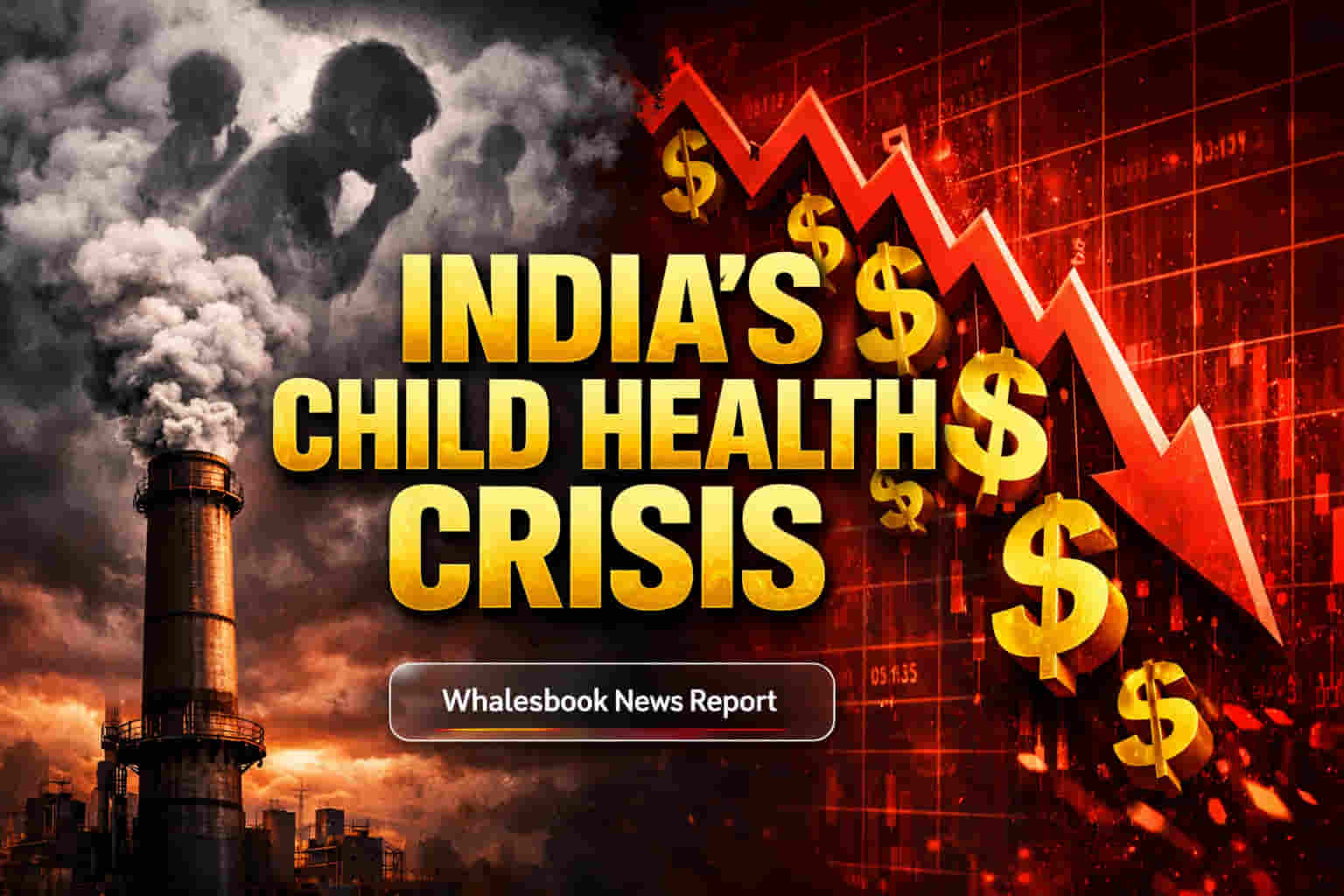


THE SEAMLESS LINK
The stark health consequences and economic burdens stemming from emissions at Steel Authority of India's (SAIL) Bokaro plant serve as a potent symptom of deeper systemic challenges within India's rapidly expanding steel sector. While the immediate impact on child health and local communities is undeniable, the incident underscores a pervasive regulatory deficit and a lagging approach to environmental stewardship that could jeopardize the industry's long-term viability and global competitiveness.
THE CORE CATALYST
The Bokaro plant's emissions, linked by the Centre for Research on Energy and Clean Air (CREA) to hundreds of adverse birth outcomes and new asthma cases annually, alongside significant economic costs approaching $80 million, represent a direct manifestation of India's underdeveloped environmental standards for steel production. Only two of six sinter stacks possess efficient electrostatic precipitators, with the rest relying on outdated technology. This localized crisis mirrors a national issue where national standards for sulphur dioxide (SO2) emissions from critical steel-making components remain absent.
Despite these environmental concerns, SAIL's stock is trading near its 52-week high, hovering around ₹166 as of late February 2026. The company's market capitalization stands at approximately ₹68,500 crore, with a trailing twelve-month P/E ratio around 25. While the stock has seen a 57% increase over the past year, its fundamental performance indicates underlying weaknesses. SAIL has delivered poor sales growth of -0.32% and profit growth of -43.67% over the last three years, with a Return on Equity (ROE) consistently below 5%. Such financial metrics, coupled with a recent profit decline of nearly 49% year-on-year in Q2 FY26, suggest the market may be overlooking significant operational and environmental risks associated with its assets.
THE ANALYTICAL DEEP DIVE
India's steel sector is poised for substantial growth, targeting 300 million tonnes of capacity by 2030. However, this ambition clashes with a reality of inadequate emission controls. The current CO2 intensity of Indian steel production, around 2.54 tons per tonne of steel, significantly exceeds the global average of 1.91 tons and lags behind international benchmarks. The European Union's Carbon Border Adjustment Mechanism (CBAM), set to impact imports from 2026, will penalize high-carbon steel, directly threatening India's export market share. In response, India has introduced a Green Steel Taxonomy, rating steel based on CO2 emissions, aiming to incentivize cleaner production. Yet, the implementation of mandatory Continuous Emission Monitoring Systems (CEMS) across highly polluting industries, including steel, remains incomplete over a decade after mandates were issued, with data transparency being a persistent issue.
Competitors like JSW Steel are actively pursuing sustainability initiatives, achieving an impressive S&P Corporate Sustainability Assessment (CSA) score of 88, positioning them at the top globally and demonstrating a significant commitment to ESG principles. While JSW Steel's MSCI ESG rating has faced historical concerns, their proactive stance and higher ROCE (8.1% vs. SAIL's 6.76%) suggest they are better equipped to navigate future regulatory shifts and investor scrutiny. In contrast, SAIL has claimed environmental awards and certifications, but its fundamental environmental performance metrics and the systemic issues highlighted by the Bokaro incident raise questions about the depth of its commitment and its readiness for a decarbonizing global economy.
⚠️ THE FORENSIC BEAR CASE
The Bokaro incident is a stark reminder of the pervasive regulatory vacuum in India's steel industry. The absence of robust national SO2 emission standards and the patchy implementation of CEMS create a permissive environment for polluters, shielding them from effective public and regulatory oversight. This lack of transparency makes it difficult to assess the true environmental liabilities across the sector. Financially, SAIL's poor recent sales and profit growth, coupled with a low ROE, suggest limited capacity for significant capital investment required for necessary pollution control upgrades. Its P/E ratio, hovering near a five-year high, appears disconnected from its operational performance, presenting a potential valuation risk. Furthermore, SAIL carries substantial contingent liabilities of over Rs. 44,708 crore, and its total liabilities significantly exceed its market capitalization, indicating a precarious balance sheet that may struggle to absorb additional environmental compliance costs or unexpected operational challenges. While competitors like JSW Steel show stronger financial performance and higher ESG scores, SAIL's position suggests it is ill-prepared for the intensifying global demand for greener steel and the resultant trade implications.
THE FUTURE OUTLOOK
As global markets increasingly prioritize sustainability, the environmental practices of steel manufacturers will become a critical determinant of competitiveness and market access. India's steel sector, led by major players like SAIL, must accelerate its adoption of cleaner technologies and stringent emission controls to align with international standards like the EU's CBAM and domestic initiatives such as the Green Steel Taxonomy. Analyst sentiment for SAIL remains largely neutral, with average price targets indicating potential downside, reflecting a cautious view on the company's ability to navigate these evolving industry dynamics. Without a decisive shift towards robust environmental management, the sector risks not only regulatory penalties but also significant exclusion from lucrative export markets, potentially hindering India's industrial growth objectives and exacerbating public health concerns.