

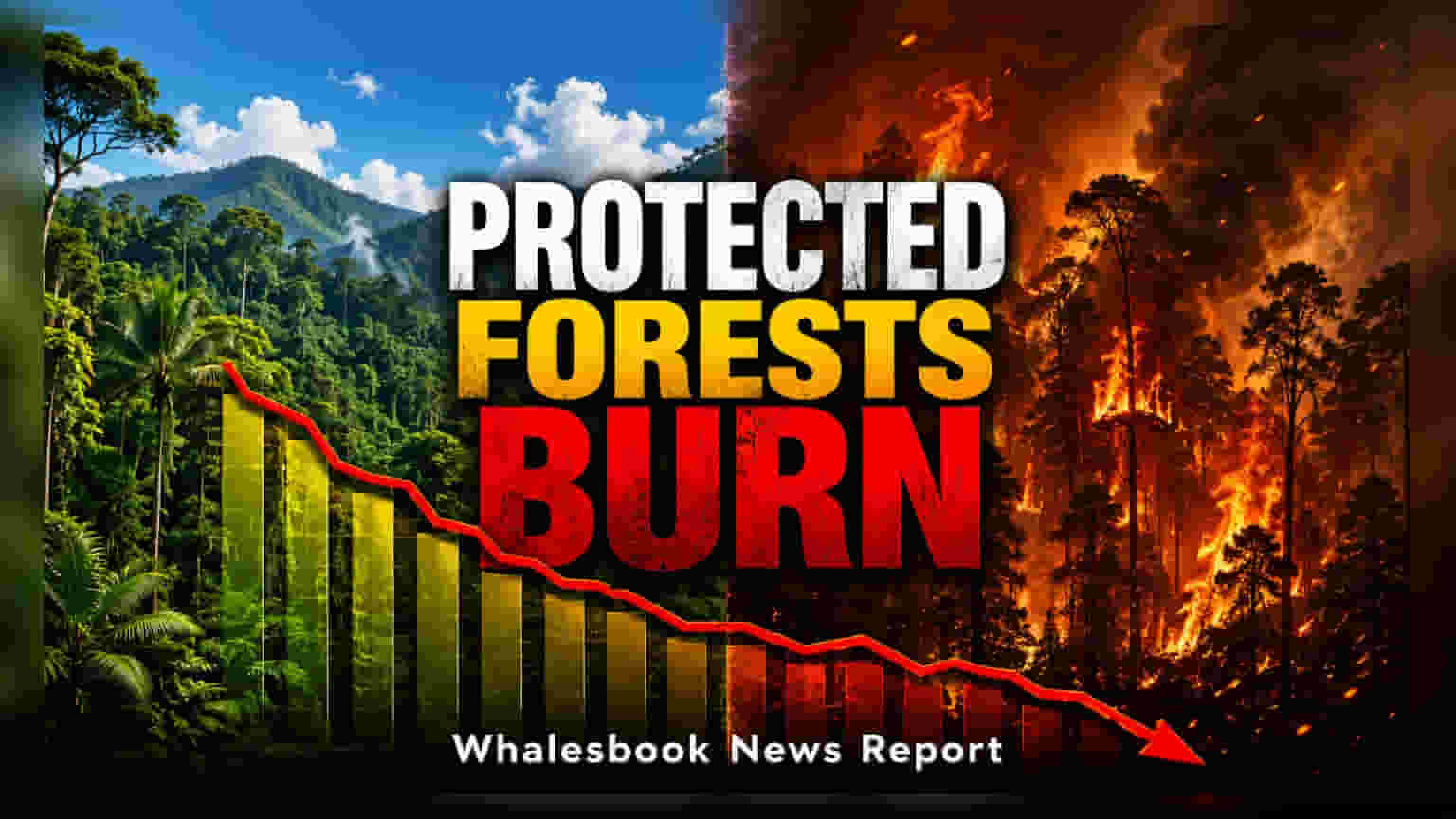
A University of Sheffield study reveals over 4 million hectares of protected tropical forest have been lost to wildfires since 2001, with a sharp spike in 2024. This environmental degradation creates significant economic uncertainty, threatening global commodity supplies like coffee, cocoa, and rubber, while increasing ESG compliance hurdles for multinational firms.
A new study from the University of Sheffield highlights a concerning trend: the loss of more than four million hectares of protected tropical forest to wildfires since 2001. With nearly one-third of this damage occurring in 2024 alone, the destruction suggests that existing protected zones are no longer enough to guard against the intensification of climate-driven fires. While this is an environmental issue, the economic implications for global trade and corporate supply chains are becoming increasingly difficult for businesses to ignore.
Impact on Global Commodity Supply Chains
The tropical regions most affected, particularly Brazil, Bolivia, and Indonesia, are critical hubs for global agricultural commodities. These countries are among the largest exporters of essential goods including palm oil, coffee, cocoa, rubber, and timber. When wildfires destroy vast swathes of land, it disrupts the supply of these raw materials. For companies in the food, beverage, and manufacturing sectors, this instability can lead to supply shortages, increased procurement costs, and higher price volatility for finished goods. Investors tracking the FMCG and agricultural sectors should note that reduced yields in these regions often translate into inflationary pressure on input costs for global manufacturers.
Regulatory Pressure and ESG Compliance
Beyond immediate supply chain disruptions, the accelerated loss of tropical forests creates significant regulatory challenges. Governments and international bodies are tightening rules on deforestation-free supply chains. For example, regulations like the European Union Deforestation Regulation (EUDR) require companies to prove that their products, such as coffee, rubber, and cocoa, are not sourced from land that has been deforested.
As wildfire-driven degradation makes it harder to certify the origin of raw materials, companies face the risk of losing access to key export markets. For Indian exporters and multinational corporations with global operations, ensuring compliance with these strict environmental standards is becoming a major operational cost and a key factor in long-term financial viability. Companies that fail to adapt their sourcing strategies to verify land status may face higher costs or loss of market share in regions with stringent green policies.
Climate Risk as an Economic Factor
The destruction of these forests serves as a reminder of the 'climate feedback loop' where wildfires release carbon into the atmosphere, further accelerating warming and increasing the risk of future fires. For insurance and reinsurance industries, this creates a 'new normal' of rising climate-related liabilities. While there is no direct stock market instrument linked to this specific academic research, the broader economic trends of rising insurance premiums, supply chain volatility, and the need for expensive adaptation strategies are factors that long-term investors should monitor.
The next important monitorable for stakeholders will be how major agricultural producers adjust their land-management strategies and whether consumer-facing companies can effectively diversify their sourcing to mitigate exposure to high-risk, fire-prone regions.