

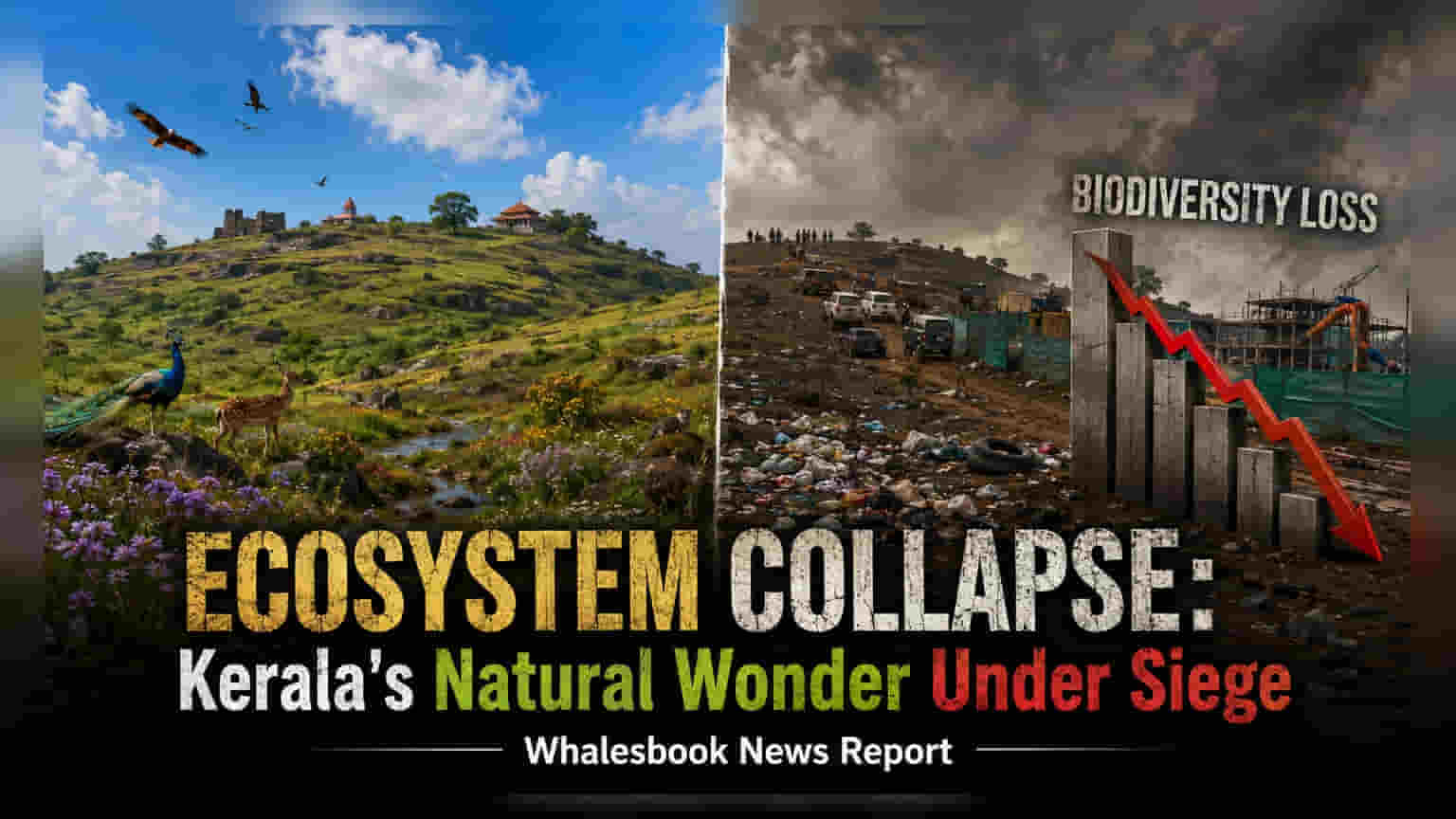
Residents and activists in Kerala's Kannur district rallied on August 22, 2026, to protest against increasing tourism at the Madayippara laterite plateau. The demonstration highlights growing concerns over environmental damage caused by vehicles, waste, and new commercial developments. For businesses operating in eco-sensitive zones, the event underscores the rising tension between tourism expansion and the preservation of natural habitats.
A wave of local resistance has emerged in northern Kerala's Kannur district, where residents and environmentalists held a rally on August 22, 2026, to demand stricter protections for the Madayippara laterite plateau. The protest reflects growing anxiety among the local community regarding the rapid transformation of this ecologically sensitive region into a commercial tourist attraction, a shift they argue is causing irreparable environmental damage.
Madayippara is a 600-700 acre plateau known for its unique geological features and rich biodiversity. Unlike typical landscapes, its exposed laterite rock, sparse soil, and grasslands support specialized plant and animal species. The area is also home to significant cultural landmarks, including the Madayikavu Bhagavathy Temple and the remains of Madayi Fort. Because the plateau acts as a natural hydrological reservoir, storing billions of liters of water annually, activists emphasize that even minor interventions can have major ecological consequences.
The primary point of friction is the sharp rise in visitor footfall, which has spiked alongside improved road connectivity and social media trends. On peak holidays, hundreds of vehicles reportedly traverse the plateau, leading to significant soil compaction and the destruction of fragile microhabitats. Local stakeholders have also pointed to a new amusement-cum-eco park that began operations near the site on July 31, 2026. Critics of the project have questioned its regulatory permissions, arguing that the facility increases pressure on the area rather than conserving it.
For investors and businesses looking at the hospitality and tourism sector in eco-sensitive regions, this situation provides a critical case study in regulatory and operational risk. When commercial developments face intense community opposition due to environmental concerns, they often encounter scrutiny from local authorities, potential litigation, and public backlash. The ability of a project to maintain its social license to operate is as vital as its financial viability.
Environmentalists T.P. Padmanabhan and V.C. Balakrishnan have stated that the goal is not to stop development, but to ensure responsible stewardship. They warn that without a proactive assessment of the cumulative impact of traffic, waste, and infrastructure, the biodiversity hotspot faces the risk of long-term degradation. The ongoing situation serves as a monitorable for companies involved in tourism projects in ecologically fragile zones, as local and regulatory focus on sustainability continues to intensify.