

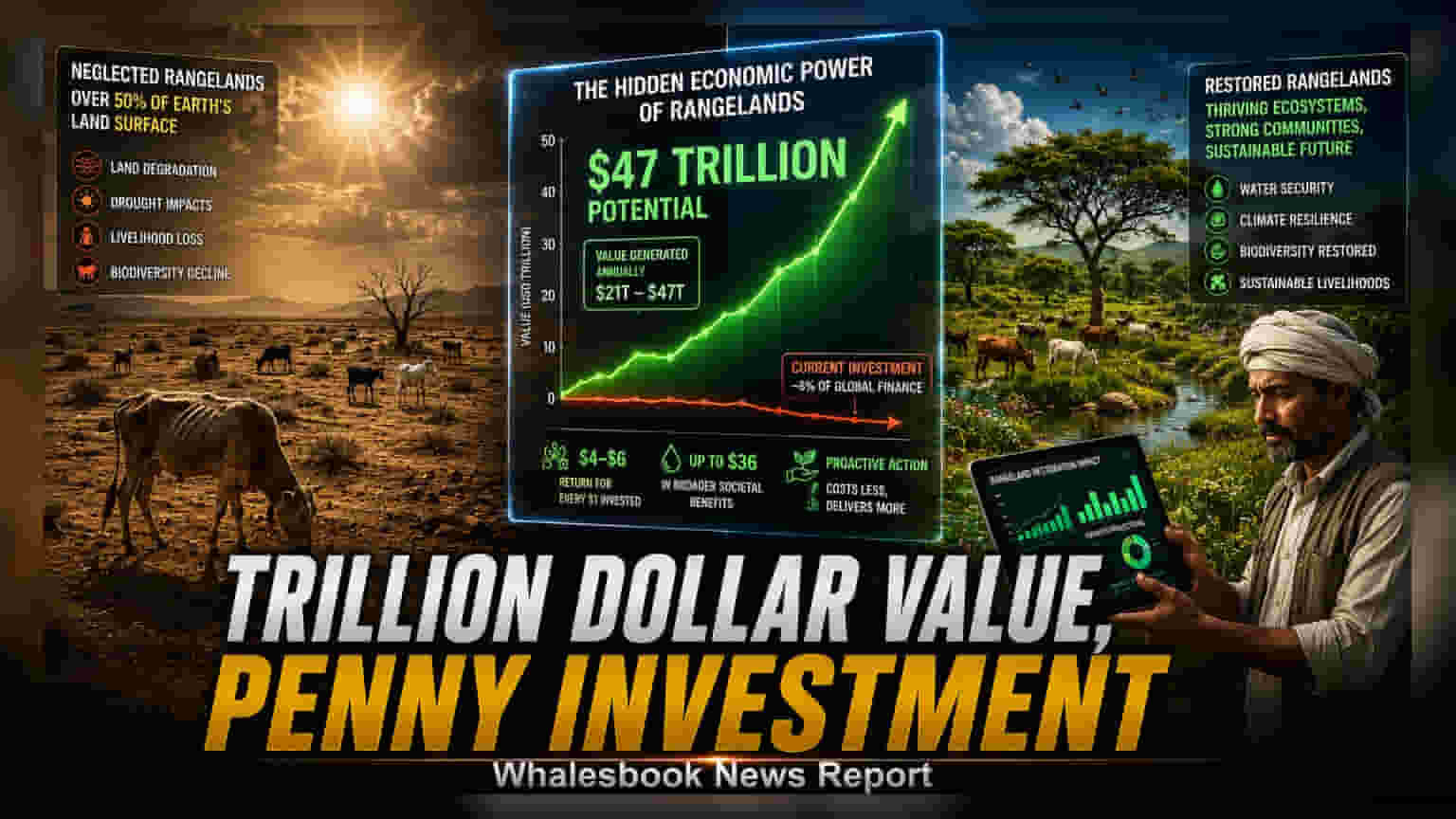
A new report discussed at a recent climate conference suggests that rangelands provide between $21 trillion and $47 trillion in annual economic value. Despite their scale, the study identifies a significant investment gap, with private capital currently accounting for only 6% of land degradation finance. The findings highlight potential opportunities for land restoration and sustainable investment to drive future climate resilience.
A new economic report is calling for a reassessment of how global investors and policymakers view rangelands. Presented at a recent session of the United Nations Convention to Combat Desertification (UNCCD), the study argues that these ecosystems, which cover over half of the Earth's land surface, generate an estimated $21 trillion to $47 trillion in value annually. Despite this massive economic contribution, the report claims these areas remain largely ignored in mainstream financial planning.
The document, developed by a consortium including the International Livestock Research Institute and the German Agency for International Cooperation, highlights a stark disparity between the value rangelands provide and the funding they receive. According to the data, as of 2025, private sector contributions to land degradation and drought resilience account for only about 6% of total global finance. This lack of capital flows is attributed to the absence of rangelands in current investment frameworks, which often prioritize other land types such as forests.
From an investor perspective, the report outlines a potential for high returns on restoration efforts. The authors suggest that for every dollar invested in restoring rangeland health, the returns can range from $4 to $6, with the impact potentially reaching $36 when accounting for wider societal benefits like improved water security. The report argues that shifting from a reactive approach—where money is spent on relief after drought impacts herders—to proactive management is more cost-effective. Proactive intervention on moderately degraded land is estimated to cost significantly less than the price of restoring severely damaged ecosystems.
The research also points to a clear policy gap. While 181 countries mention forests in their national climate plans under the Paris Agreement, only 24 countries include specific provisions for rangelands. This oversight in policy, the report suggests, limits the ability of the private sector to deploy capital effectively, as businesses often look for regulatory support and clear national targets before committing long-term funds to land projects.
Looking ahead, the report proposes a shift toward large-scale blended finance models. It highlights the role of pastoral communities as primary stewards of this land and suggests that future investment strategies should focus on empowering these groups while integrating rangeland targets into national climate strategies. For investors interested in climate finance, the key monitorables moving forward will include whether governments begin to explicitly include rangelands in their national policy frameworks and if new blended finance products emerge to support pastoral systems and land restoration.