 Whalesbook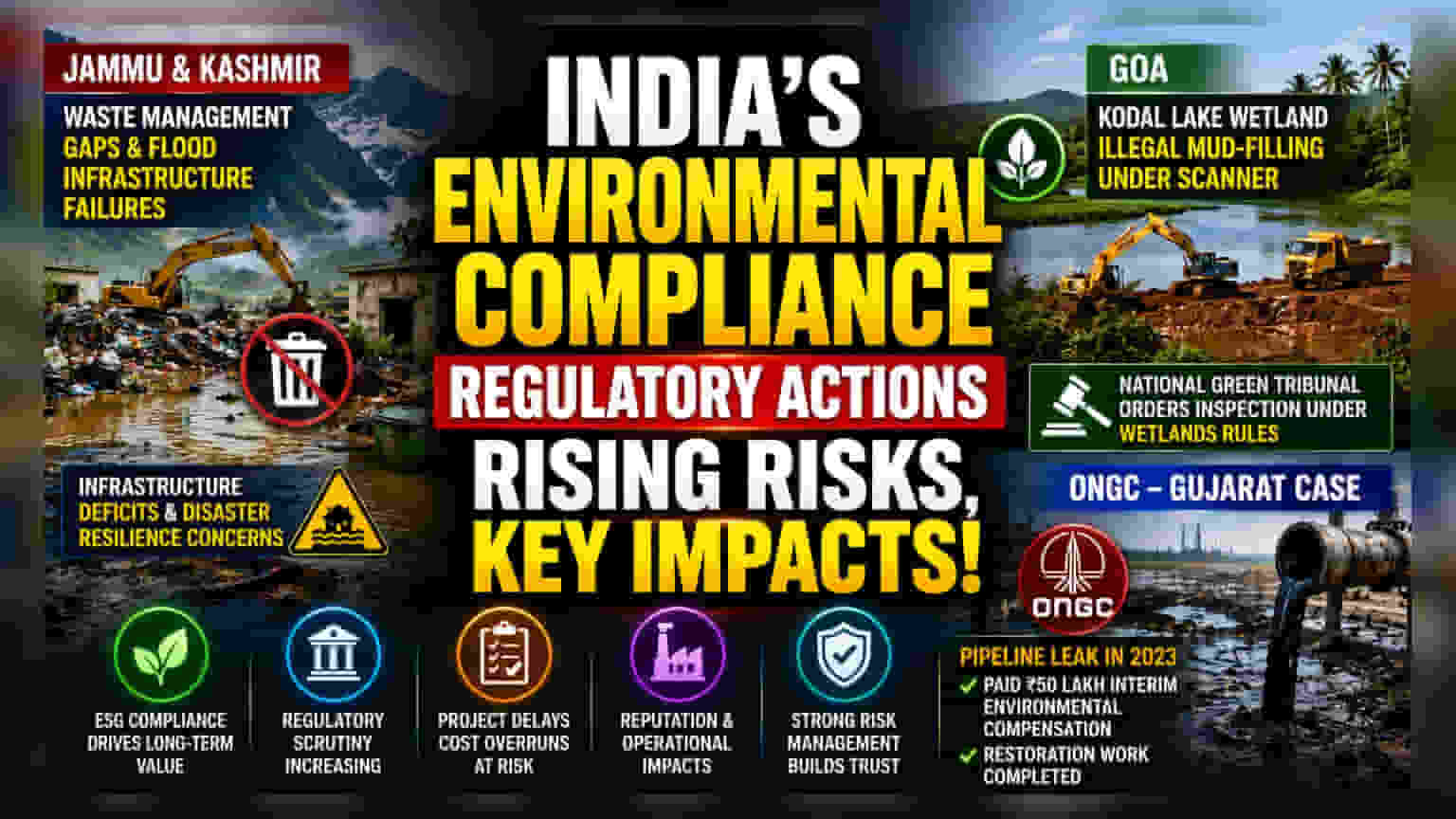
Environmental compliance is becoming a critical monitorable for Indian investors. This update highlights ongoing regulatory scrutiny involving waste management infrastructure in Jammu & Kashmir, wetland protection in Goa, and historical environmental compliance cases concerning ONGC. Understanding how companies manage environmental risks and regulatory orders is essential for evaluating long-term operational stability and project execution timelines.
What Happened
Recent regulatory updates have highlighted environmental and infrastructure compliance issues across India. In Jammu & Kashmir, waste management systems are under scrutiny due to gaps in processing capacity, with a significant deficit reported in both solid and liquid waste management systems. Reports indicate that infrastructure in certain areas lacks disaster-resilient designs, leading to operational failures during floods.
In Goa, the State Wetland Authority is investigating potential environmental violations near Kodal Lake. The National Green Tribunal (NGT) has ordered an inspection following complaints of illegal mud-filling activities within the notified wetland boundary. The area is subject to strict Wetlands Rules, which restrict construction and land conversion near sensitive zones.
Separately, Oil & Natural Gas Corporation (ONGC) has been in the news regarding an environmental case from 2023 in Gujarat. The company refuted claims that its operations caused livestock deaths but confirmed it had paid Rs 50 lakh in interim environmental compensation and completed restoration work in the affected area after a pipeline leak occurred.
The Importance of ESG and Operational Compliance
For investors, these events underscore the growing importance of Environmental, Social, and Governance (ESG) compliance. Regulatory bodies like the National Green Tribunal are increasingly active in monitoring industrial and infrastructure projects. For public sector undertakings and large infrastructure companies, environmental compliance is not just about regulatory adherence; it directly impacts operational continuity.
When a company faces litigation or receives orders to stop work, it can lead to project delays, cost overruns, and reputational challenges. Investors often evaluate how companies respond to these issues—whether they are proactive in restoration or if the issues represent a pattern of operational negligence.
ONGC and Environmental Risk Management
The case involving ONGC highlights the operational risks inherent in the oil and gas sector. Leakages and subsequent environmental damage are material risks for such companies. In this instance, the company reported that it initiated remedial measures and paid the required compensation to the Gujarat Pollution Control Board.
For investors, the key takeaway is the company's historical response to such incidents. Consistent regulatory compliance and the ability to resolve environmental disputes quickly are positive indicators of mature risk management. However, recurring environmental issues can weigh on investor sentiment and increase the cost of compliance for the firm.
Infrastructure Risks in Sensitive Zones
The developments in Jammu & Kashmir and Goa highlight a broader trend: projects located near floodplains, wetlands, or ecologically sensitive areas face higher execution risks. Regulatory hurdles, potential changes in environmental norms, and the need for disaster-resilient designs can delay project commissioning.
Companies involved in waste management, infrastructure, and real estate development in such regions must navigate stringent environmental clearances. Delays in upgrading waste processing capacity, as seen in Jammu & Kashmir, can limit a local body’s ability to manage urban growth and may eventually lead to stricter oversight or financial penalties from state regulators.
What Investors Should Monitor
Investors looking at infrastructure, oil, gas, and utility sectors may track several key factors. First, monitor company ESG disclosures to understand how environmental risks are being managed. Second, keep an eye on orders from the National Green Tribunal and state pollution control boards, as these can serve as leading indicators of potential operational disruptions or fines. Finally, for companies with major project pipelines, watch for regulatory approvals and project execution updates, as environmental clearances remain a significant factor in project timelines.

