

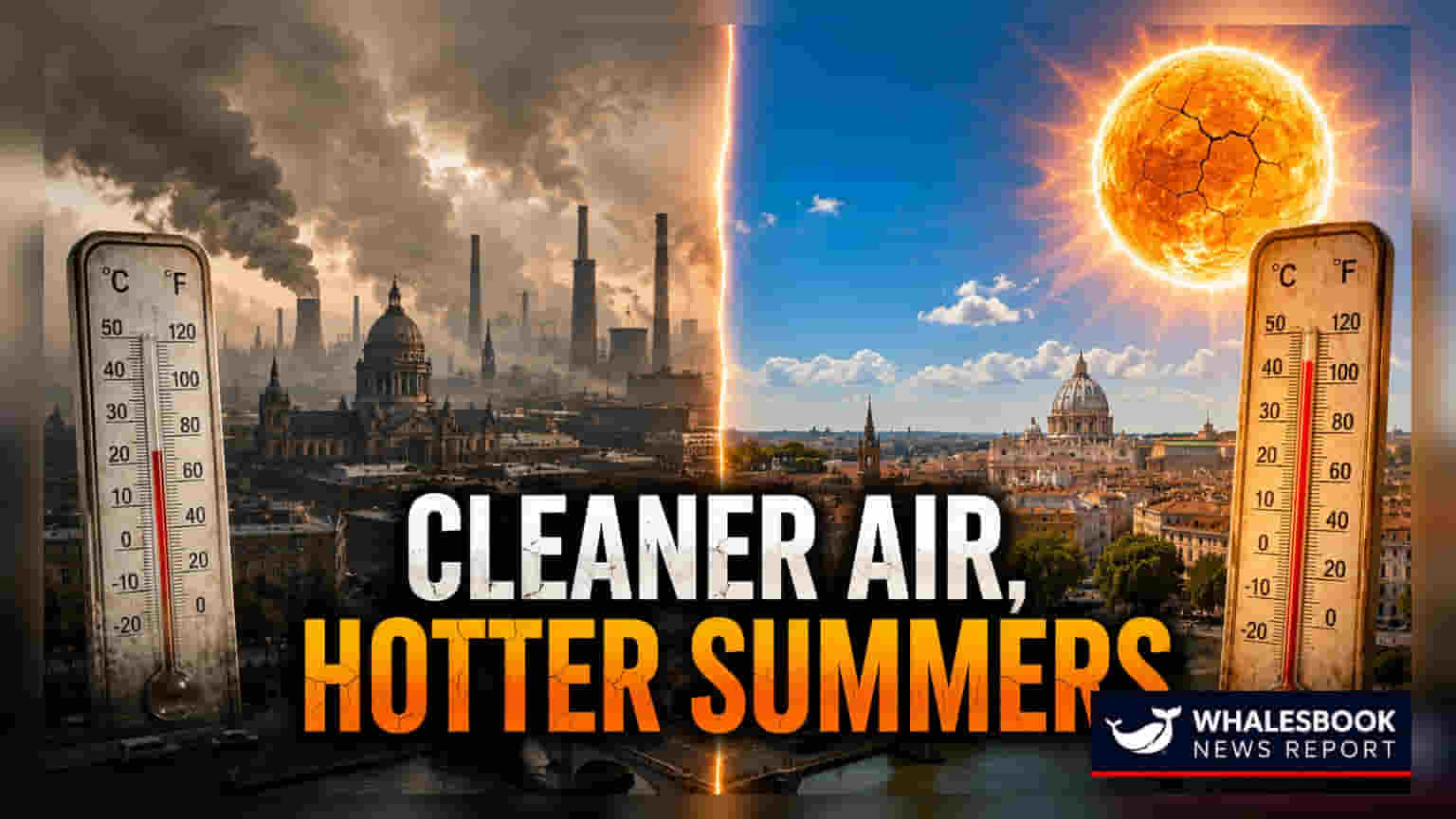
New research suggests that lower levels of sulphate aerosols in Europe are causing more intense heatwaves. These particles previously acted as a natural shield by reflecting sunlight. While essential for public health, their reduction now reveals the full impact of rising temperatures, which could influence environmental policy and energy demand across the region.
A recent study published in Geophysical Research Letters highlights an unexpected trade-off in Europe's climate: the success of air quality improvement programs may be contributing to more severe summer heatwaves. For years, sulphate aerosols, which are tiny particles released by burning fossil fuels, acted as a protective layer by reflecting sunlight away from the Earth’s surface. This natural cooling effect masked some of the warming caused by greenhouse gases.
As Europe has successfully implemented strict environmental regulations to reduce pollution, the concentration of these aerosols has dropped significantly. The study indicates that with fewer particles in the atmosphere, more solar radiation is reaching the continent. Researchers also noted that the decline in these particles has influenced atmospheric circulation patterns. This change has led to more frequent high-pressure systems that trap heat, creating longer and more intense periods of extreme weather.
While greenhouse gas emissions remain the primary driver of long-term climate change, this finding shows how air quality initiatives and temperature regulation are deeply interconnected. The immediate health benefits of cleaner air—such as reduced respiratory and cardiovascular risks—remain the priority for public policy. However, the study points to the complexity of environmental management, where solving one problem can have secondary effects on another.
For investors and policymakers, this research suggests that environmental regulations may continue to evolve. As heatwaves become more frequent, there may be increased pressure to accelerate the transition toward renewable energy and away from the remaining fossil fuel sources that produce these aerosols. Additionally, industries may face heightened requirements for climate-resilient infrastructure. The next important monitorable will be how these findings influence future climate policy in the European Union, particularly regarding the pace of emission reduction and energy transition targets.