 Whalesbook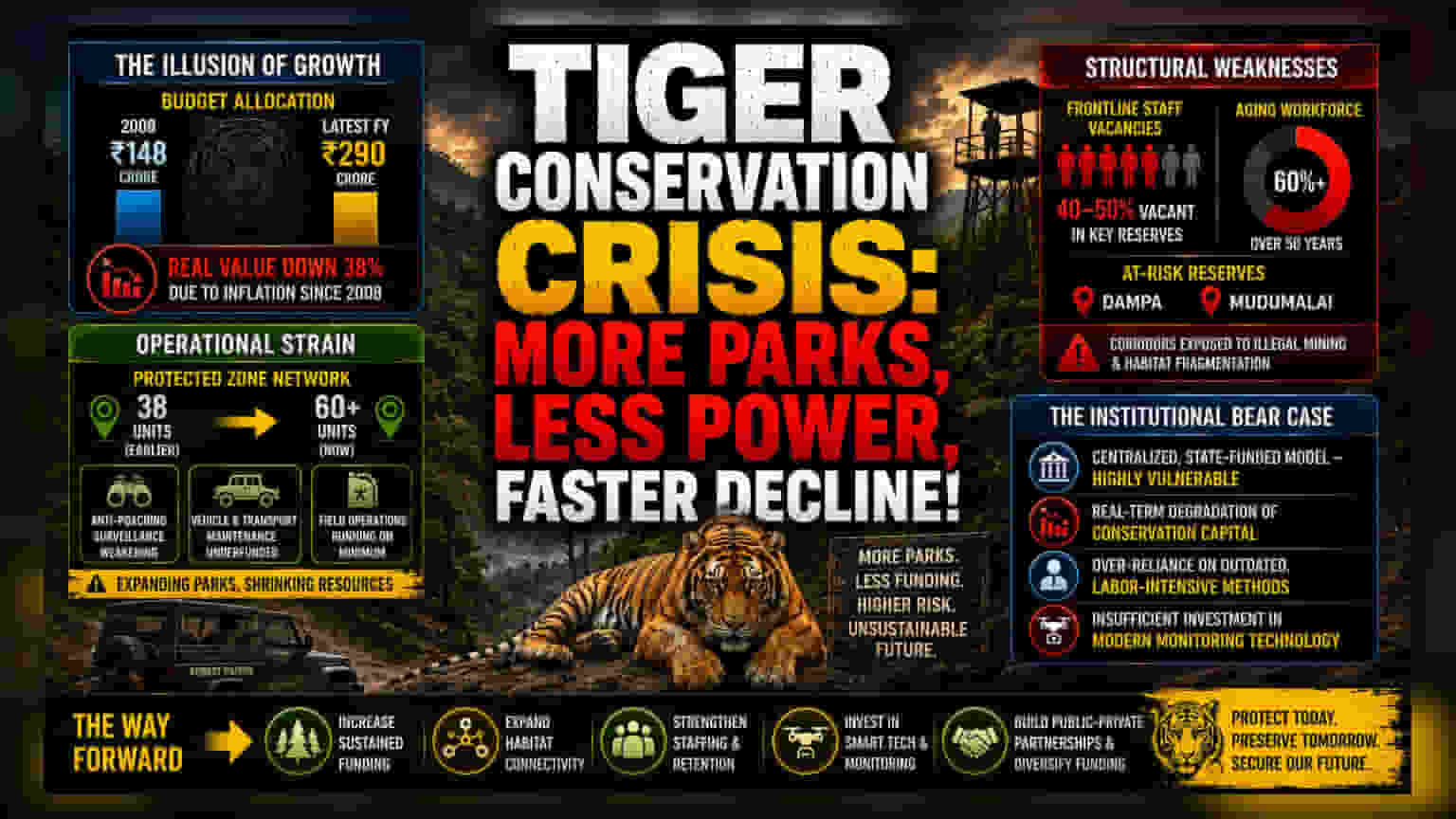


The Illusion of Budgetary Growth
While governmental allocations for India’s premier conservation initiative have technically climbed to Rs 290 crore for the current fiscal cycle, this headline figure obscures a deeper fiscal erosion. When indexed against the surge in the Consumer Price Index since 2008, the purchasing power of these funds reveals a harrowing decline. The effective capital available for critical conservation work is now roughly 38 percent lower than it was nearly two decades ago, creating a widening chasm between stated conservation mandates and the resources required to execute them.
Operational Strain in Expanding Reserves
The fiscal shortfall is intensified by the rapid administrative scaling of the program. The government has increased the protected zone network from 38 units to over 60, spreading existing, inflation-diminished funds across a much larger geographic footprint. This expansion without corresponding capital infusion translates to a thinning of resources on the ground. Essential activities—ranging from high-frequency anti-poaching surveillance to the upkeep of specialized transport—are increasingly underfunded, forcing field directors to prioritize basic personnel survival over necessary ecological interventions.
Structural Risks and Management Fragility
Beyond the raw budgetary numbers, the structural integrity of tiger management is under pressure from severe labor deficits. The National Tiger Conservation Authority has noted that specific reserves are currently operating with massive vacancies in frontline security personnel. This is not merely a staffing issue but a retention crisis, driven by an aging workforce that has not been adequately replaced by younger, trained professionals. Reserves like Dampa and Mudumalai are emblematic of this broader decay, where the loss of nearly half of the required field staff leaves corridors exposed to illegal mining and fragmentation risks.
The Institutional Bear Case
From a resource-management perspective, the current trajectory is unsustainable. Reliance on a centralized, state-funded budget model without integrated private-sector partnership or diversified revenue streams leaves the program highly vulnerable to broader macroeconomic volatility. If inflation remains sticky, the real-term degradation of conservation capital will likely lead to a decline in biodiversity density within these reserves. The lack of investment in modern monitoring technology—meant to offset labor shortages—further highlights the program's reliance on outdated, labor-intensive methods that are no longer cost-effective or feasible in the current environment.