

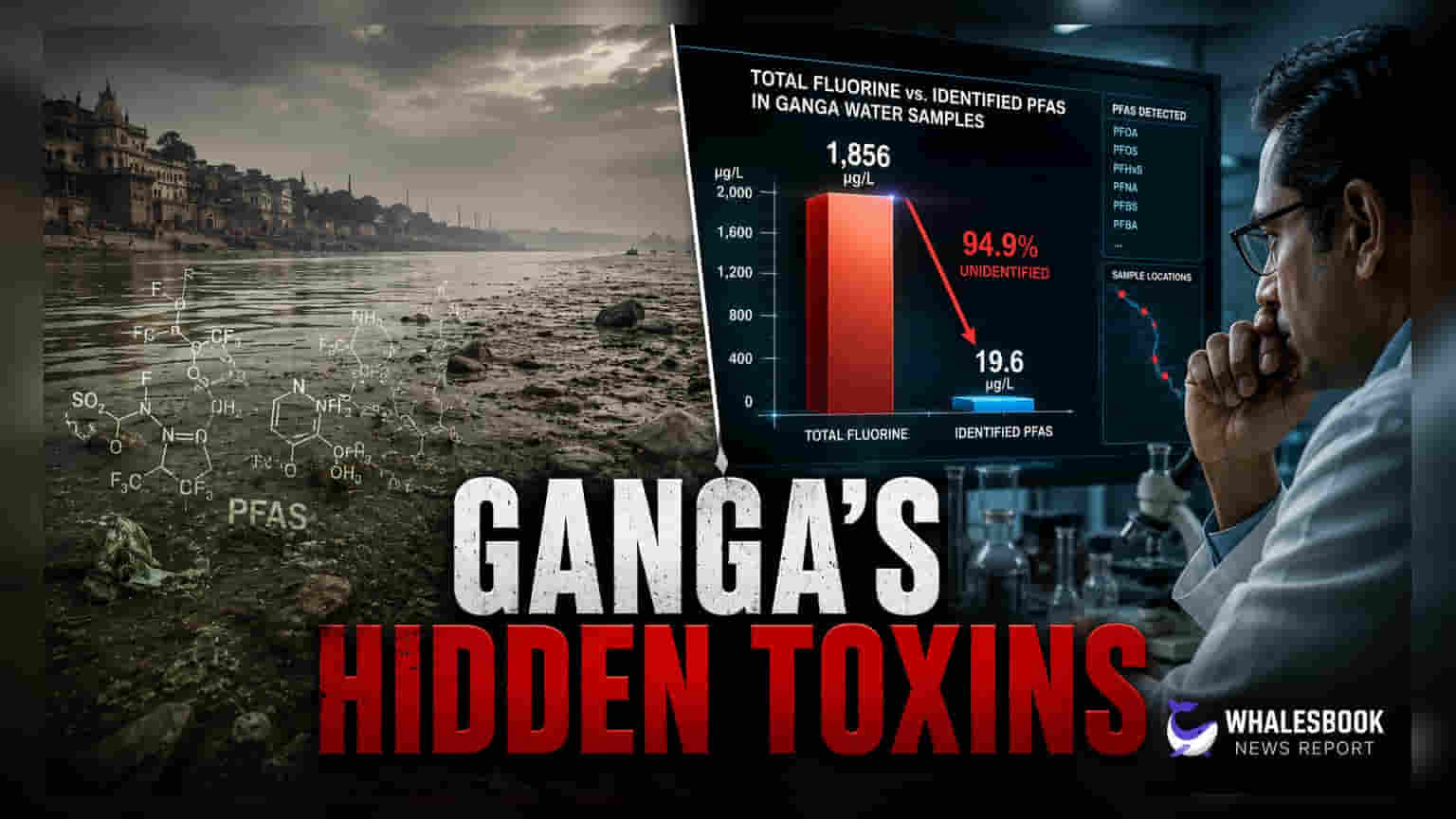
A new study finds that conventional tests detect only 1% of 'forever chemicals' in the Ganga riverbed. This discrepancy highlights a massive hidden pollution issue, potentially leading to stricter environmental discharge norms for chemical, textile, and manufacturing industries in India.
What Happened
A recent scientific study published in the journal Environment International has uncovered a significant environmental concern regarding the Ganga river. Researchers found that existing testing methods are only capturing about 1% of the 'forever chemicals'—known technically as per- and polyfluoroalkyl substances (PFAS)—present in the riverbed. The study analyzed sediment samples from 14 sites along a 58-kilometer stretch of the Ganga in Uttarakhand, specifically between Rishikesh and Roorkee.
While targeted analysis identified a limited number of known PFAS compounds, the total concentration of extractable organic fluorine (a marker for these chemicals) was drastically higher. In some downstream areas, the levels of these substances were nearly five times higher than those recorded near Rishikesh, suggesting a substantial accumulation of unidentified fluorinated pollutants in the riverbed.
Why This Matters For Industries
PFAS compounds are human-made chemicals widely used in industrial processes due to their resistance to water, grease, and heat. They are commonly found in the production of non-stick cookware, stain-resistant clothing, food packaging, and specialized industrial coatings. The revelation that the Ganga riverbed holds a high concentration of these chemicals implies that they are entering the ecosystem, likely through industrial wastewater, effluent discharge, or runoff from manufacturing hubs.
For investors, this study highlights an emerging environmental and operational risk. As the presence of these chemicals becomes more widely known and scientifically documented, the likelihood of increased government scrutiny and stricter environmental regulations rises. Industries that rely on these chemical processes may face pressure to upgrade their effluent treatment plants (ETPs) or adopt safer alternatives, which can impact operating costs and capital expenditure.
The Compliance And Regulatory Risk
Historically, environmental pollution findings in major Indian water bodies often lead to regulatory action. If government agencies prioritize the mitigation of these 'forever chemicals,' it could result in more stringent discharge norms for factories located along the Ganga and its tributaries. Companies in the chemical, textile, leather, and food processing sectors that fail to comply with evolving water quality standards may face legal challenges, temporary shutdowns, or expensive compliance retrofits.
Furthermore, the long-term health risks associated with PFAS—including potential links to thyroid issues and immune system problems—could lead to increased public awareness and potential litigation risks for companies perceived as major contributors to such pollution.
Understanding 'Forever Chemicals'
These substances are called 'forever chemicals' because of their strong carbon-fluorine bonds, which make them extremely difficult to break down in the natural environment. They accumulate in soil and water and can persist in human bloodstreams for extended periods. The study’s finding that 99% of these chemicals remain undetected by conventional protocols suggests that the true scale of pollution is currently underestimated, which may necessitate a shift toward more advanced and expensive testing and filtration technologies in the near future.
What Investors May Monitor
Investors in manufacturing and chemical companies with operations near the Ganga basin should track the following: potential policy announcements from the Central Pollution Control Board (CPCB) regarding PFAS or stricter wastewater standards, news regarding water quality updates in the region, and any capital spending plans announced by companies to improve their effluent treatment capabilities. Monitoring these areas will help in assessing how businesses are preparing for a landscape where environmental compliance is becoming increasingly stringent.