

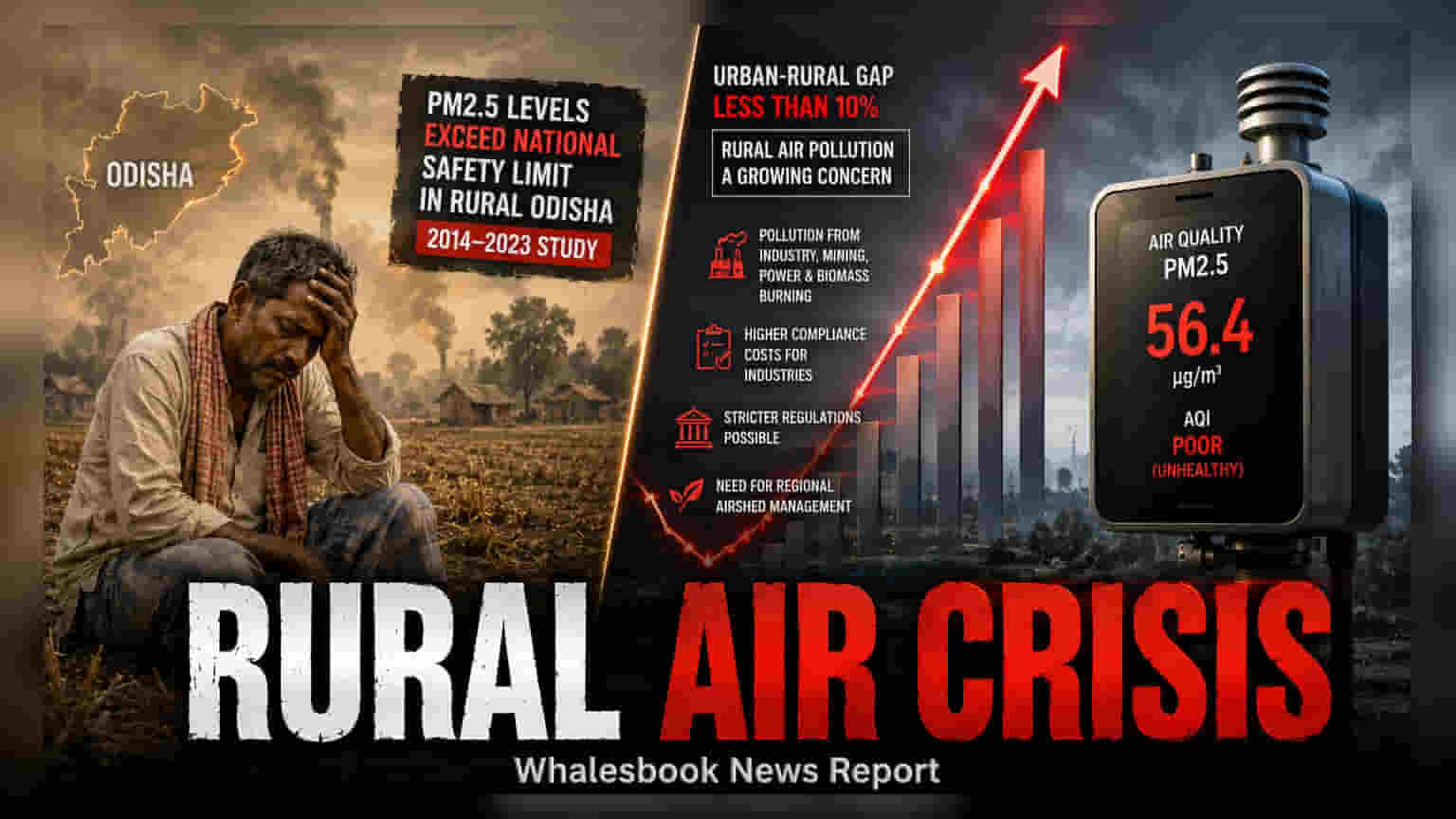
New data released on August 17, 2026, shows rural Odisha is consistently failing national PM2.5 air quality standards. For investors, this signals potential for stricter future environmental norms, particularly impacting industries like mining, power, and manufacturing that operate across the state’s industrial and rural belts.
A newly released study on August 17, 2026, by India Air Quality & Energy Insights has identified that rural regions in Odisha are consistently exceeding the national PM2.5 air quality safety limits. The analysis, covering the period from 2014 to 2023, shows that rural PM2.5 levels in the state have surpassed the annual National Ambient Air Quality Standards (NAAQS) of 40 microgrammes per cubic metre. This finding challenges the assumption that air pollution is primarily an urban problem, as the gap between urban and rural pollution levels in Odisha is currently less than 10%.
Why Investors Are Watching Environmental Compliance
While this report is an environmental finding and not a direct corporate event, it holds significant relevance for the broader investment landscape in Odisha. The state is a major hub for mining, steel, power generation, and heavy manufacturing. Companies operating in these sectors are already subject to stringent environmental clearances. When rural air quality fails to meet national standards, it often triggers increased attention from pollution control boards and environmental regulators.
For investors, the primary concern is the potential for stricter operational norms. If regulators push for more aggressive pollution controls to meet national standards, companies across the state—especially those with significant footprint in industrial belts like Angul or Talcher—may face higher compliance costs. This could include mandatory upgrades to emission control technology, stricter caps on operational hours during high-pollution days, or more frequent audits.
The Shift Toward Regional Airshed Management
Historically, air quality interventions in India have been focused on major cities. However, this study suggests that pollution is not confined to municipal limits, indicating a need for a broader approach that covers entire regions or 'airsheds.' For businesses, this means that even if a facility is located in a rural area, it may soon be subjected to the same level of environmental scrutiny as an urban plant. Investors should look out for potential changes in state or central government policies regarding air quality management, as these could influence capital expenditure (capex) plans for industrial players in the region.
Balancing industrial growth with environmental sustainability remains a key long-term goal for the state. While Odisha has made strides in fiscal health and economic reforms, maintaining this growth requires careful management of natural resources and environmental standards. The next important monitorable for investors will be any government policy updates or stricter emission guidelines that may emerge in response to these findings, which could directly influence the operating environment for large-scale industrial firms in the state.