

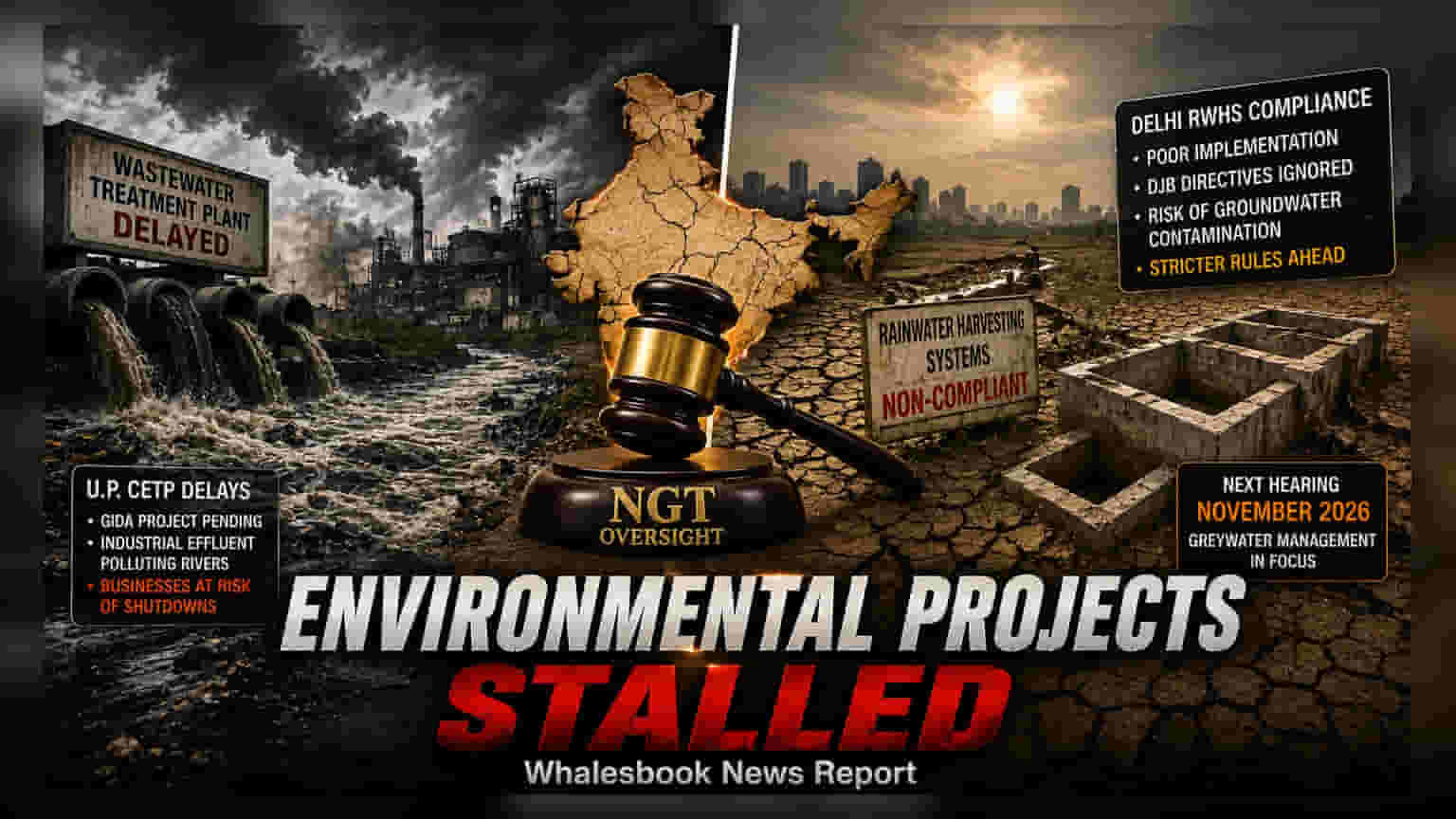
The National Green Tribunal (NGT) is scrutinizing state agencies over persistent delays in environmental infrastructure, such as effluent treatment plants in Uttar Pradesh and rainwater harvesting compliance in Delhi. This increased oversight highlights a tightening regulatory environment that may raise operational costs and compliance risks for businesses and developers operating in these jurisdictions.
The National Green Tribunal (NGT) has intensified its oversight of environmental compliance, directing state agencies to address significant delays in critical pollution control projects. Recent tribunal sessions have flagged slow progress in wastewater treatment initiatives in Uttar Pradesh and gaps in rainwater harvesting system (RWHS) compliance within the National Capital Territory of Delhi.
For investors and businesses, this development signals a period of stricter environmental enforcement. When vital infrastructure like common effluent treatment plants (CETPs) faces delays, industries relying on these facilities often bear the brunt of operational uncertainty. In industrial zones such as the Gorakhpur Industrial Development Authority (GIDA), the absence of functional treatment plants can lead to discharge restrictions, forcing manufacturing units to either invest in private treatment solutions or face the risk of temporary closures.
Infrastructure Delays and Business Impact
The NGT has specifically pointed to the lack of an operational CETP in the GIDA region of Uttar Pradesh. The project, intended to handle industrial waste, remains in the planning or approval stage, preventing effective treatment of effluents before discharge into local water bodies. Similar concerns persist regarding greywater management in the Deoria district, where the tribunal has mandated the construction of stabilization ponds.
Regulatory pressure of this nature often carries downstream effects for corporate operations. When state authorities are pushed to expedite compliance, they may introduce stricter audits or impose higher environmental compensation fees on industrial units to fund necessary infrastructure. Consequently, companies operating in these zones should anticipate increased focus on environmental, social, and governance (ESG) compliance, which may impact capital spending and operational margins.
Urban Compliance Risks
In Delhi, the NGT is scrutinizing the Delhi Jal Board (DJB) regarding its long-standing directives for rainwater harvesting. The dispute involves the installation of monitoring systems and the location of harvesting units near storm drains, which critics argue risks groundwater contamination. For real estate developers and property managers in the region, this signifies a higher threshold for regulatory approvals and operational maintenance. Continued non-compliance by civic bodies often results in stricter mandates for private players to ensure their own developments meet updated water-saving and environmental standards.
As the NGT continues to hold regular hearings, the key monitorable for market participants is the potential for increased compliance costs. Investors should watch for any shifts in state policy that might mandate faster adoption of these technologies by industrial parks or new urban projects, as these requirements can shift project timelines and budget allocations. The next phase of these proceedings, including a scheduled hearing in November 2026 for ongoing greywater management issues, will be crucial in determining how aggressively state authorities are forced to act.