

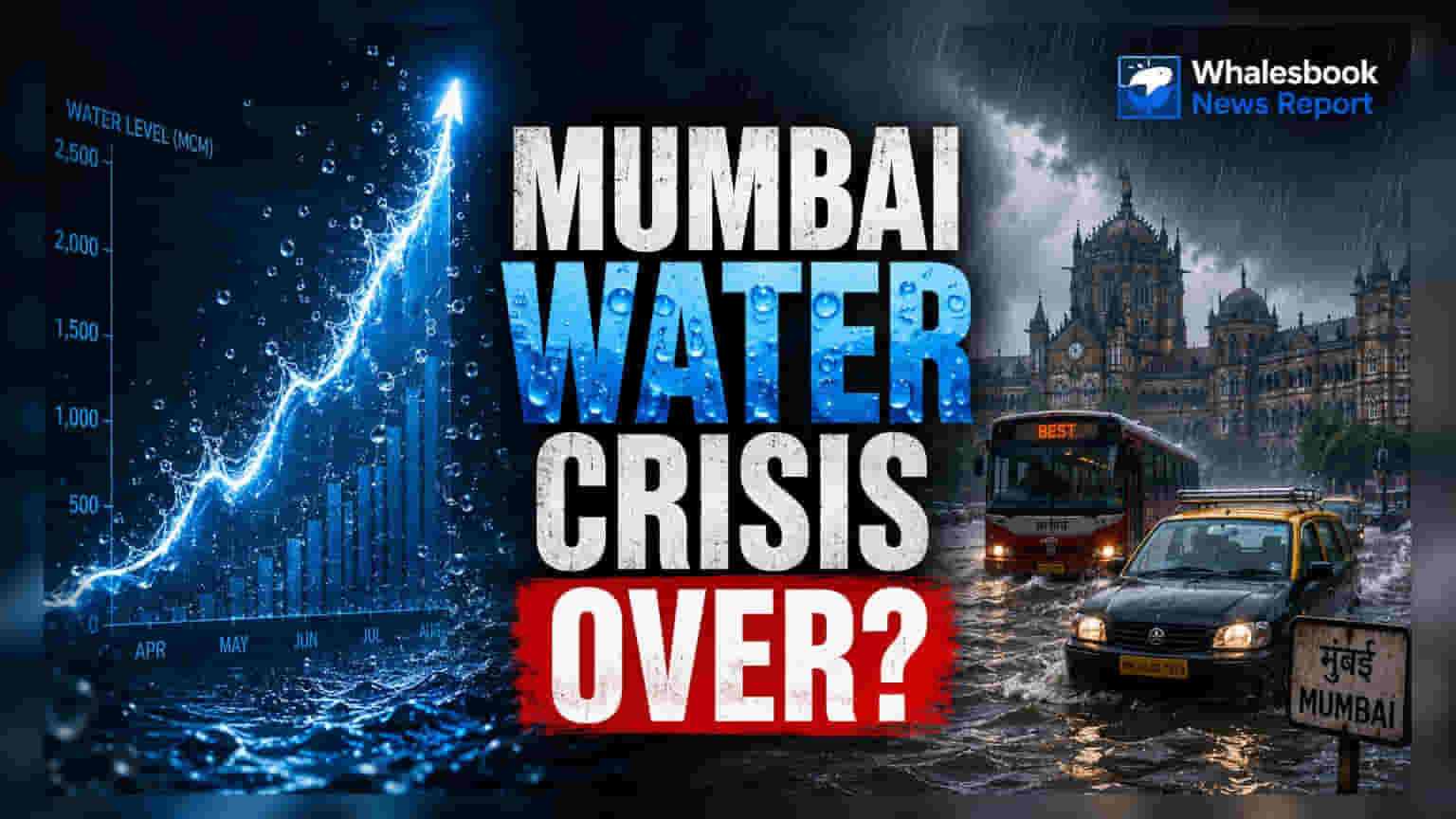
Mumbai's seven primary water reservoirs have reached 8.12% capacity following significant rainfall, providing relief after a dry June. While this replenishment eases immediate water security concerns for businesses in the region, investors should consider potential operational disruptions caused by the current extreme weather alerts in Maharashtra.
What Happened
Mumbai's seven critical water reservoirs have seen a combined increase in storage to 8.12% of their total capacity, following widespread heavy rainfall across coastal Maharashtra. As of July 2, 2026, these reservoirs—including Modak Sagar, Tansa, and Tulsi—hold approximately 117,532 million litres. This recovery comes after a dry spell in June that had depleted reserves, causing concern regarding the city's water supply stability.
Specific reservoir performance varied, with Modak Sagar reporting levels rising to 22.35% and Tansa Lake, which was near depletion, reaching 3.60% capacity. Other reservoirs like Middle Vaitarna and Vihar have also shown improved storage levels, aided by significant rainfall in catchment areas, such as the 207 mm recorded at Tulsi Lake.
Water Security and Business Continuity
For the Mumbai Metropolitan Region (MMR), consistent water supply is a fundamental operational requirement for several key industries, including manufacturing, FMCG, and real estate development. When reservoir levels remain critically low for extended periods, businesses may face increased operational costs due to water rationing, the need for private water procurement, or, in extreme cases, the temporary scaling back of production.
The replenishment of these lakes serves as a risk mitigator for water-intensive sectors that operate within the Mumbai region. A stable water supply ensures that commercial and industrial projects can continue without the added strain of resource scarcity, which can otherwise impact profit margins and project timelines.
Operational Risks from Extreme Weather
While the current rainfall is necessary for water security, the India Meteorological Department (IMD) has issued red and orange alerts for Mumbai, Thane, Palghar, and Raigad. These weather warnings signal the risk of extreme rainfall, which often creates different challenges for businesses.
Heavy rainfall in the Mumbai region is frequently associated with logistical bottlenecks. Businesses with significant presence in the city may face temporary disruptions in supply chain operations, delays in transport of goods, or the suspension of on-site construction activities due to safety protocols. For companies with a heavy reliance on local workforce attendance, extreme weather often leads to temporary drops in productivity, which, while usually short-lived, are an operational reality during the peak monsoon season.
What To Monitor
Investors looking at companies with a significant physical footprint or manufacturing base in the Mumbai Metropolitan Region may observe management commentary for potential impacts from the ongoing monsoon. Key areas include the stability of site operations, logistical efficiency during the extreme weather alert periods, and the overall impact of the rainy season on project delivery timelines for real estate and infrastructure firms. The primary focus for the region's businesses remains the balance between sufficient water replenishment and the avoidance of severe monsoon-related operational disruptions.