 Whalesbook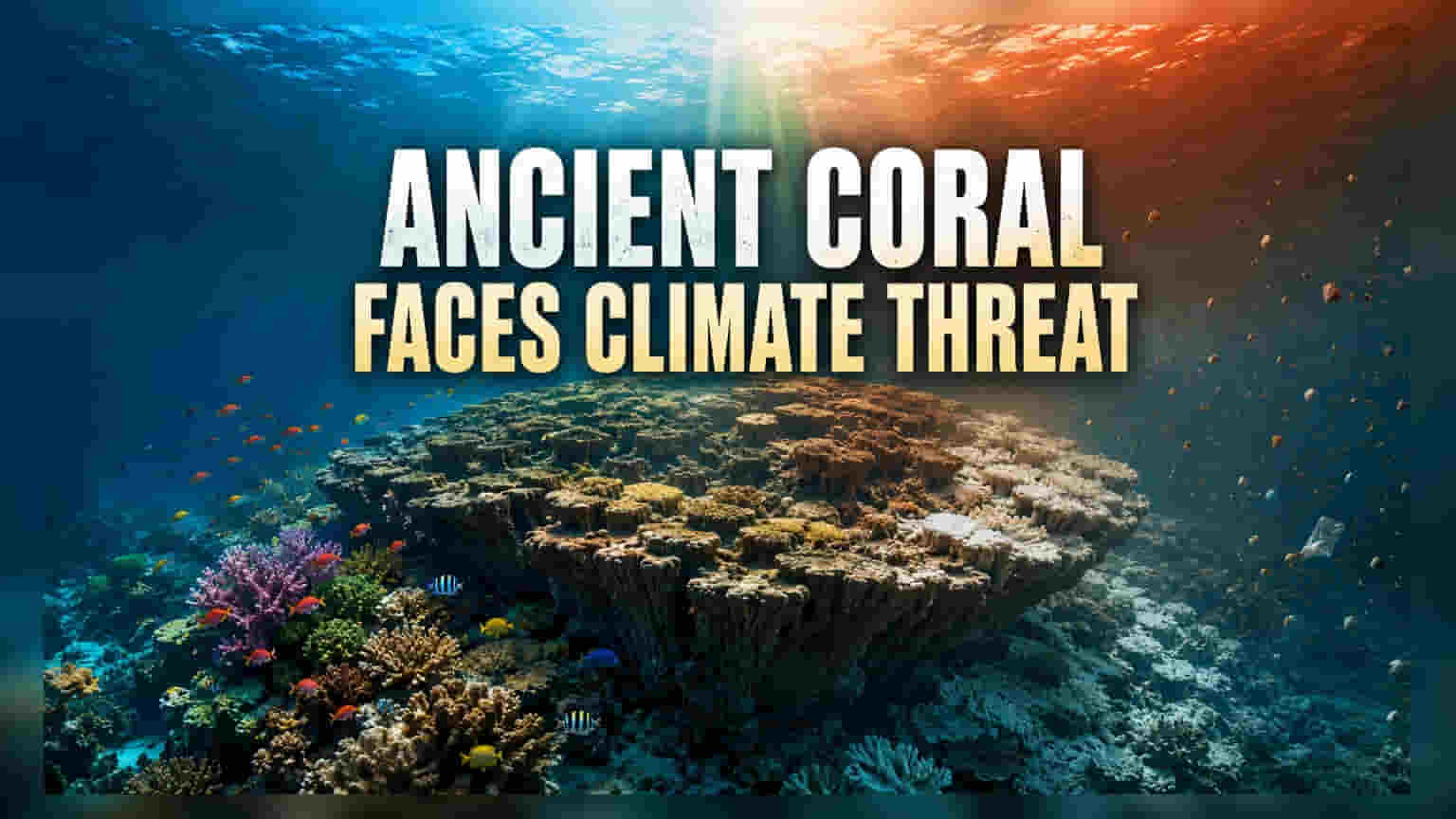


The Resilience Paradox
The documentation of the "Potato Patch" near Kadmat Island serves as a significant marker in marine biology. This Pavona clavus colony, spanning approximately 4,250 square meters, represents a biological anomaly in an era defined by rapid reef degradation. While the Indian Ocean has seen a four-fold increase in marine heatwave frequency over recent decades, this formation has maintained a live tissue cover of 58.47%. Such persistence is not merely a statistical curiosity; it provides a high-fidelity data point for studying how specific coral morphologies survive prolonged thermal stress.
Comparative Biological Context
Unlike shallow-water corals that are highly susceptible to immediate bleaching from surface-level warming, the Kadmat formation sits at a depth gradient starting at 5.2 meters and extending to 20 meters. This positioning may act as a thermal buffer, shielding the colony from the extreme surface anomalies that have decimated other Indian reefs. While a record-breaking coral colony in the Solomon Islands captured global attention in 2024 for its sheer scale, the Lakshadweep discovery is particularly noteworthy for its longevity estimate of 700 to 1,800 years. This suggests that the archipelago’s deep-reef slopes may harbor overlooked "refugia"—areas of deep water that remain relatively insulated from the climate-driven shifts affecting global marine biodiversity.
The Structural Vulnerability
Despite the excitement surrounding this finding, the broader environmental context of the Lakshadweep archipelago remains grim. Recent research indicates that nearly 85% of coral cover in some Indian reef regions has succumbed to past bleaching events. Furthermore, the ecosystem is currently contending with high concentrations of microplastics in both sediment and water columns, particularly around inhabited atolls. The structural integrity of the Potato Patch is also inherently linked to the surrounding marine environment; any localized increase in sedimentation or coastal runoff could rapidly erode the colony's capacity to continue its centuries-long growth trajectory. Unlike more managed marine environments, the Lakshadweep reefs face significant anthropogenic pressure, including historically unsustainable fishing practices and rising tourism-related pollution.
Scientific Implications
Future research will likely focus on sclerochronological dating to confirm the colony’s exact age. If these estimates hold, the Potato Patch serves as a living historical record of the Indian Ocean's climate variability over the last millennium. For conservationists, the primary directive is now transitioning from mere observation to active protection. The goal is to determine if the genetic markers of this specific Pavona clavus strain can be leveraged in assisted evolution efforts to bolster the resilience of more fragile, heat-sensitive coral species throughout the region.