

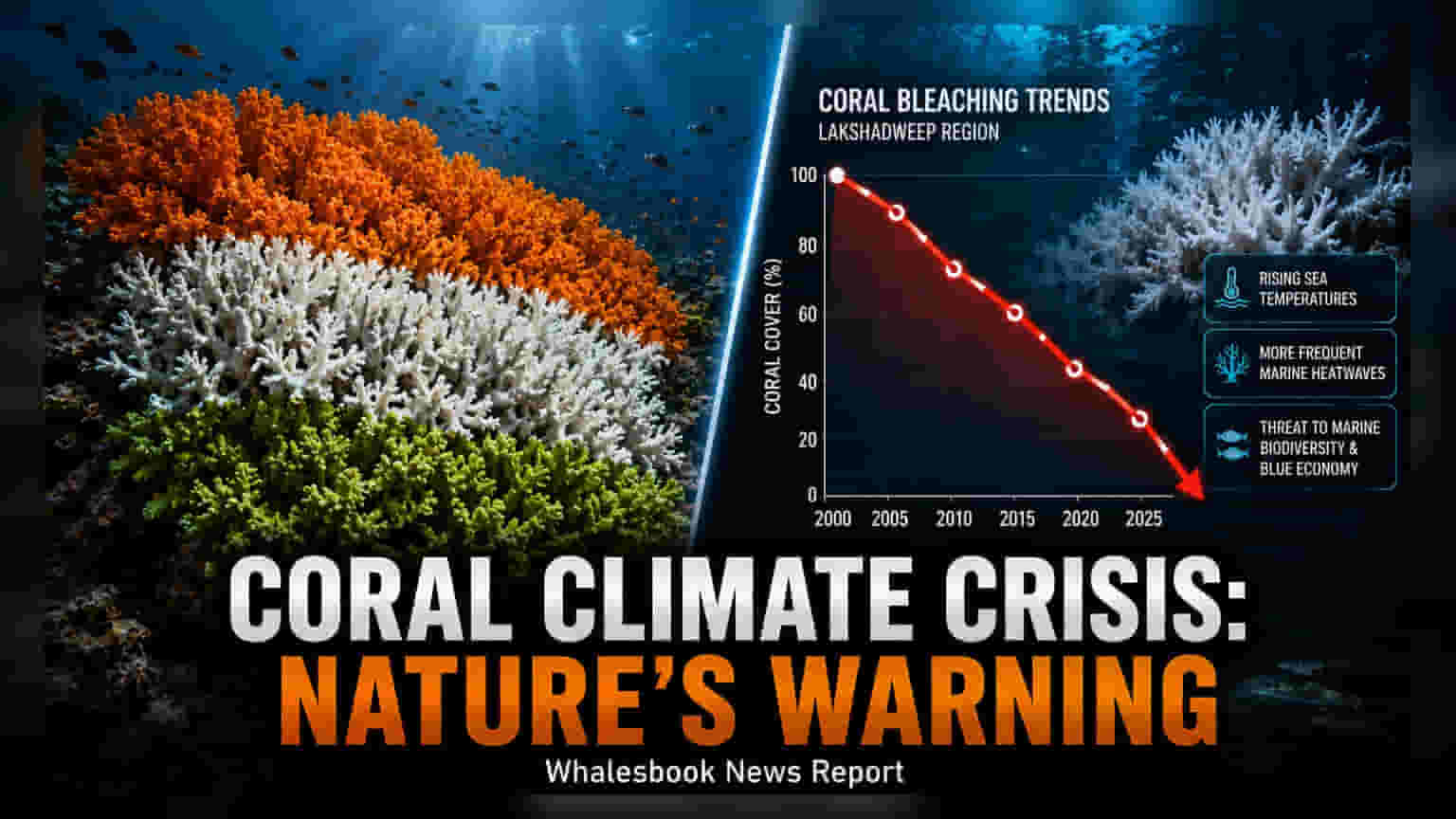
ICAR-CMFRI researchers have documented a unique coral formation in Lakshadweep that mimics the Indian tricolour. This natural occurrence provides a critical 'live laboratory' to study how different coral colonies respond to thermal stress, offering vital insights for reef restoration and climate adaptation in a region where marine ecosystems are under severe pressure.
Researchers from the ICAR-Central Marine Fisheries Research Institute (CMFRI) have identified a unique coral formation off the coast of Lakshadweep that naturally resembles the Indian tricolour flag. While the visual discovery is striking, the scientific importance lies in the contrasting health of the coral colonies observed in the formation.
Insights for Climate Resilience
The image, captured by research scholar Alvin Anto during a marine survey, reveals a scene where neighboring coral colonies exhibit different reactions to environmental stress. One colony shows signs of bleaching, a condition often caused by rising sea temperatures that forces corals to expel the algae living in their tissues. In contrast, the neighboring colony remains healthy despite being in the same environment. This stark variation provides a rare, natural laboratory for scientists to study why some corals are more resilient to thermal stress than others.
Understanding these resilience mechanisms is crucial for ongoing reef restoration projects. As marine heatwaves become more frequent, the ability to identify and cultivate heat-tolerant coral species is becoming a priority for global conservation efforts.
Impact on the Blue Economy
For the Indian economy, the health of coral ecosystems in regions like Lakshadweep is a matter of both environmental and economic significance. These reefs are essential for the survival of marine biodiversity, which directly supports local fisheries and provides natural coastal protection against erosion and storm surges. The long-term degradation of these habitats poses a structural risk to the regional 'blue economy,' which relies on tourism and sustainable fishing practices.
Data from recent years indicates that Lakshadweep has faced significant coral cover decline due to repeated marine heatwaves. The CMFRI is actively working to mitigate these risks through initiatives such as the deployment of artificial reefs. These structures are designed to provide a substrate for coral regeneration, restore degraded habitats, and boost fish populations, which are vital for the livelihoods of coastal fishing communities.
Future Monitoring
While this discovery provides promising data for climate adaptation research, the broader ecosystem remains vulnerable to the cumulative effects of rising ocean temperatures and anthropogenic pressures like pollution and overfishing. The scientific community continues to monitor these sites to better understand recovery intervals between bleaching events. For stakeholders involved in marine conservation and coastal management, the effectiveness of restoration techniques like artificial reef deployment and marine fish breeding programs remains the key metric for long-term ecological stability.