

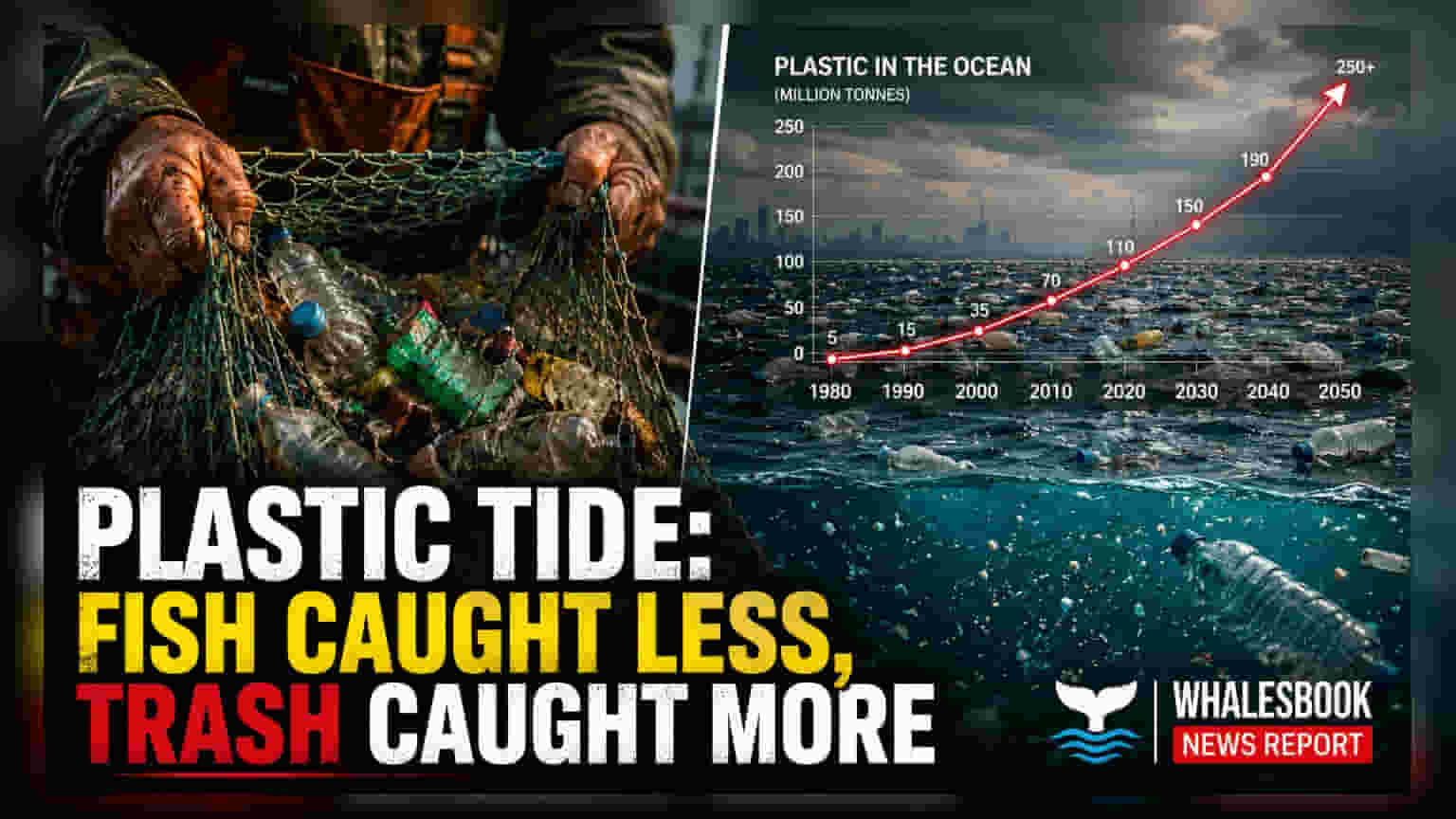
Fishermen in Kerala's Kochi district are increasingly finding their nets filled with plastic instead of fish, a problem linked to waste flowing from the Periyar River. This local issue mirrors a wider global crisis where 400 million tonnes of plastic are produced annually, with only 10% recycled. As marine litter continues to impact biodiversity and human food chains, global policy efforts to regulate plastic life cycles remain in the negotiation phase.
What Happened in Kochi
Fishermen operating near Munambam beach in Kerala’s Kochi district are facing a growing challenge: their daily haul now frequently contains more plastic waste than actual fish. Local fishermen, such as Peter, report that their fishing operations have been significantly disrupted over the past five to six years. During certain weather patterns, or when water is released from dams, large volumes of plastic debris flow into the ocean from the Periyar River. For instance, in a seven-hour period, fishermen have collected up to 1 kg of plastic, leaving little room for a productive catch. To manage this, local fishermen have shifted from burning the waste to preserving it for collection by non-profit organizations like Plan@Earth.
Global Plastic Production and Scale
The crisis in Kochi is a localized reflection of a massive global problem. According to the United Nations Environment Programme (UNEP), the world generates approximately 400 million tonnes of plastic each year. Data from the UN's "World Ocean Assessment" (WOA) report indicates that only 10% of this plastic is successfully recycled, meaning the vast majority enters the environment. It is estimated that every day, the equivalent of 2,000 garbage trucks worth of plastic are dumped into rivers, lakes, and oceans. The WOA highlights that 52 million tonnes of plastic waste flow into the oceans annually, threatening roughly 4,000 marine species. This waste is distributed globally by ocean currents, forming large garbage patches.
Why Marine Litter Matters
Marine litter, defined by the UNEP as any persistent, manufactured solid material discarded into the sea, presents long-term risks. As plastic breaks down, it creates smaller particles known as mesoplastics, microplastics, and nanoplastics. These particles can travel to remote regions, including the Arctic and Antarctica, and have been detected in major human organs, though the full impact on human health remains an area of ongoing study. The infiltration of these materials into the human food chain via marine life is a significant concern for health officials and environmental experts.
The Policy Challenge
In 2022, the UN Environment Assembly passed five resolutions, including Resolution 5/14, which mandates the creation of a legally binding international instrument to address the full life cycle of plastic pollution. However, the path to a global solution has been slow. While a draft was proposed in 2025, many nations have yet to reach a formal agreement. Currently, there is a lack of comprehensive global or national policy frameworks that can effectively curb the inflow of waste into oceans, leaving coastal communities to deal with the immediate economic and environmental consequences.