

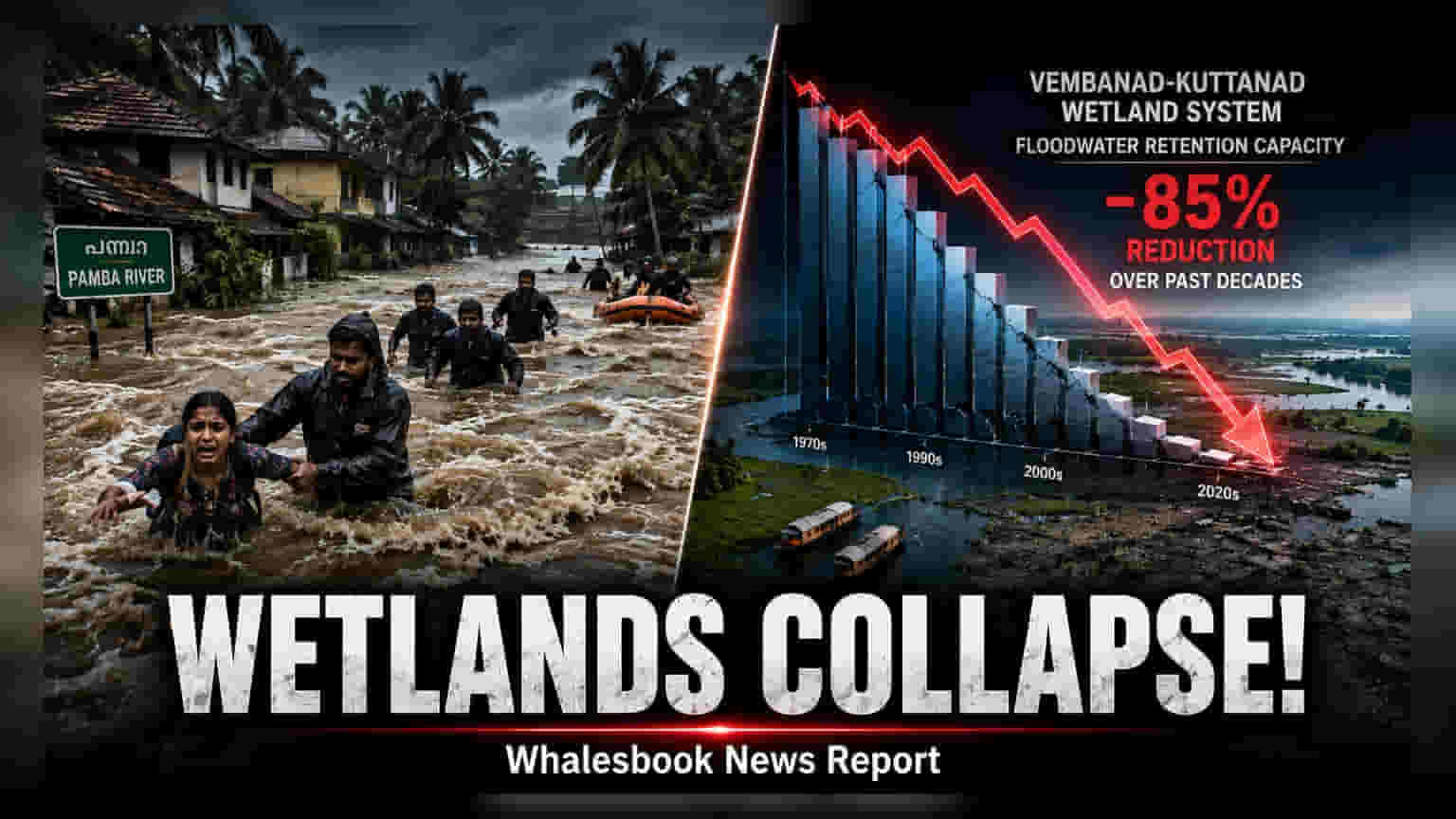
Recent severe flooding in Kerala has highlighted the critical ecological strain on the Pamba river and Vembanad wetland system. This environmental issue carries long-term economic risks for regional businesses, particularly in tourism, agriculture, and small-scale industries that operate in this fragile landscape.
The recent monsoon flooding in Kerala has brought significant attention to the Pamba river and the Vembanad-Kuttanad wetland system, with the Pathanamthitta district reporting over 5,900 people in relief camps as of early August 2026. While the immediate impact involves severe damage to homes and public infrastructure, the event has also reignited concerns regarding the long-term economic stability of the region due to environmental degradation.
Scientific data indicates a drastic shift in the basin’s hydrology. The Vembanad-Kuttanad wetland system has reportedly seen an estimated 85% reduction in floodwater retention capacity over the last several decades. This loss of capacity, driven by factors such as wetland reclamation, siltation, and the narrowing of natural drainage channels, means the region is becoming increasingly vulnerable to extreme weather events. For investors and businesses with exposure to the region, this creates a pattern of recurring operational risks.
The economic implications for the local area are significant. The region relies heavily on tourism, particularly the houseboat industry, and agriculture in the Kuttanad polders, which are situated below sea level. When flooding disrupts these systems, local small and medium-sized enterprises often face severe liquidity crises. Many of these businesses struggle with the lack of adequate flood insurance, making them highly sensitive to physical damage caused by water. Furthermore, recurring infrastructure repairs for state highways and power grids place a continued burden on local economic resources, potentially slowing down regional development.
Past proposals to mitigate these risks, such as the 'Room for the River' project, have faced years of delays and funding hurdles. The ongoing challenge for policymakers is to balance infrastructure development with ecological restoration. For those monitoring the region, the effectiveness of future integrated river basin management plans will be a critical indicator of long-term economic resilience.
The key monitorables for the coming months will be the scale of state-level relief packages for affected businesses and whether new regulatory frameworks are introduced regarding land use and tourism carrying capacity. Any shifts in policies governing the Pamba basin or the management of the Vembanad lake could impact the operational costs and viability of businesses located within these high-risk zones.