

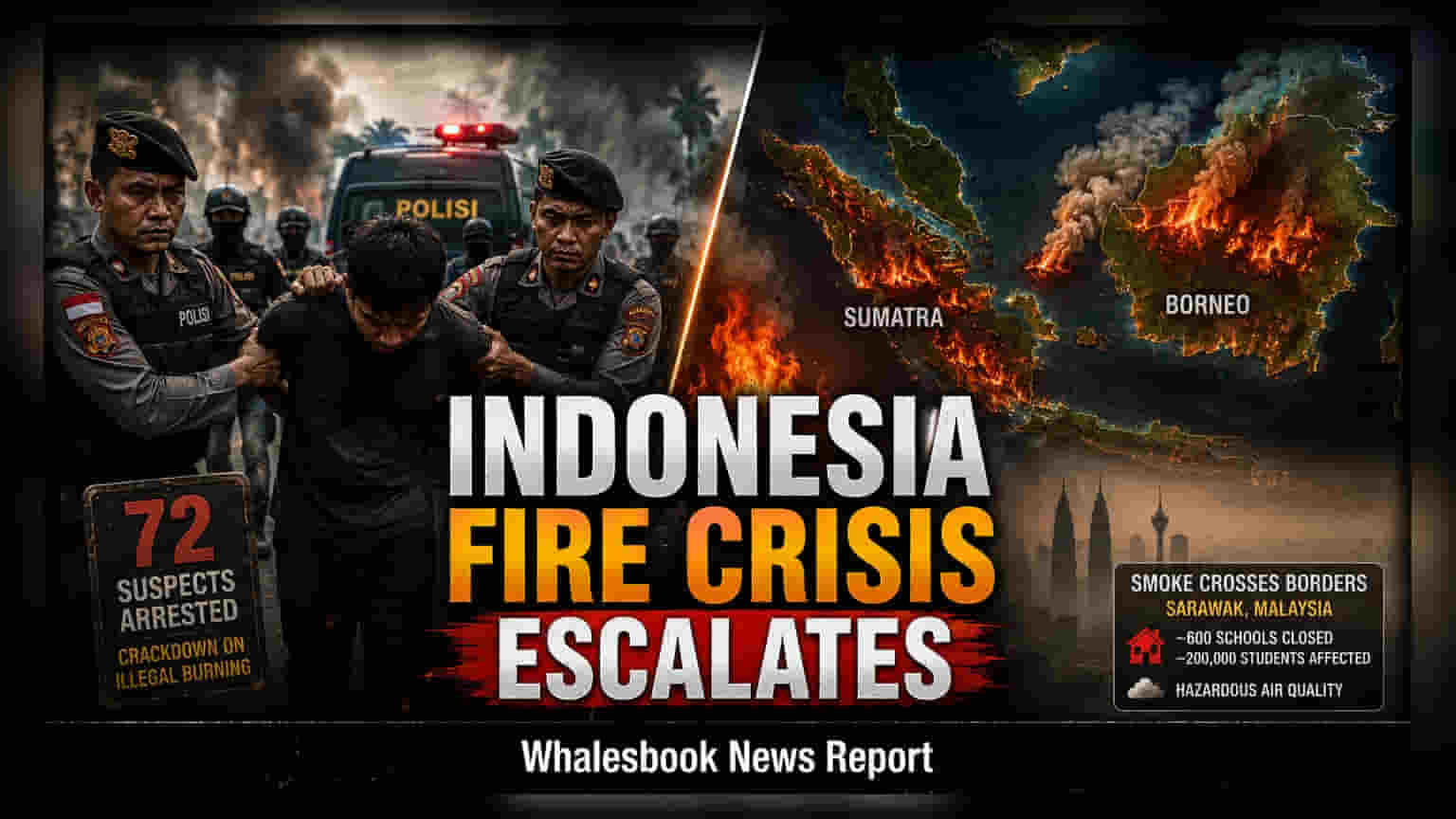
Indonesian authorities have arrested 72 people linked to forest fires that are causing hazardous haze in Malaysia. With El Niño weather patterns intensifying the crisis, investors are watching for potential regulatory crackdowns on plantation companies that may be involved in illegal land clearing.
Indonesian authorities have launched a widespread crackdown on illegal land clearing, arresting 72 individuals suspected of starting forest and peatland fires across the regions of Borneo and Sumatra. These fires, worsened by an intensifying El Niño weather pattern and a prolonged dry season, have produced a thick, hazardous blanket of smoke that has drifted into neighboring Malaysia. In the Malaysian state of Sarawak, the severe drop in air quality has forced nearly 600 schools to close, affecting approximately 200,000 students.
The situation is drawing significant attention from investors because the Indonesian National Police have announced a broader investigation. Officials are not stopping at the ground-level suspects; they are actively investigating whether plantation owners or corporations financed or ordered these illegal burning activities. This introduces a material risk for agricultural companies operating in the region.
For investors, this development underscores the growing importance of Environmental, Social, and Governance (ESG) standards. Plantation and agricultural firms are under increasing scrutiny regarding their land management practices. If the police investigation uncovers that specific companies or their supply chains were involved in illegal land clearing, those firms could face heavy financial penalties, legal challenges, and the potential revocation of land licenses. Such outcomes would not only disrupt supply chains but could also lead to significant stock volatility for companies directly linked to the breaches.
Furthermore, the persistence of the El Niño weather pattern serves as a macro-risk factor. These climatic conditions increase the risk of dry, flammable landscapes, which can lead to production delays, logistical disruptions, and higher operational costs for agricultural businesses. As environmental regulations become stricter, the ability of a company to effectively manage and prevent such fires on its land bank is becoming a critical measure of its operational stability.
Investors should track the ongoing police investigation, as any official naming of companies involved could trigger immediate regulatory and market reactions. Additionally, monitoring regional air quality data and official government updates regarding containment efforts will be important to gauge how long these operational and logistical disruptions might persist.