 Whalesbook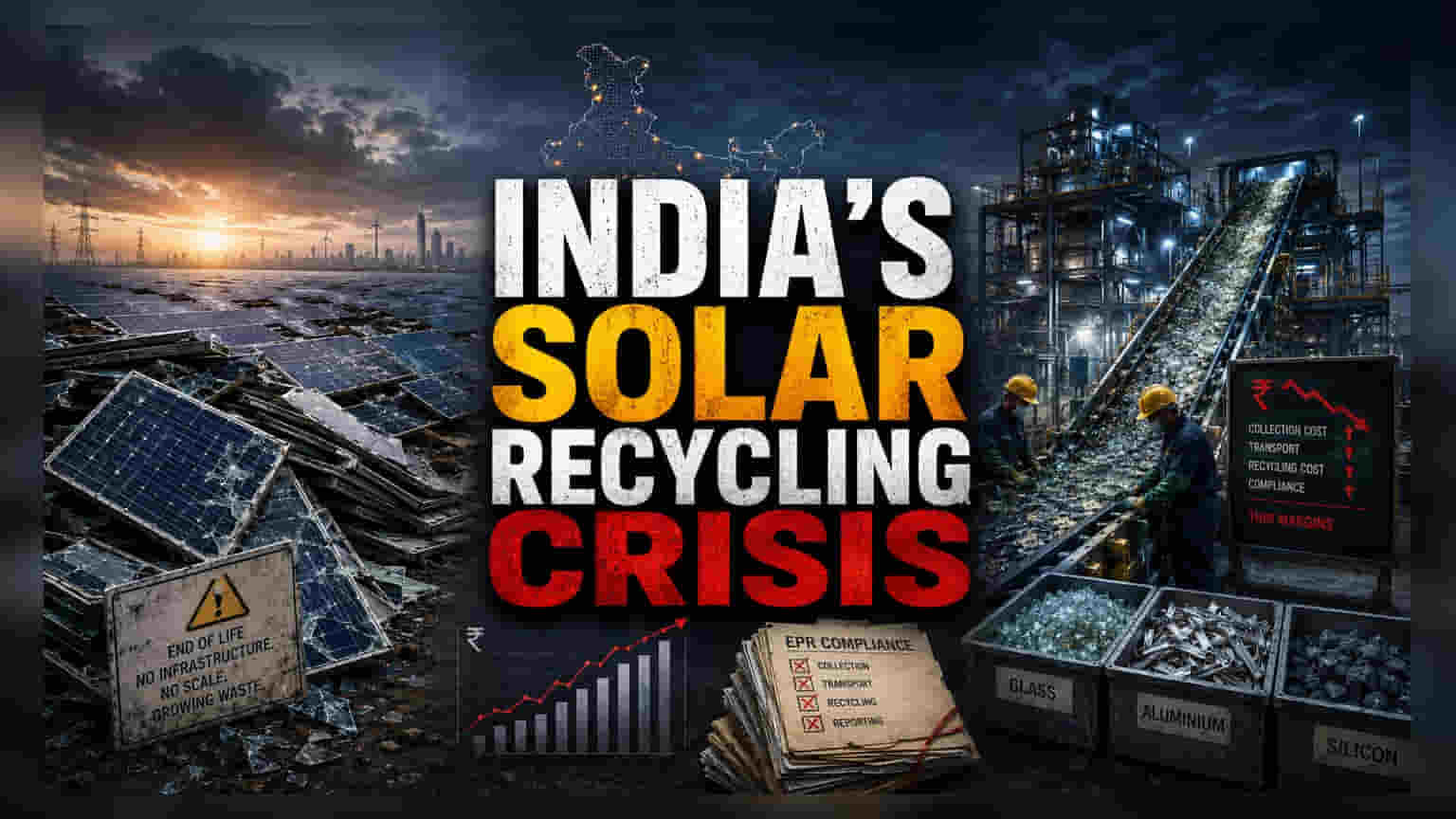


The Valuation Gap
Despite India’s rapid expansion to over 130 GW of solar capacity, the industry stands at a precarious juncture. The first generation of utility-scale projects is nearing its 25-to-30-year operational limit. While the government has pivoted toward formal regulation with the Central Pollution Control Board’s March 2026 guidelines, the economic reality remains stark. Current recycling pathways, both mechanical and chemical, struggle with thin margins; processing costs often hover between ₹883 and ₹1,079 per module, frequently rendering formal recycling a loss-making endeavor without the support of Extended Producer Responsibility (EPR) credit trading.
The Analytical Deep Dive
India’s recycling sector is arguably a decade behind its mature European counterparts, which have long utilized the Waste Electrical and Electronic Equipment (WEEE) Directive to institutionalize collection. In contrast, India’s current strategy relies on fragmented, nascent pilot initiatives. Market data suggests that while the sector could grow at a CAGR of 16% through 2034, the lack of standardized, high-recovery technology—such as specialized silver and high-purity silicon extraction—means that most value remains trapped in discarded panels. The move to classify solar waste under the E-Waste (Management) Rules of 2022 is a necessary foundation, yet it primarily focuses on storage and handling rather than incentivizing the massive capital expenditure required to establish an estimated 300 recycling facilities by 2047.
The Forensic Bear Case
Investors should view the sector with caution due to structural headwinds. Unlike the battery recycling industry, where high-value nickel and cobalt recovery drives EBITDA margins of 25% to 40%, solar recycling suffers from a revenue-to-cost mismatch. Discarded panels are dominated by low-value glass and aluminum, with silver content insufficient to offset processing expenses at current market prices. Furthermore, the absence of enforceable, high-value EPR mandates—comparable to those governing battery disposal—leaves recyclers at the mercy of volatile scrap prices and logistical hurdles. The risk of illicit dumping remains high, particularly in remote solar parks where collection and transport costs can easily exceed the resale value of the recovered materials.
The Future Outlook
Long-term viability hinges on the success of government-led innovation challenges and the potential integration of solar waste into a robust EPR credit market. If the Ministry of Mines’ ₹1,500 crore incentive scheme effectively lowers the capital barrier, the industry could pivot from a public health liability to a strategic supply chain asset. For now, the focus is shifting toward design-for-recyclability and modular architecture, as manufacturers realize that the future of solar profitability may eventually depend as much on what they can reclaim as what they can install.