

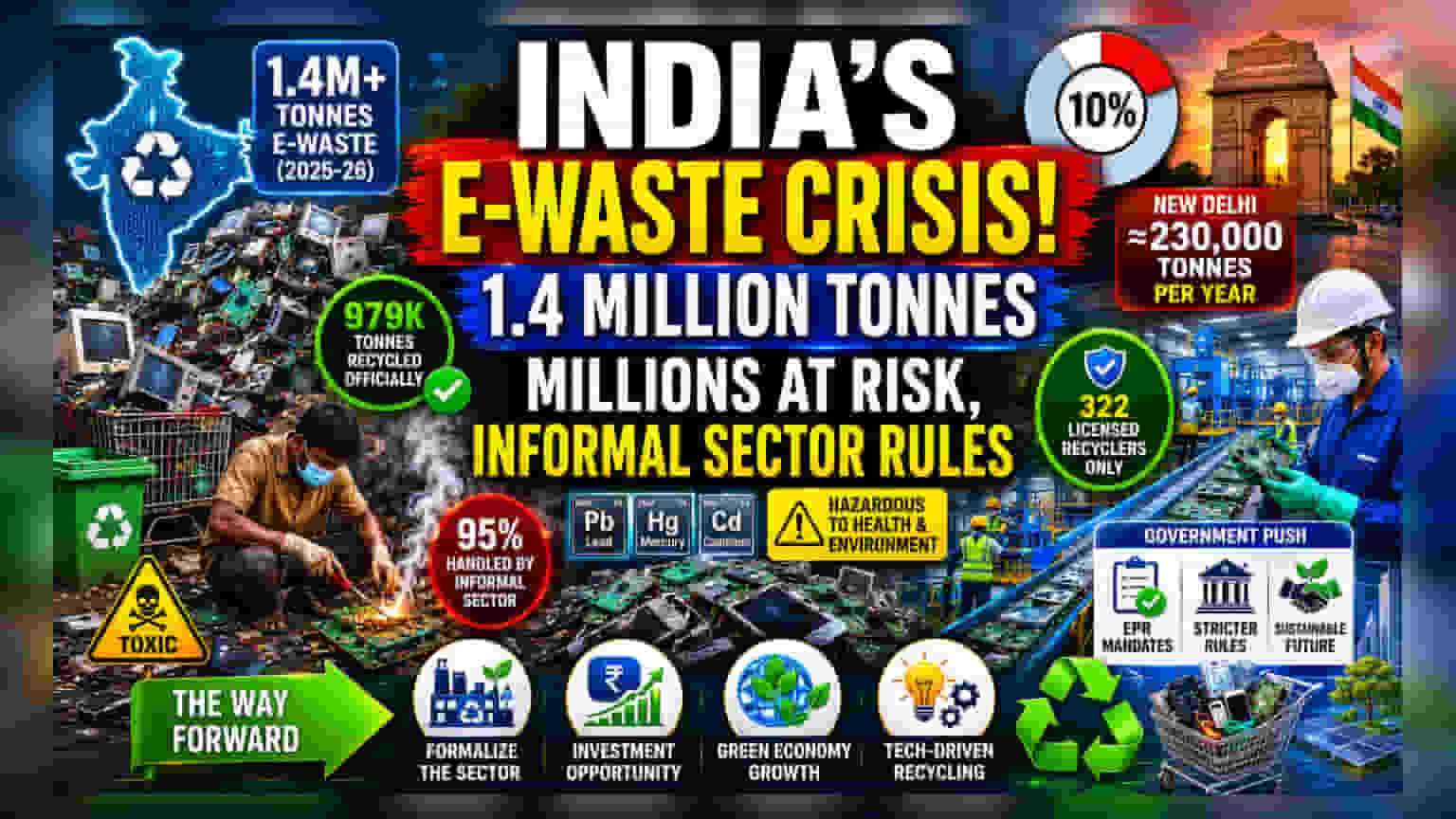
India generated over 1.4 million metric tonnes of e-waste in 2025-2026, yet the informal sector manages 95% of this volume. This regulatory gap poses significant health risks to workers and creates an uneven playing field for formal recycling companies struggling with high compliance costs.
What Happened
India continues to face a significant challenge in managing its growing e-waste mountain. In the 2025-2026 period, the country generated over 1.4 million metric tonnes of electronic waste. While official data indicates that roughly 979,000 tonnes were recycled, a massive portion of the processing happens in the unregulated, informal sector. New Delhi alone accounts for approximately 10% of the national total, producing nearly 230,000 metric tonnes annually. For the thousands of workers involved in this informal economy, the lack of safety infrastructure remains a critical issue, with many handling hazardous materials without basic protective gear.
The Business of Informal Recycling
The informal sector handles nearly 95% of India’s discarded electronics. From a business and economic perspective, this dominance creates a complex environment. Informal workshops operate with extremely low overheads, as they avoid the costs associated with environmental compliance, labor safety, and waste management technology. This makes it difficult for the 322 licensed recyclers in India to compete on price, as they must bear the significant costs of maintaining regulated facilities and ensuring proper disposal of toxic chemicals like lead, mercury, and cadmium.
Why Formalization Matters for Investors
The Indian government has introduced e-waste management rules, including Extended Producer Responsibility (EPR) mandates, which require producers to take responsibility for the collection and recycling of their products. For investors in the waste management sector, the key theme is the government's push to formalize this industry. As enforcement tightens, the ability of authorized recyclers to capture market share from the informal sector will be the primary driver of growth. However, this transition remains slow because the informal sector provides cheaper disposal services to businesses and consumers.
Regulatory and Execution Risks
The current structure presents clear risks. Enforcement of environmental regulations remains inconsistent, allowing informal players to continue operations in densely populated areas like New Delhi. For formal companies, the main risk is the high cost of compliance, which can pressure profit margins if they cannot scale operations efficiently. Additionally, if environmental authorities impose stricter crackdowns, the sudden displacement of informal units could disrupt the collection supply chain, at least in the short term, before formal systems can fully replace them.
What Investors Should Track
Investors interested in the sustainability and recycling space should monitor the effectiveness of EPR enforcement. Key monitorables include updates on government penalties for non-compliance, the licensing of new authorized facilities, and shifts in corporate procurement policies that prioritize certified recycling partners over cheaper, unregulated options. The long-term profitability of the formal e-waste sector will largely depend on the government's success in bridging the price gap between authorized, safe recycling and the cheaper, hazardous methods used in the informal economy.