 Whalesbook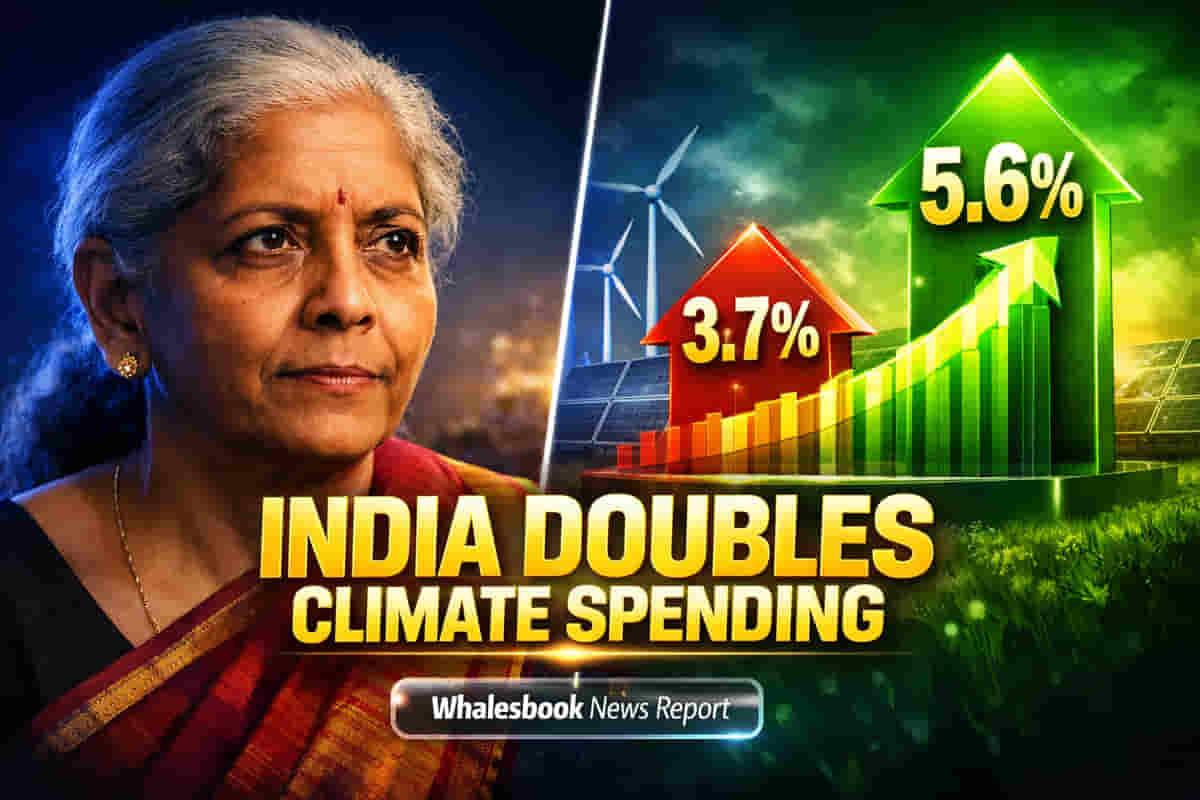
Strategic Climate Investment Fuels Economic Growth
The Indian government's intensified focus on climate action, evidenced by a surge in spending to 5.6% of GDP from 3.7% six years ago, positions the nation strategically within the global green transition. This significant fiscal commitment, detailed by Finance Minister Nirmala Sitharaman, suggests a move beyond mere compliance towards leveraging environmental initiatives for economic advancement. The administration is actively investing domestic funds rather than solely awaiting external financing or technology transfers, a stance reinforced by the Union Budget 2026-27's allocation towards nationwide carbon capture strategies and incentives for renewable energy expansion. This proactive fiscal policy aims to accelerate the development of sustainable energy infrastructure, a critical component for long-term economic resilience and competitiveness in an increasingly decarbonized global economy.
Early Renewable Milestones and Global Positioning
India's achievement of two-thirds of its nationally determined commitments in the renewable energy sector, four years ahead of its target, highlights the effectiveness of its policy framework and execution. This early success is a potent signal of India's capability to meet ambitious environmental targets, enhancing its credibility on the international stage. At the Munich Security Conference, Sitharaman articulated a vision for differentiated cost-sharing in climate action, advocating that nations with lower historical emissions should not bear the same financial burden as major polluters. This argument for equitable global climate finance, coupled with demonstrated domestic progress, places India as a leader advocating for a more balanced and pragmatic approach to international climate policy. Competitors like China also invest heavily in renewables, but often through state-driven industrial policy, while the United States and European Union increasingly focus on market-based mechanisms and carbon pricing alongside direct spending, presenting a complex global landscape for climate finance.
Risks and The Bear Case
Despite the robust increase in spending and early target achievements, significant headwinds persist. The reliance on imported technologies for advanced carbon capture and certain renewable energy components remains a vulnerability, potentially impacting cost efficiency and supply chain security. Furthermore, while the government is investing heavily, the sheer scale of India's development needs means that climate action spending competes with other critical areas like infrastructure, healthcare, and education, potentially straining fiscal resources if not managed meticulously. Past periods of accelerated government infrastructure spending in India have sometimes been associated with inflationary pressures and increased sovereign debt, risks that investors will monitor closely. For instance, unlike some developed nations with established green bond markets or advanced carbon trading schemes, India's regulatory framework for climate finance is still evolving, creating uncertainties for long-term private sector investment. Management's ability to ensure efficient deployment of capital and navigate bureaucratic hurdles across diverse states will be crucial to sustaining momentum and avoiding a 'greenwashing' perception should implementation falter.
Forward Outlook and Sector Dynamics
Looking ahead, India's trajectory in renewable energy and climate action is expected to remain a key focus for both domestic and international investors. Analysts generally view the sector positively, citing strong policy support, substantial domestic demand, and the government's clear commitment. However, concerns persist regarding grid integration challenges for intermittent renewable sources and the speed of land acquisition for large-scale projects. The success of the Union Budget 2026-27's initiatives in carbon capture and renewable energy incentives will be a critical determinant of future performance. The ongoing advocacy for differentiated climate action costs by India could also influence international climate negotiations and the flow of global green finance towards emerging economies.