
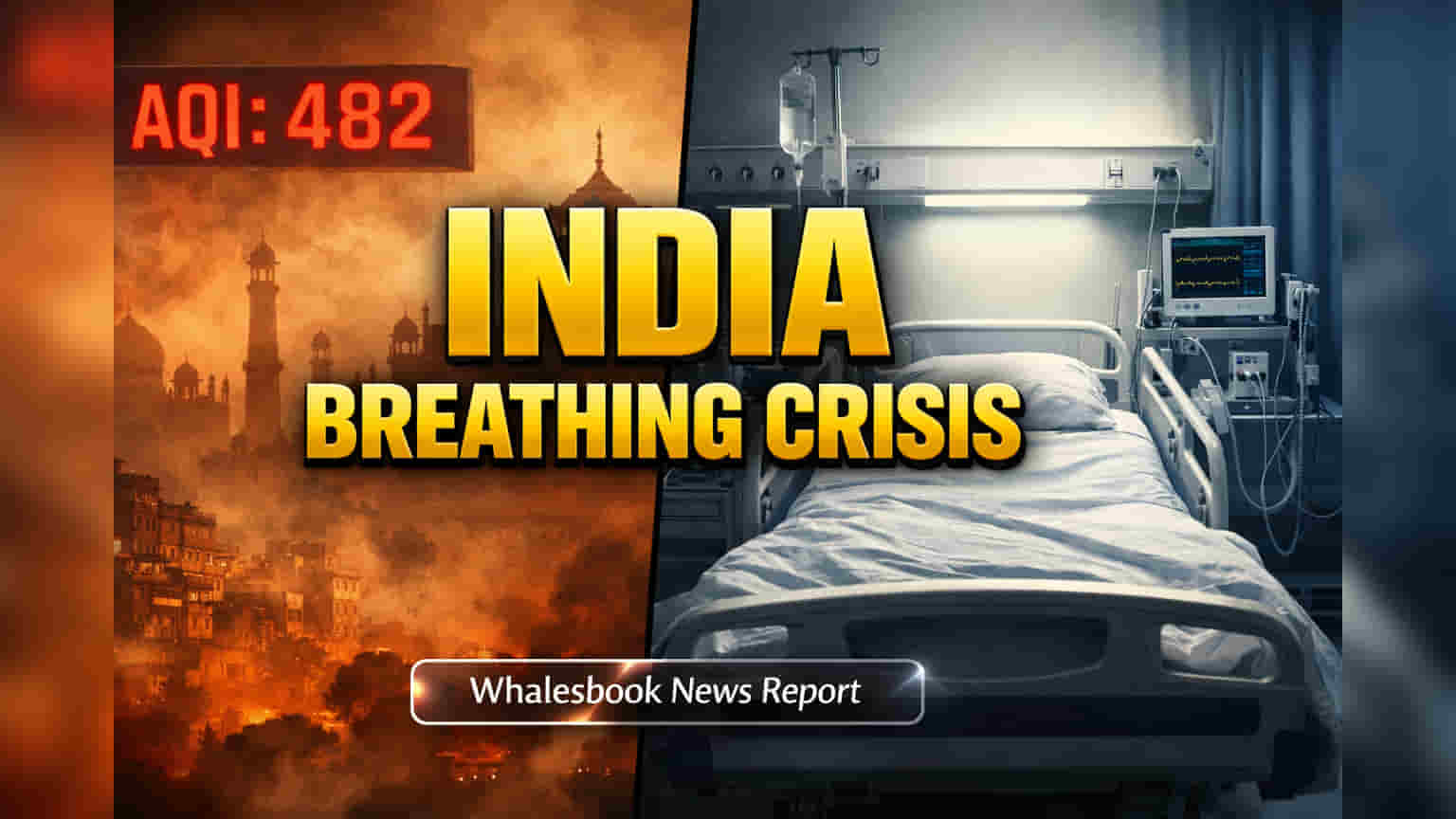
NGT Demands Government Action on Air Crisis
The National Green Tribunal (NGT) is demanding answers from the Union government and other authorities regarding India's worsening air pollution. A court filing argues the situation has become a national public health emergency, noting a similar case is already underway. Both applications will be heard together on May 14.
Breathing Now a Serious Health Risk
India is currently trapped under a persistent, polluted air mass. Harmful pollutants consistently exceed national and international health standards. This dangerous situation, which has persisted for years, is worsening and causing millions of premature deaths annually. The plea states clearly, "The quality of air has deteriorated to such an extent that breathing itself has become a health risk."
Staggering Death Toll and Economic Cost
Scientific studies paint a stark picture of the severity. According to the Global Burden of Disease Study, air pollution caused 1.67 million deaths in India in 2019, representing 17.8% of all fatalities. This total included 0.98 million deaths from outdoor pollution and 0.61 million from indoor (household) pollution. The economic impact is significant, with an estimated $36.8 billion loss, or 1.36% of India's GDP, attributed to premature deaths and illness. An estimated 464 children under five die daily in India from air pollution.
Cities Consistently Fall Short of Air Standards
Data covering 2015 to 2025 reveals that no major Indian city met safe air quality standards during that entire period. Delhi consistently recorded very high Air Quality Index (AQI) levels. Cities like Lucknow and Varanasi also frequently exceeded limits. Even relatively cleaner major cities such as Kolkata, Mumbai, and Chennai reported AQI levels well above recommended thresholds.
Governance Criticized as Fragmented and Reactive
The filing criticizes India's approach to air pollution, describing it as scattered, reactive, and seasonal. Responses often focus on temporary fixes during peak pollution times instead of tackling long-term emission sources. The application argues that despite laws like the Air (Prevention and Control of Pollution) Act, 1981, enforcement is spread across uncoordinated bodies. Authorities lack comprehensive data and monitoring, with one observation stating: "What is not counted is not governed; what is not recorded is not prevented."
Call for National Framework and Coordinated Action
The applicant is pushing the NGT to mandate significant reforms. Key demands include creating a unified national plan, acknowledging air pollution as a public harm, linking environmental oversight with public health tracking, and ensuring government agencies work together. The plea argues the crisis stems from poor execution, coordination, and accountability, not weak laws, and aims to secure the constitutional right to clean air.