

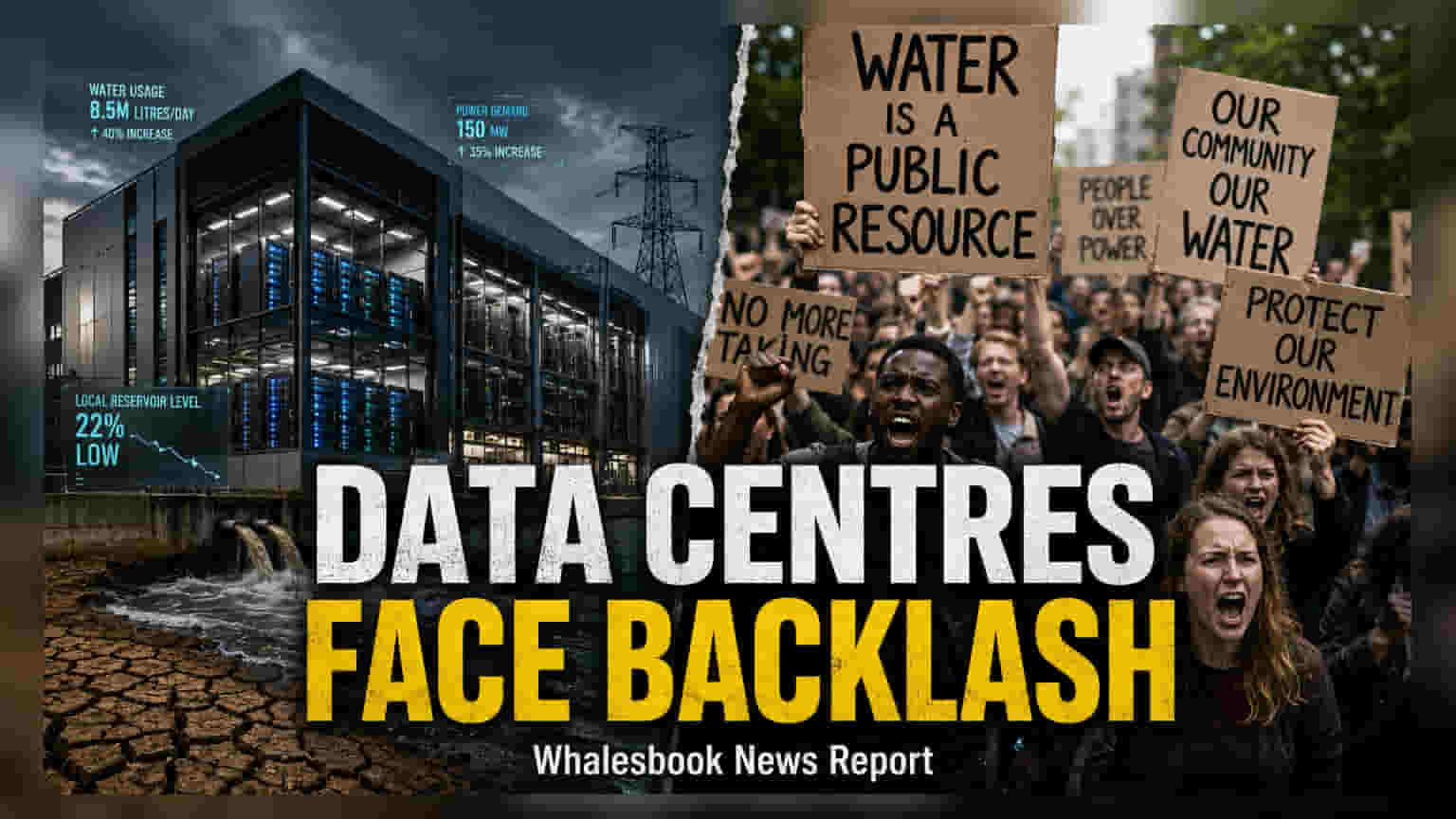
Major data center projects, including those led by Adani and Amazon in Andhra Pradesh and Maharashtra, are encountering local resistance. Residents are citing concerns over water consumption and land use, creating potential execution risks. While the Union government has clarified current environmental clearance rules, the ongoing legal and social challenges are key factors for investors to track.
A wave of local protests is currently targeting large-scale data center projects across India, bringing new operational and regulatory challenges to the country’s booming digital infrastructure sector. Significant projects, including the proposed hyperscale facility by the Adani group in Visakhapatnam and Amazon’s planned data center in Thane, Maharashtra, have become focal points for environmental groups and local residents.
The central issue behind these demonstrations is the heavy resource demand of these facilities. Data centers are massive consumers of water for cooling and require uninterrupted, high-capacity electricity. In areas already struggling with resource stress, local communities are voicing concerns over the impact these projects might have on local water tables, public utility supply, and agricultural access.
From a regulatory standpoint, the government's stance adds complexity to the situation. On August 6, 2026, the Union Ministry of Environment, Forest and Climate Change clarified that AI data centers do not require separate, standalone environmental clearances unless they fall into specific categories such as building, construction, or township projects. While this rule technically simplifies the approval process for companies, it has also sparked legal and social debates. Activists argue that this creates a regulatory gap, leading to calls for stricter oversight that considers the cumulative environmental footprint of these mega-facilities.
For investors, these developments introduce specific risks regarding project execution. When large infrastructure projects face significant local opposition, the most immediate impact is often a delay in construction. Public interest litigations and local court cases can halt work for months or even years. For companies, this means capital remains locked in projects that are not yet generating revenue, potentially straining cash flows and impacting the return on investment.
Beyond delays, there is the risk of rising operational costs. If local pressure forces companies to invest in more sustainable cooling technology, water recycling, or renewable energy sources to satisfy community demands, it could lead to higher-than-expected capital spending. Furthermore, companies with large-scale projects in water-stressed regions face long-term commercial risks if utilities become scarce or more expensive for industrial use.
Investors should monitor how these situations evolve at the state and local levels, as specific state policies on water usage and land allocation may become more stringent in response to the public outcry. The key monitorable for the coming months will be the status of ongoing court cases, any new state-level guidelines that might emerge to address community grievances, and updates on project timelines from the companies involved. As India continues to build out its AI and digital backbone, the ability of firms to manage these environmental and community relationships will be as critical to their success as the technology they deploy.