

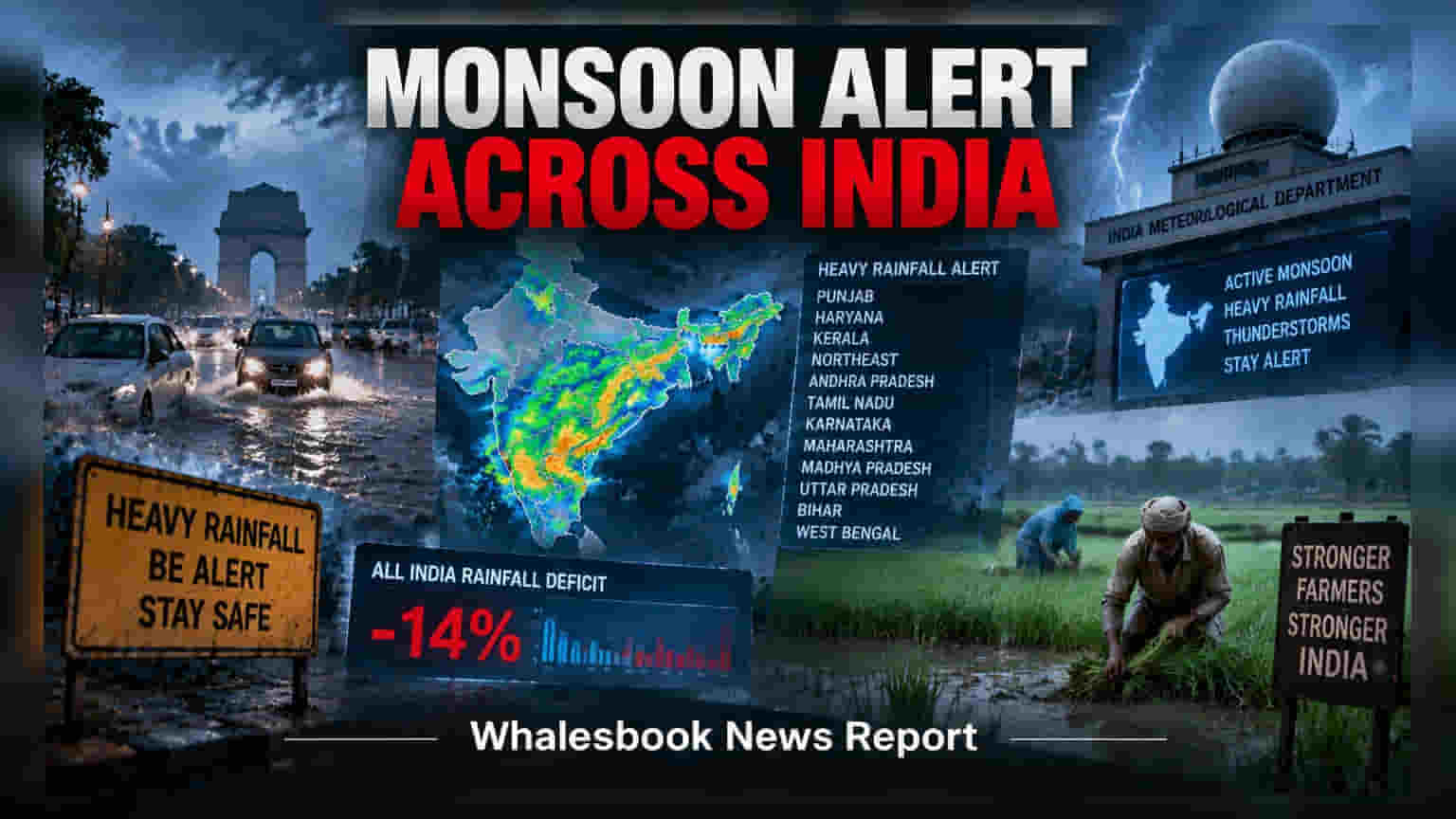
The India Meteorological Department has issued heavy rainfall alerts for 12 states as the monsoon continues into mid-September. With an overall rainfall deficit of 14% this season, these late-stage showers are critical for agricultural soil moisture. Investors monitor these trends for their potential impact on food inflation, rural consumption, and agricultural productivity.
The India Meteorological Department (IMD) has issued alerts for heavy rainfall and thunderstorms across 12 states, including Punjab, Haryana, Kerala, and parts of the Northeast, as the southwest monsoon remains active. While these weather updates are primarily environmental, they carry significant economic implications, particularly as the country navigates a monsoon season that has faced an overall rainfall deficit of approximately 14%.
Impact on Agriculture and Rural Demand
For the Indian economy, the monsoon is a critical driver of rural income. A deficit of 14% generally signals risks to crop output and soil moisture levels. Late-season rainfall, while helping to replenish reservoirs and improve soil conditions for the rabi sowing season, can present a mixed picture. If rainfall is well-distributed, it supports harvest outcomes and rural purchasing power. However, extreme or concentrated downpours in agricultural belts can lead to waterlogging and damage to standing kharif crops, which may temporarily disrupt supply chains.
Investors typically analyze monsoon progress because of its direct link to rural demand. Companies in the fast-moving consumer goods (FMCG) and two-wheeler sectors, which rely heavily on rural market penetration, often monitor these patterns. When rural incomes are stable due to a healthy harvest, these sectors often see better sales volumes. Conversely, supply chain disruptions caused by extreme weather can impact short-term operational efficiency.
Inflation and Macroeconomic Risks
Food inflation remains a sensitive metric for the Reserve Bank of India (RBI) and the broader market. Rainfall patterns directly influence the supply of perishable goods like vegetables and grains. While late-season rain can improve yield prospects, sudden or excessive rainfall can also spike prices due to transport delays and crop spoilage. Market analysts often watch these weather developments alongside official inflation data, as food price fluctuations can affect overall consumer spending patterns.
Looking Ahead
The IMD has signaled that monsoon withdrawal is likely to commence from parts of western Rajasthan around September 19, marking the gradual conclusion of the season. As the transition begins, the focus for the market will shift from rainfall adequacy to harvest results and crop procurement data.
Investors monitoring the rural economy will likely look for updates on harvest quality and food price trends in the coming weeks. Official reports on agricultural output and subsequent inflation data will provide a clearer picture of how the overall 2026 monsoon season has impacted the broader economic landscape.