 Whalesbook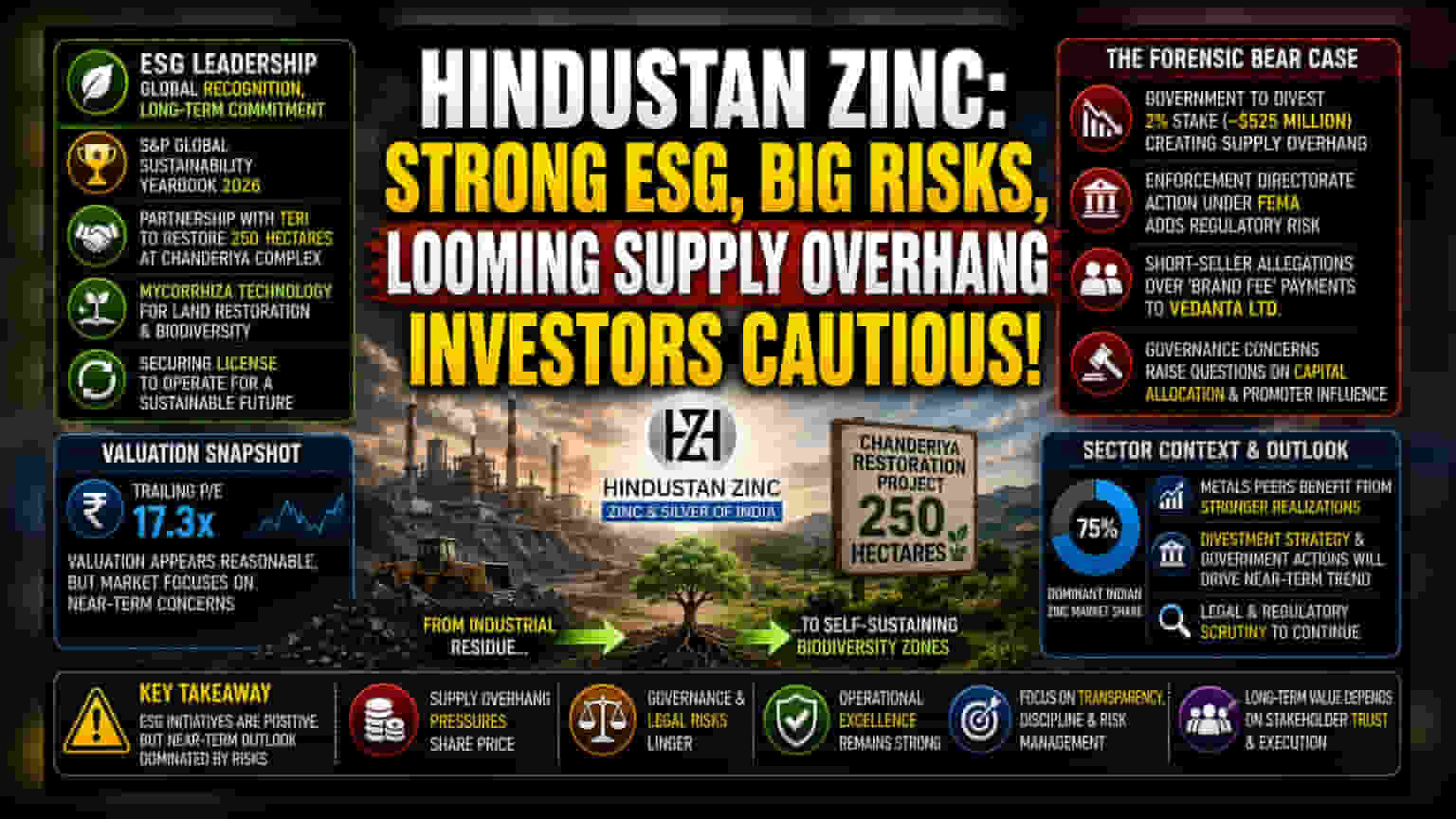


The Valuation Gap
While Hindustan Zinc consistently earns top-tier global rankings for its sustainability efforts—including recent recognition in the S&P Global Sustainability Yearbook 2026—the market remains preoccupied with immediate liquidity concerns. Trading at a trailing P/E ratio of approximately 17.3x, the company is attempting to pivot the narrative toward its long-term commitment to ESG integration. The new partnership with The Energy and Resources Institute (TERI) to restore 250 hectares at the Chanderiya Lead Zinc Smelter Complex serves as a strategic move to secure its 'license to operate' amidst shifting global investor expectations for responsible mining.
The Operational Reality
The restoration initiative represents a technical scaling of past successful trials at the company’s Jarofix Yard. By leveraging TERI’s proprietary Mycorrhiza technology, the company aims to convert industrial residue sites into self-sustaining biodiversity zones. Despite the positive optics, the project is a drop in the bucket compared to the broader environmental footprint of a major integrated mining operation. Investors are increasingly looking past the headline-grabbing green initiatives, focusing instead on whether these projects can mitigate the operational risks and potential future remediation costs associated with mining activities in Rajasthan.
The Forensic Bear Case
The stock is currently navigating a period of heightened volatility, exacerbated by a looming supply overhang. Reports of the Indian government preparing to divest a 2% stake—potentially valued near $525 million—have pressured the share price, overshadowing the company’s strong fundamental performance. Beyond the technical supply-demand imbalance, the company faces lingering governance questions. The Enforcement Directorate has recently initiated actions under the Foreign Exchange Management Act (FEMA), adding a layer of regulatory uncertainty. Furthermore, short-seller allegations regarding 'brand fee' payments to the promoter, Vedanta Ltd., continue to hang over the company, raising concerns about capital allocation and the influence of majority shareholders on the interests of minority investors.
Sector Context and Future Outlook
Hindustan Zinc remains a dominant force in the Indian zinc market with an estimated 75% market share, yet it is not immune to sector-wide cyclicality. While peers in the metals and mining space have benefited from stronger realizations in the most recent quarter, the company’s near-term trajectory will likely be determined by how New Delhi manages its divestment strategy and how effectively the management team navigates its ongoing legal and regulatory scrutiny. For investors, the long-term ESG benefits of the Chanderiya restoration project are secondary to the immediate impact of equity supply and governance transparency.