

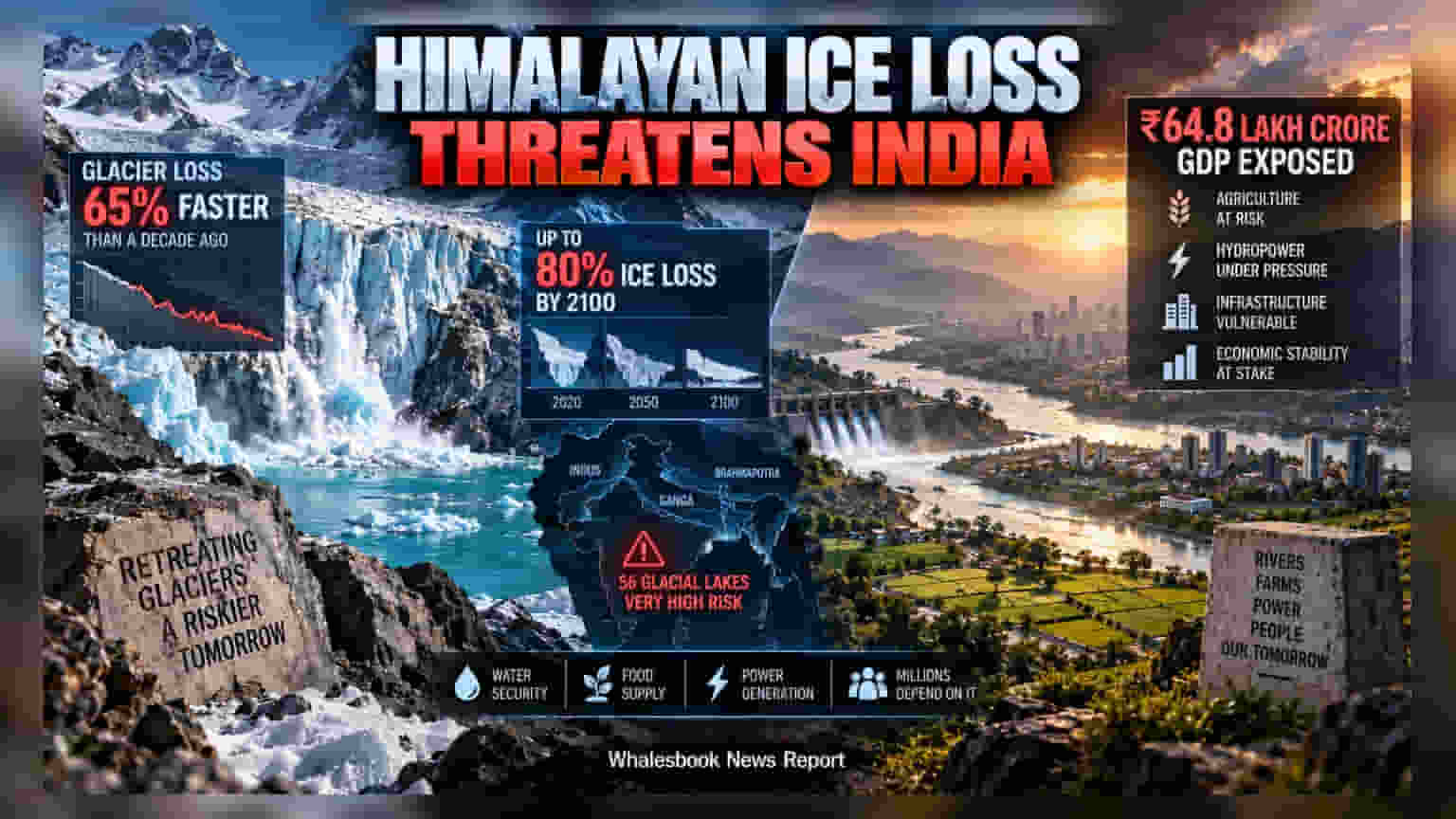
Himalayan glaciers are melting 65% faster, impacting activities worth ₹64.8 lakh crore—about 21.5% of India's GDP. This shift presents long-term operational risks for sectors reliant on consistent water flows, including hydropower and agriculture, while increasing costs for infrastructure development in mountain regions.
A recent assessment of the Himalayan region has highlighted a shift in climate patterns that carries significant economic implications. Glaciers in this region are now losing mass 65% faster than they were a decade ago, with projections suggesting a potential 80% loss in volume by 2100. For the Indian economy, this is not merely an environmental concern but a long-term risk factor for industries that depend on stable river systems, such as agriculture, hydropower, and large-scale infrastructure.
The economic exposure involved is substantial. Activities worth ₹64.8 lakh crore, or roughly 21.5% of India's GDP, are linked to the Himalayan region. While this does not mean this entire output is at immediate risk, it underscores how deeply the national economy relies on the water security provided by the Indus, Ganga, and Brahmaputra river systems. Disruptions to these river flows could have cascading effects on the productivity of sectors that rely on them for irrigation, power generation, and industrial operations.
Challenges for the Hydropower Sector
Hydropower companies, including major players like NHPC and SJVN, operate large-scale projects in the Himalayan belt. Their business models depend on the predictable flow of water to maintain consistent power generation. The dual threat of 'peak water'—where river flows start to decline after a maximum peak—and the increased risk of glacial lake outburst floods, creates operational uncertainty. Power producers may face higher costs related to disaster management, infrastructure reinforcement, and, in some cases, lower generation capacity during drier periods. Investors should watch how these companies incorporate climate resilience into their capital spending plans and long-term asset management.
Impact on Agriculture and Inflation
Agriculture remains a critical part of the northern Indian economy, heavily reliant on the predictable meltwater from these river systems for irrigation. Any disruption in river volume or timing can lead to supply chain volatility for key crops like wheat, rice, and sugarcane. Increased volatility in agricultural output often translates into food inflation, which is a major monitorable for the Reserve Bank of India and impacts the broader market sentiment. Investors tracking consumer goods and agricultural commodity sectors should be aware of these climate-linked supply risks.
Infrastructure and Regulatory Compliance
Construction activities in the mountain regions are coming under stricter scrutiny. Following the identification of 56 glacial lakes as 'very high risk' areas, regulatory bodies are likely to increase oversight, which may lead to slower project execution, higher compliance costs, or the need for more expensive, disaster-resistant designs. Projects that are already in the pipeline or planned for these zones may face delays or require higher financial allocations to mitigate environmental risks.
Moving forward, the primary monitorable for investors is how companies and the government adapt to these changes. Increased investments in early-warning systems, more robust disaster-proofing of assets, and diversified energy strategies will likely become standard requirements for sustainable operations in the region.