

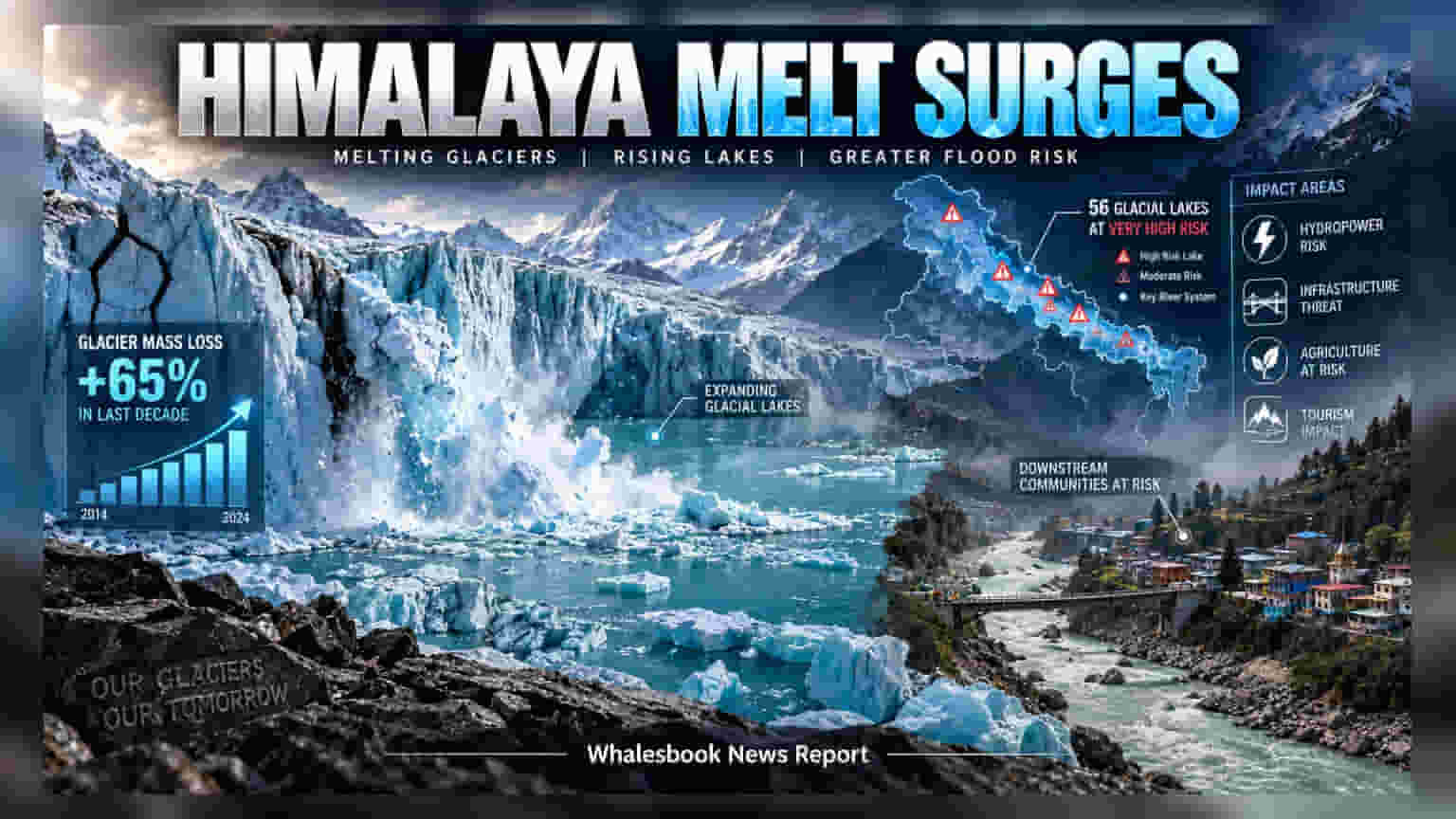
A report indicates that Himalayan glaciers are melting 65% faster, threatening water security and regional infrastructure. Investors should note potential long-term impacts on sectors like hydropower, agriculture, and construction in hilly regions, where disaster risks and operational costs may rise.
A new environmental report has highlighted that Himalayan glaciers are melting at an accelerated pace, with mass loss increasing by 65% over the past decade. The study warns that this trend brings the region closer to a critical threshold, potentially affecting the environmental and economic stability of South Asia. For investors, this development is significant because the Himalayan ecosystem supports a vast portion of India’s economic activities, including agriculture, hydropower, and tourism, which contribute to an estimated 20% of the country's GDP.
Hydropower Operational Risks
The power sector, particularly hydropower, is closely linked to glacial-fed river systems. Many hydropower projects in Northern India rely on consistent water flow from these glaciers to generate electricity. As glacier retreat accelerates, long-term river flows could become more unpredictable, potentially impacting the capacity utilization of these plants. Investors in companies operating large-scale hydro projects may track management commentary regarding climate risk assessments, water flow reliability, and long-term project viability in high-altitude zones. Increased sediment levels and unpredictable water discharge can also lead to operational challenges and higher maintenance costs for power utilities.
Infrastructure and Construction Exposure
The report identifies 56 glacial lakes in India as posing a very high disaster risk, with failures potentially triggering sudden floods that could damage roads, bridges, and power infrastructure. Construction and infrastructure companies involved in projects across hilly states like Himachal Pradesh and Uttarakhand face heightened risks of execution delays due to landslides and flash floods. While this may lead to increased government spending on disaster-resilient infrastructure, such as stronger retaining walls and early-warning systems, it also increases the financial and execution burden on engineering and construction firms. Investors may monitor how companies factor these geological risks into their project planning and whether insurance costs for such assets might rise.
Long-Term Economic and Policy Implications
Beyond power and infrastructure, the long-term impact on agriculture—the backbone of India’s economy—is a factor to watch. Large parts of Northern India rely on glacier-fed rivers for irrigation. Significant shifts in water availability could influence crop yields and commodity prices, creating indirect pressure on food inflation and rural demand.
From a policy perspective, the government is likely to prioritize investments in climate adaptation, forest management, and water conservation. While this could create opportunities for engineering firms specialized in disaster mitigation, it may also lead to more stringent environmental regulations for businesses operating in fragile eco-zones. The ultimate investor monitorables include future government budget allocations for disaster management, regulatory changes in sensitive regions, and corporate disclosures regarding climate-related risks for operations in the Himalayan belt.