

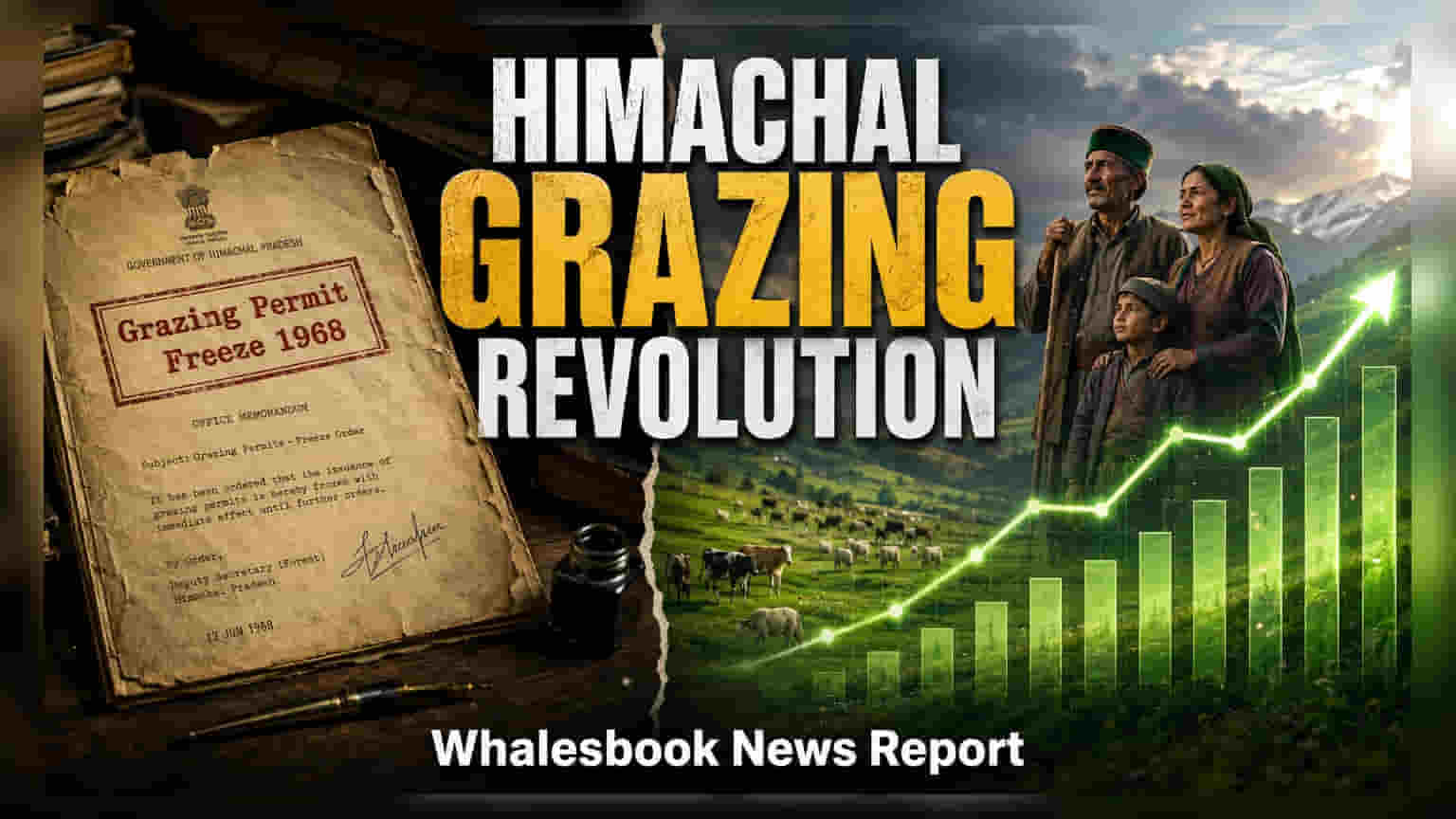
Himachal Pradesh has introduced the Grazing Policy, 2026, replacing a rigid 1968 permit system with adaptive management based on pasture capacity. This reform shifts away from fixed animal limits, potentially impacting thousands of pastoralist families and regional ecological monitoring.
The Himachal Pradesh government has officially ended a 56-year-old freeze on livestock grazing permits by introducing the Grazing Policy, 2026. This regulatory shift replaces a restrictive system that had remained largely unchanged since 1968, when the state initially capped grazing numbers to protect infrastructure such as the Bhakra reservoir from soil erosion. Over the past five decades, the population of sheep and goats in the region has grown significantly, while the number of officially recognized grazing permits remained stagnant, pushing a vast majority of pastoralists into an informal and unrecorded system.
Moving to Scientific Resource Management
Under the new framework, the government is moving away from static permit caps that were last set based on 1966-67 livestock data. Instead, the state will now grant permits based on scientific assessments of land capability. The criteria for these permits include an evaluation of available pasture acreage, the forest’s ability to sustain livestock, and the total number of animals—including buffalo, mule, sheep, and goats—currently dependent on these lands. By accounting for wildlife needs and local grazing rights, the policy aims to balance the economic requirements of the nearly 26,000 pastoralist families in the state with the ecological necessity of forest regeneration.
Adaptive Management and Five-Year Reviews
A central feature of this policy is the shift toward adaptive management. Rather than maintaining permanent, fixed limits, the state will implement a five-year review cycle for permit numbers. This adjustment process will rely on modern technology, including remote sensing, soil carbon data, and the tracking of herd movements through geotagging. This approach is designed to allow the government to adjust grazing access dynamically as environmental conditions change, rather than adhering to outdated, rigid regulations.
Monitoring Ecological and Economic Impacts
For investors and observers tracking the region, the primary monitorable will be how the state manages the transition from informal to formal grazing status. While the policy aims to sustain grassland productivity and biodiversity, the implementation process will require significant coordination to manage herd movements effectively. The transition will be monitored through the state's forest and agriculture departments, as these departments oversee the land-use assessments that will now dictate permit renewals every five years. The effectiveness of this policy will depend on the state’s ability to balance the livelihoods of the migratory pastoralist community with the long-term goal of maintaining soil carbon stocks and overall pasture health.