 Whalesbook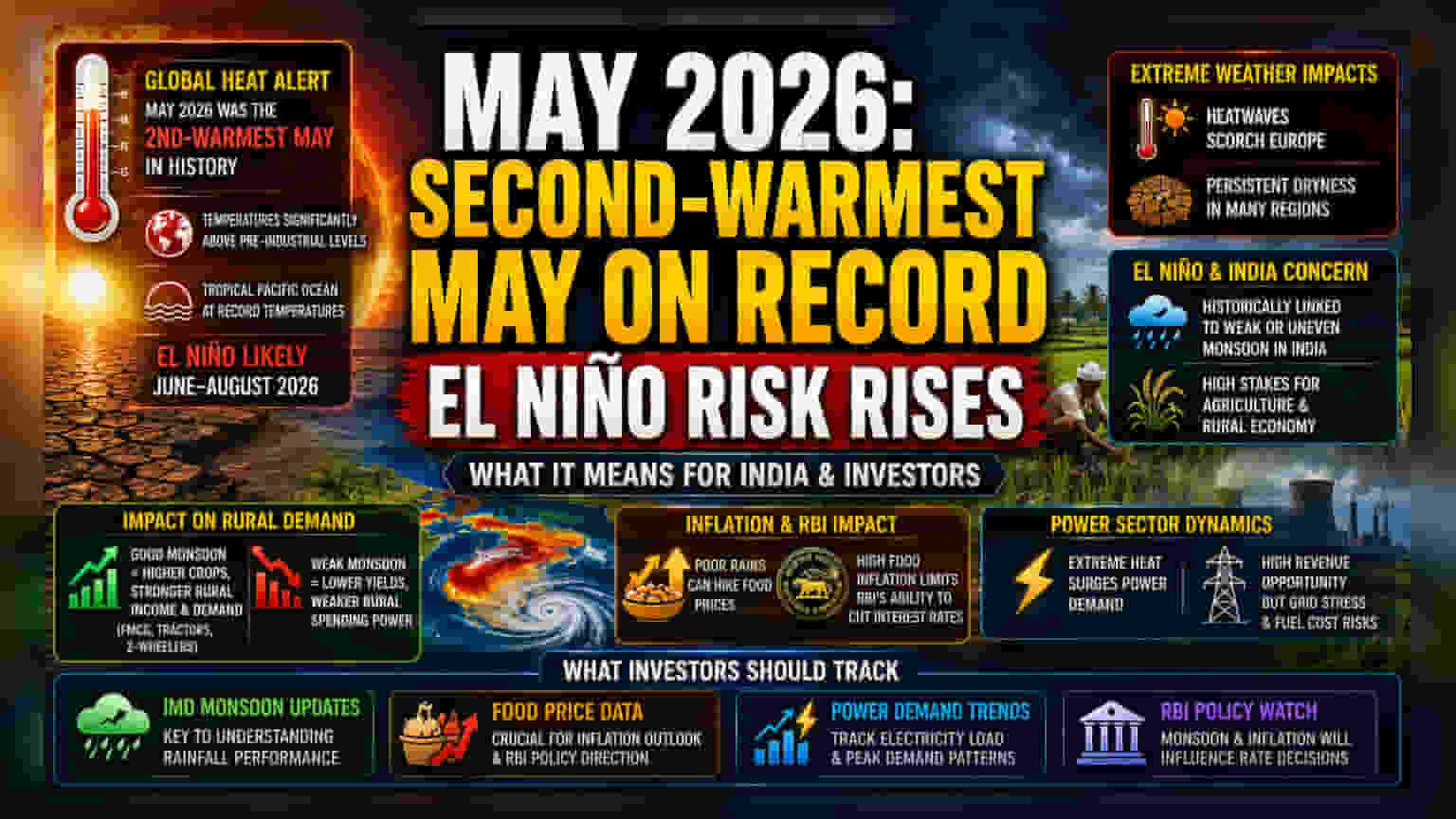


May 2026 ranked as the second-warmest May globally, with rising signs of an El Niño weather pattern. For Indian investors, this highlights potential challenges for the monsoon, which remains a critical driver for rural consumption, food inflation, and power demand.
What Happened
May 2026 has been recorded as the second-warmest May in history, according to the Copernicus Climate Change Service. Global temperatures were significantly above pre-industrial levels, driven by shifting climate patterns. Of particular interest to global weather analysts is the tropical Pacific Ocean, where record temperatures suggest a high probability of an El Niño event forming between June and August 2026. This data comes alongside reports of heatwaves in Europe and persistent dryness in several regions globally.
The El Niño Link and India
For the Indian economy, weather patterns are not just environmental issues; they are economic variables. A potential El Niño event is closely monitored by market analysts because it historically aligns with the risk of a weak or uneven monsoon season in India. Since the monsoon is the primary source of irrigation and water for a massive portion of the Indian agricultural sector, any deviation in rainfall can directly influence crop output and rural income levels.
Impact on Rural Demand and Inflation
Investors often track monsoon progress because it serves as a leading indicator for rural consumption. A strong monsoon typically supports higher crop yields, which boosts rural income and drives demand for fast-moving consumer goods (FMCG), tractors, and two-wheelers. Conversely, if weather patterns lead to poor rainfall, rural spending power may tighten. Furthermore, agriculture output is a major factor in food inflation. Rising food prices often influence the Reserve Bank of India’s (RBI) monetary policy decisions. If the monsoon is weak and leads to supply shortages, food inflation can rise, limiting the central bank’s ability to lower interest rates.
Power Sector Dynamics
Extreme heat and changing climate patterns also have a direct impact on the power sector. High temperatures, such as those seen globally in May, typically lead to a sharp increase in electricity demand for cooling. In India, heatwaves often push power consumption to record highs, placing strain on the grid and requiring efficient load management. While this can lead to high revenue for power generators and distributors due to increased volume, it also presents a risk if the supply cannot keep pace with the surge in demand, or if fuel costs for power generation remain high.
What Investors Should Track
Investors looking at the broader economic impact of these climate trends should monitor a few key updates in the coming months. First, the India Meteorological Department (IMD) reports on monsoon progress are essential to understand whether the season is performing according to expectations. Second, food price data will be a crucial monitorable for understanding inflationary pressure and its potential influence on future RBI policy meetings. Finally, electricity load data and power demand trends are important indicators of how the sector is managing peak demand periods during high-temperature events.