 Whalesbook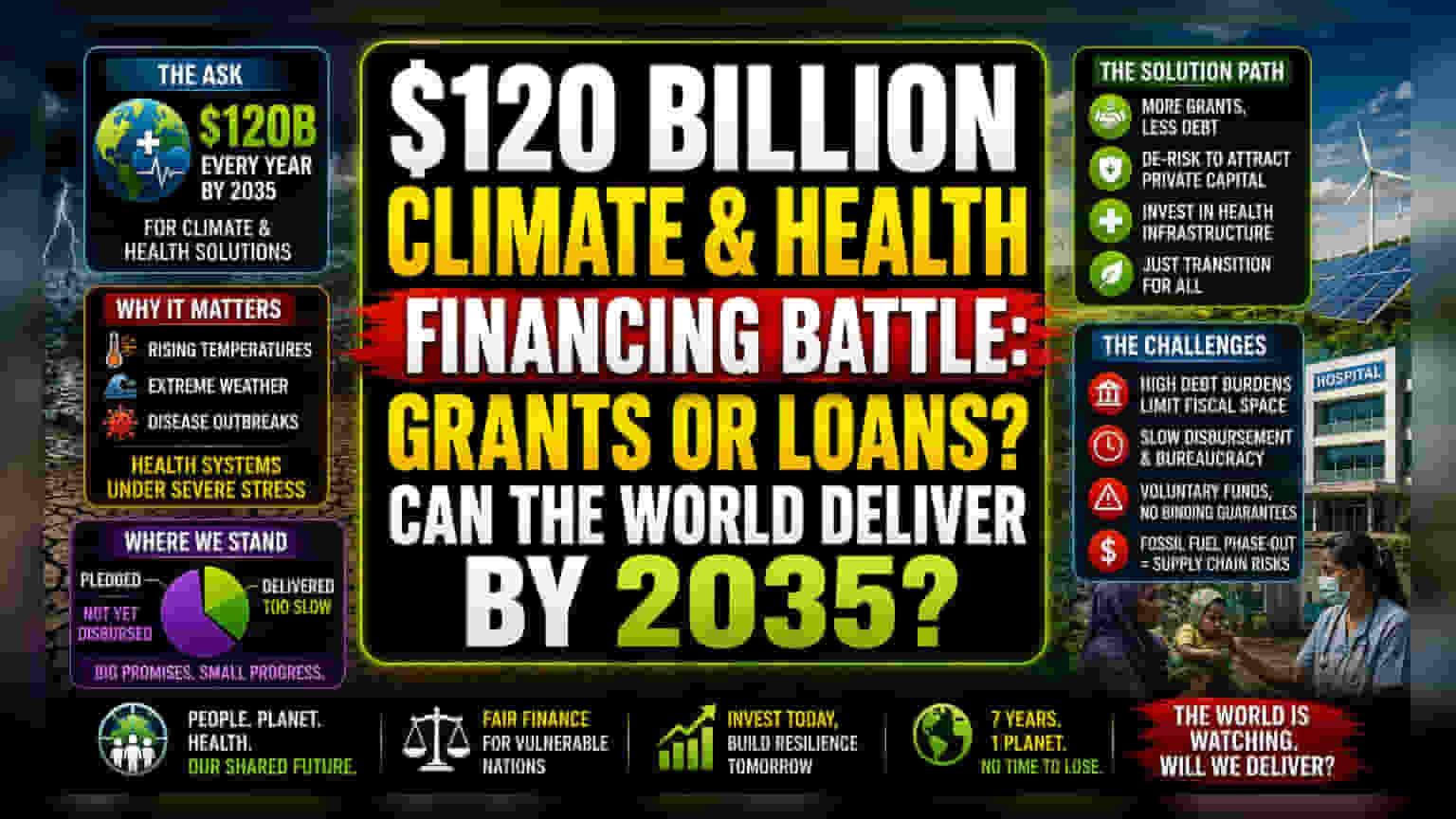


The Capital Allocation Gap
The demand for a $120 billion annual commitment by 2035 arrives at a moment where international climate finance mechanisms are facing intense scrutiny regarding their efficacy. While the Global Climate and Health Alliance (GCHA) seeks to categorize these expenditures as essential health infrastructure, the structural reality remains that public grant-based funding is being outpaced by the escalating costs of climate-induced medical emergencies. Negotiators at the Subsidiary Bodies 64th sessions are tasked with reconciling these ambitious requests against a backdrop of constrained fiscal headroom in many developed economies, where debt-to-GDP ratios have reached levels that limit aggressive new spending commitments.
Sovereign Debt and Liquidity Constraints
A critical, often overlooked element of the current climate finance debate is the interplay between high-interest debt burdens in developing nations and their ability to finance local adaptation measures. When a significant portion of a nation's tax revenue is diverted to debt servicing, the capacity to fund sanitation, water security, and rural health clinics vanishes, regardless of international grant availability. This creates a feedback loop where extreme weather events further destabilize credit ratings, forcing these nations into more expensive borrowing cycles. The current friction in Bonn reflects a broader dispute over whether the financial solution lies in direct, non-repayable grants or in the creation of de-risking vehicles designed to attract private capital into public-sector climate projects.
The Forensic Bear Case: Structural Implementation Risks
The optimistic projections regarding a $120 billion infusion face significant institutional headwinds. Historically, the gap between pledged climate funds and actual disbursement has been substantial, with many agreements trapped in bureaucratic latency. Investors should note that the transition away from fossil fuels, while theoretically supported by the International Energy Agency, involves a massive reallocation of capital that may induce short-term supply chain volatility. Furthermore, the reliance on the Loss and Damage Fund remains problematic, as current capital commitments are largely voluntary and have yet to demonstrate a scalable impact on global risk mitigation. Without a binding legal framework to ensure liquidity, these targets remain aspirational, potentially leading to market disappointment if promised capital fails to materialize during the next decade of fiscal tightening.
Path Forward for Climate Capital
Policy discussions in Bonn are shifting toward integrating health outcomes into the UNFCCC’s Just Transition Work Programme. This signals a future where infrastructure investment may be increasingly tied to social metrics. Moving forward, the effectiveness of these initiatives will be measured not by the volume of announcements, but by the speed at which funds move from pledge agreements into functional, climate-resilient energy and medical projects.