

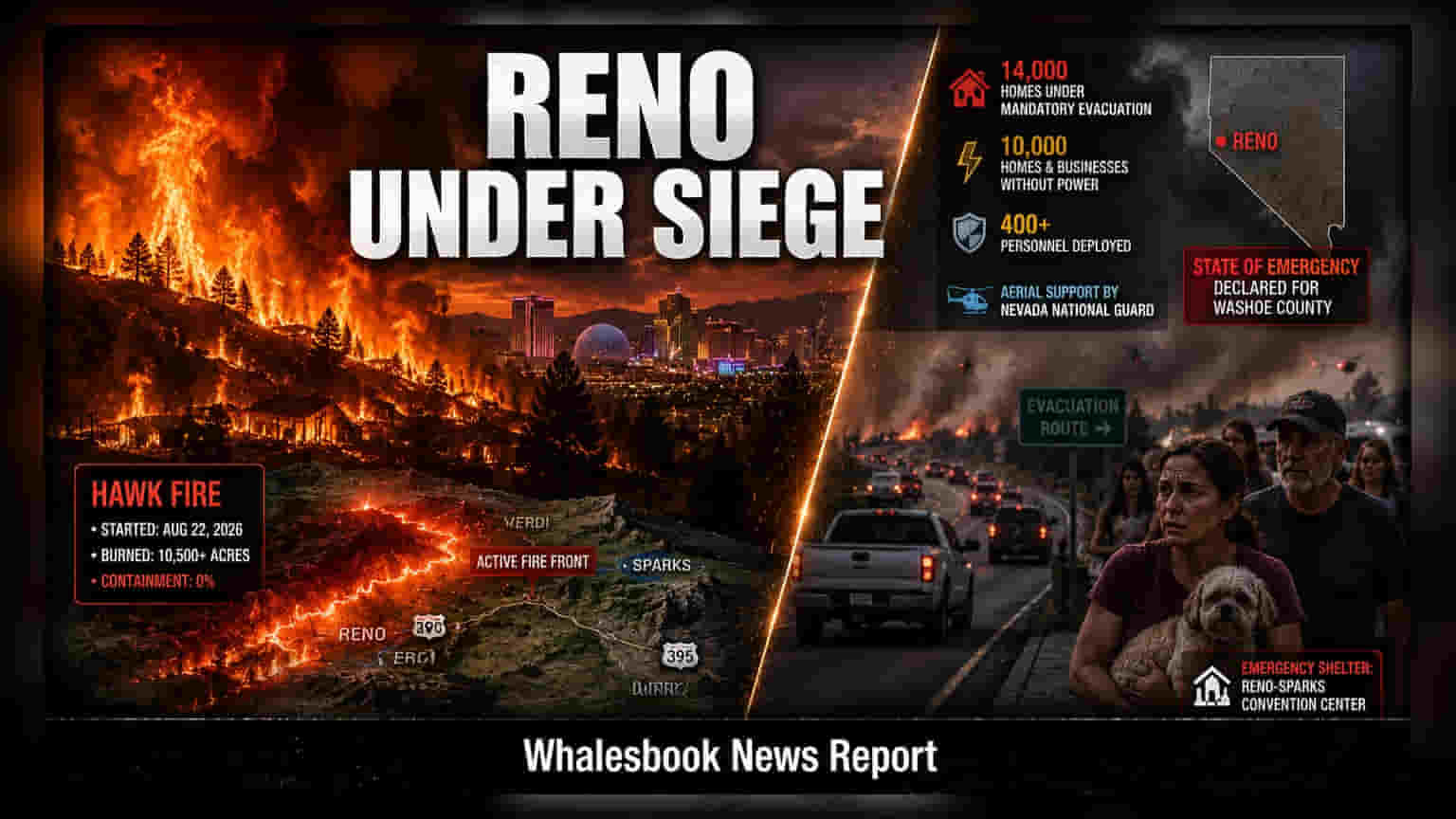
A fast-moving wildfire, known as the Hawk Fire, has burned over 10,500 acres near Reno, Nevada, triggering mandatory evacuations for 14,000 homes. The blaze has disrupted power grids and major highway routes, leading the state to declare an emergency. Infrastructure and logistics providers in the region are managing the impact as emergency teams work to contain the fire.
The Hawk Fire, currently burning near Reno, Nevada, has rapidly escalated in size, scorching over 10,500 acres since it began on August 22. As of August 23, 2026, the fire remains uncontained, leading authorities to issue mandatory evacuation orders for approximately 14,000 homes. The situation has prompted Governor Joe Lombardo to declare a state of emergency for Washoe County, allowing for the mobilization of the Nevada National Guard to assist with aerial operations and security.
From an economic and infrastructure perspective, the event has created immediate challenges for the Reno region. The closure of major transportation routes, including sections of US Route 395, is affecting local logistics and supply chain movement. Additionally, power outages impacting approximately 10,000 homes and businesses highlight the vulnerability of utility infrastructure to extreme environmental conditions. When wildfires threaten populated areas, the immediate financial impact often involves increased operational costs for utility providers, potential insurance claims from property damage, and the temporary loss of local commercial activity.
Approximately 400 personnel from various state and federal agencies are currently involved in containment efforts. The combination of dry vegetation, low humidity, and strong winds—factors that have historically contributed to high-intensity wildfire seasons in the Western United States—continues to hinder progress. Emergency shelters, including the Reno-Sparks Convention Center, have been established to support displaced residents.
For those tracking the broader economic impact, the primary monitorables remain the duration of the infrastructure shutdown and the extent of property damage. The speed of containment will determine how quickly transport routes and power services can be restored to normal capacity. Beyond the immediate emergency response, stakeholders typically track these events to assess insurance liabilities and the resilience of local utility grids against future environmental risks.