

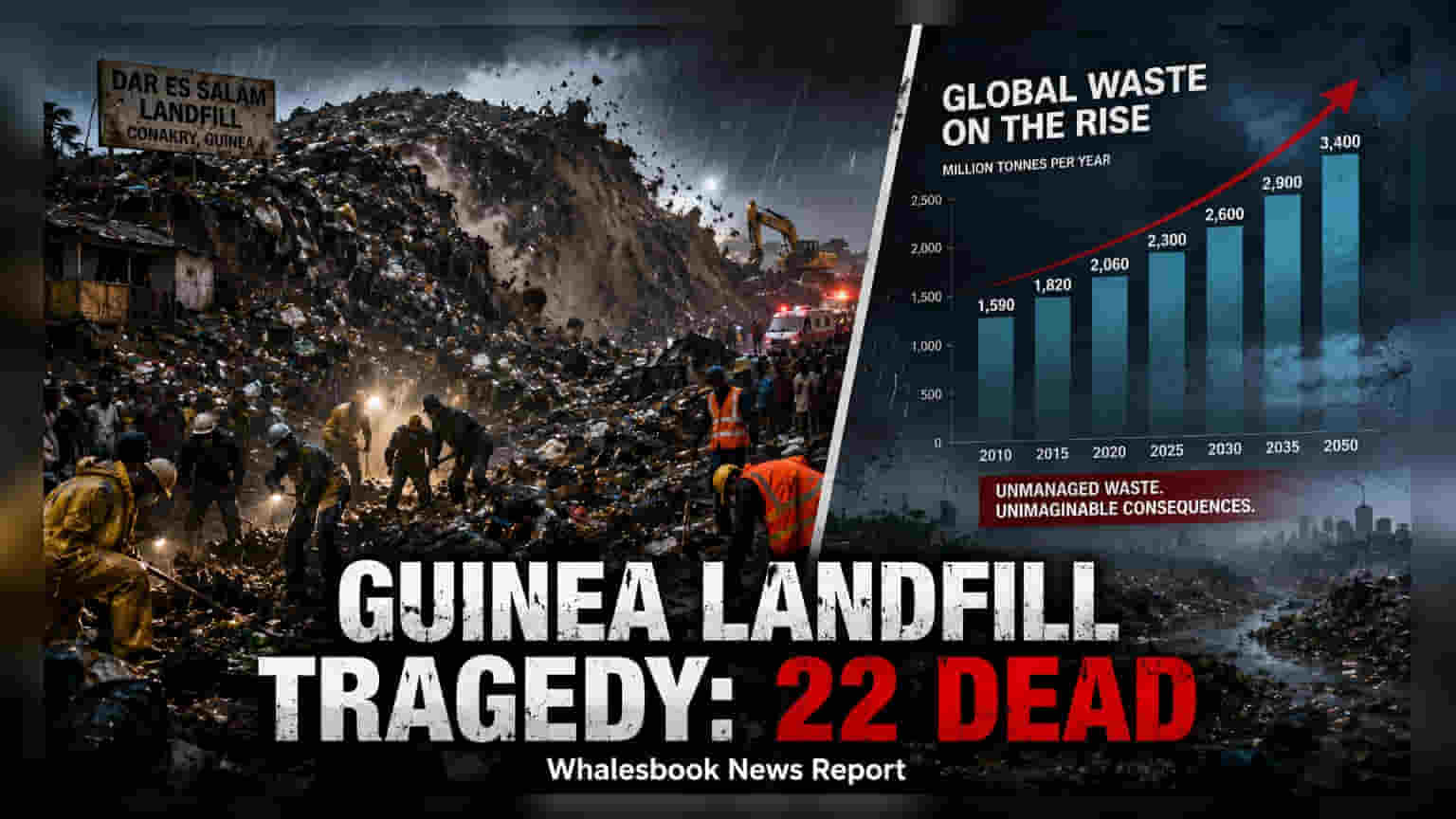
A massive garbage heap collapsed at the Dar Es Salam landfill in Conakry, Guinea, on Sunday, killing at least 22 people after heavy rains. The facility was scheduled for closure, highlighting severe urban planning and public safety risks in the region.
A tragic landslide at the Dar Es Salam landfill in Conakry, the capital of Guinea, resulted in at least 22 fatalities on Sunday, August 23, 2026. The incident occurred in the early hours of the morning, around 3:00 a.m., after torrential overnight rainfall saturated the massive mound of refuse. The unstable waste shifted, collapsing onto adjacent informal settlements and burying homes under tons of debris.
This disaster happened on the very day the landfill was designated for closure. Authorities had previously issued eviction notices to residents living in the surrounding area due to the site's environmental and safety hazards. While many families had complied and relocated, others remained in the vicinity when the collapse occurred, leading to this loss of life.
From a broader perspective, this event underscores critical challenges regarding urban development and infrastructure in emerging economies. For observers of global municipal management, the incident highlights the urgent need for robust urban planning and waste management systems. Failures in maintaining safe public spaces near hazardous sites often lead to significant social and human costs. The event acts as a stark reminder of the risks associated with rapid, unplanned urban growth, where informal settlements often expand into dangerous areas without adequate regulatory oversight.
The Dar Es Salam landfill has been a long-standing point of concern for public health and environmental safety. This is not an isolated incident; the site previously experienced a similar fatal collapse in 2017, and other landslides have been reported in the broader region. These recurring failures emphasize the importance of consistent long-term investment in municipal infrastructure and disaster prevention protocols.
Emergency response teams have been deployed to the site to conduct search and rescue operations, with officials cautioning that the death toll is provisional and may rise. The government of Guinea has committed to ensuring the relocation of all remaining families from the hazardous area to safer housing locations. The immediate focus remains on locating survivors, while long-term success will depend on the effectiveness of the city’s plans to clear the site and manage future urban growth safely.