 Whalesbook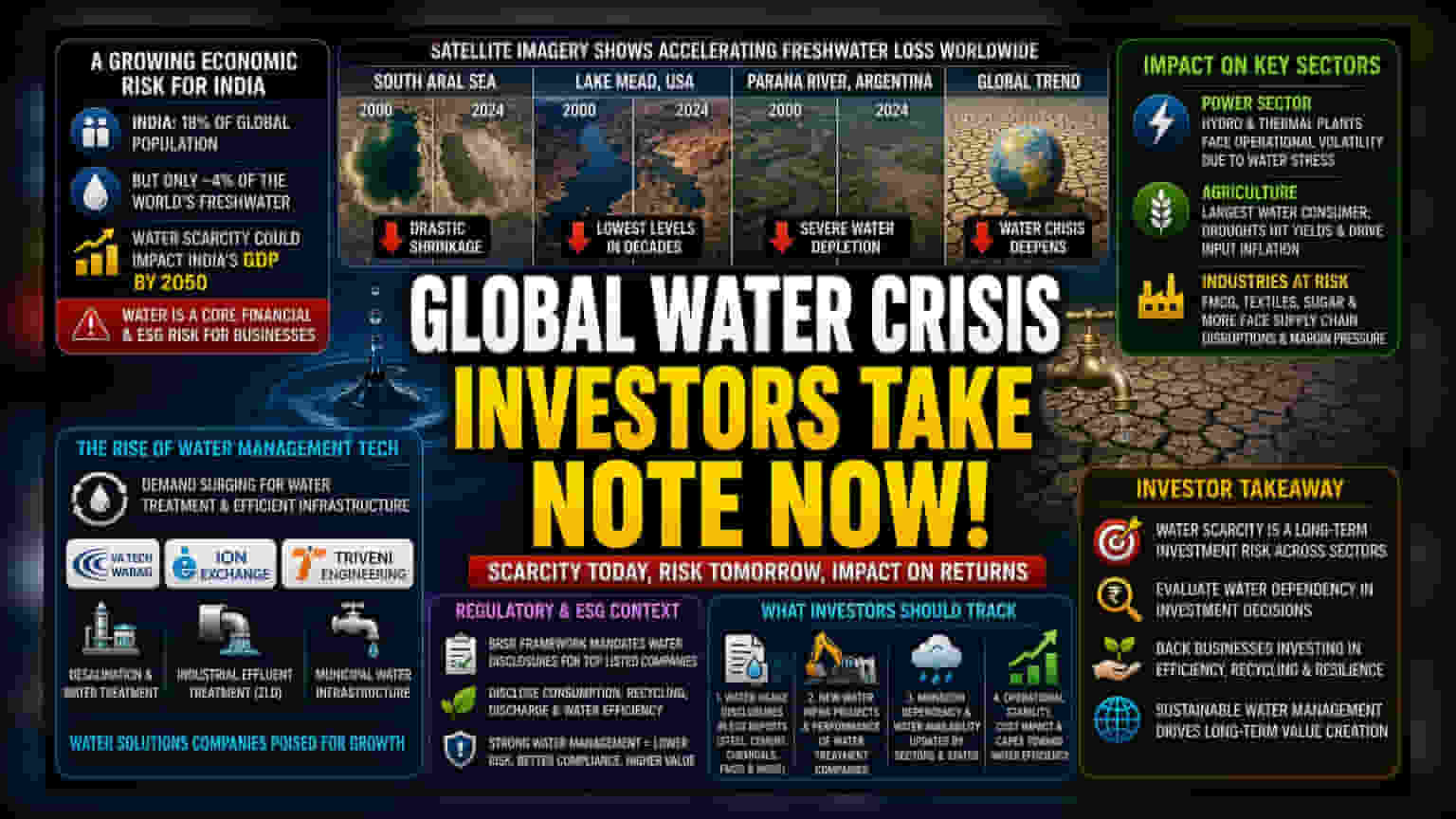


New satellite data shows rapid global freshwater loss, sparking concerns for water-intensive industries. For Indian investors, this creates significant implications for sectors like power, agriculture, and manufacturing, while highlighting growth potential in water management technologies.
What Happened
Recent satellite imagery has provided a stark visual record of accelerating freshwater loss globally, with lakes, rivers, and reservoirs shrinking across several continents. The data highlights severe water depletion in regions ranging from the South Aral Sea to Lake Mead in the United States and the Parana River in Argentina. This phenomenon, often linked to prolonged droughts, rising temperatures, and unsustainable land and water management practices, signals a deepening global resource challenge that goes beyond environmental conservation and enters the realm of economic stability.
Why This Matters For Indian Investors
For Indian markets, water is a critical economic asset. India supports nearly 18% of the global population with only about 4% of the world’s freshwater resources. As water scarcity intensifies, it presents a tangible financial risk. The World Bank has noted that water scarcity could have a material impact on India’s GDP by 2050, affecting both agricultural productivity and industrial output. Investors should view water not just as an environmental issue, but as a core component of operational risk and ESG (Environmental, Social, and Governance) compliance for many listed companies.
Impact on Key Sectors
The power sector is perhaps the most sensitive to water availability. Indian hydropower, which relies on consistent water flow, often faces volatility due to erratic monsoons and low reservoir levels. Similarly, thermal power plants, which provide the bulk of India’s electricity, are highly water-intensive for cooling purposes. Research indicates that a significant percentage of India’s thermal power capacity is located in high water-stress regions, which can lead to operational shutdowns and increased costs during drought periods.
Agriculture remains the largest consumer of water in the country. For investors, this means that companies in the FMCG, textiles, and sugar industries—which rely heavily on agricultural raw materials—face long-term supply chain risks. Any disruption in agricultural output due to water shortages can drive input inflation and impact the margins of these businesses.
The Rise of Water Management Tech
As water scarcity becomes a structural challenge, the demand for water treatment, recycling, and efficient infrastructure is increasing. Companies focusing on water and wastewater management solutions, such as Va Tech Wabag, Ion Exchange, and Triveni Engineering, are operating in a sector that is seeing increased focus. These firms often provide essential services like desalination, industrial effluent treatment (helping companies achieve Zero Liquid Discharge), and municipal water supply infrastructure. As industries face stricter regulations regarding water usage and discharge, the importance of these technology providers is expected to grow.
Regulatory and ESG Context
Indian corporations are under increasing pressure to disclose their water management practices. The Business Responsibility and Sustainability Reporting (BRSR) framework now mandates that top listed companies disclose metrics related to water consumption, recycling, and discharge. Investors should monitor these disclosures carefully. Companies that proactively reduce their water dependency or invest in water-efficient technologies are better positioned to mitigate operational risks and comply with tightening environmental regulations.
What Investors Should Track Next
Investors should closely monitor several factors in the coming quarters. First, watch for water usage disclosures in the annual ESG reports of water-intensive companies, such as steel, cement, and chemical manufacturers. Second, monitor the commissioning of new water infrastructure projects and the performance of companies in the water treatment sector. Finally, keep an eye on sector-specific commentary regarding monsoon dependency and water availability, as these factors directly influence the operational stability of power and agricultural businesses.