 Whalesbook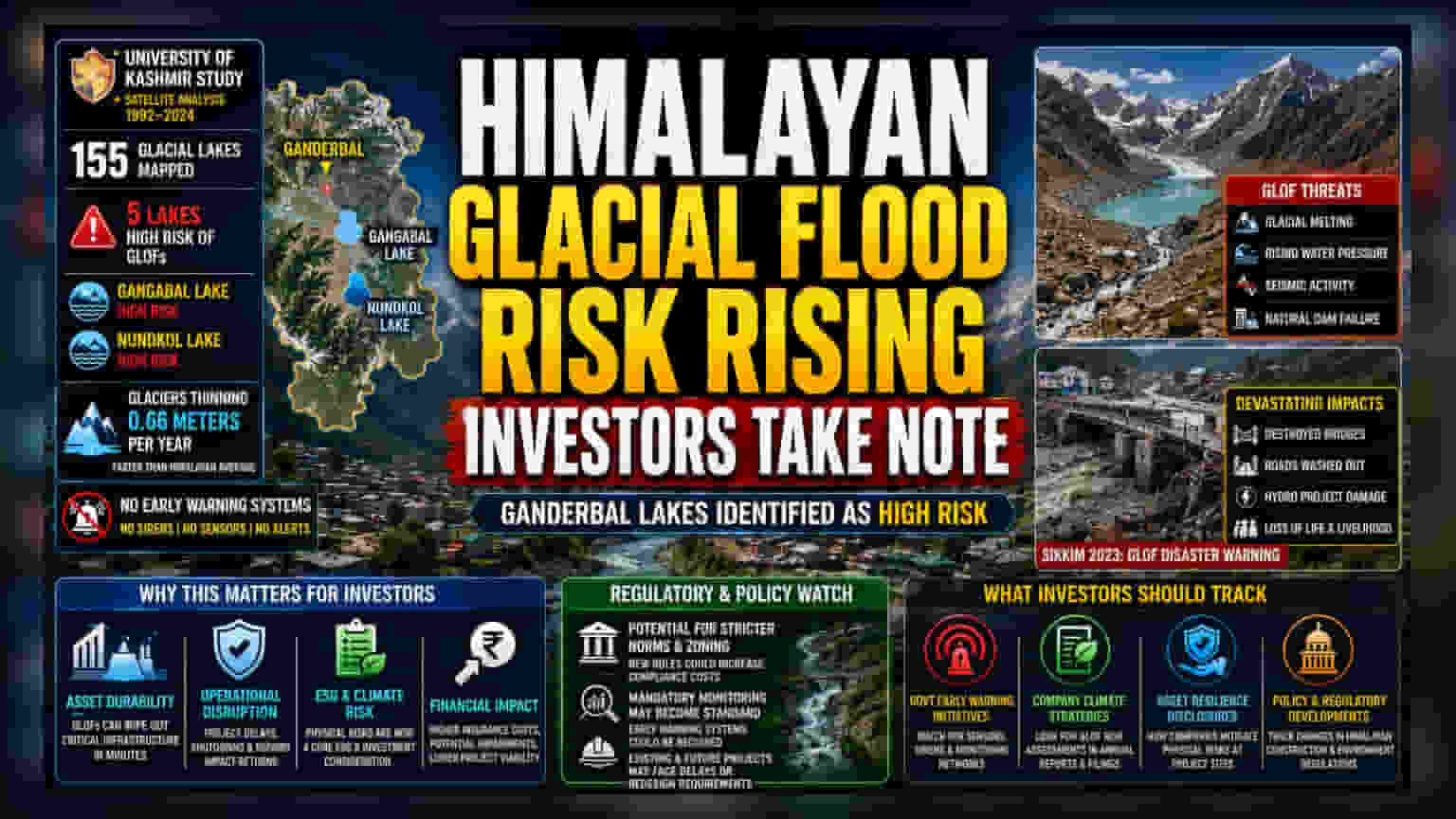


New research highlights significant flood risks from glacial lakes in Kashmir, impacting local infrastructure and potential hydropower assets. Investors should monitor how environmental risks like Glacial Lake Outburst Floods (GLOFs) are managed, as they can lead to asset damage, insurance cost hikes, and regulatory scrutiny for Himalayan projects.
What Happened
A recent study by the University of Kashmir has identified critical flood risks in the Ganderbal district of central Kashmir, specifically involving two glacial lakes: Gangabal and Nundkol. The research, which analyzed satellite data from 1992 to 2024, maps 155 glacial lakes in the region and flags five as having a high risk of Glacial Lake Outburst Floods (GLOFs). These floods occur when the natural dams holding back meltwater fail, often due to glacial melting, seismic activity, or rising water pressure. The study notes that glaciers in this area are thinning at a rate of 0.66 meters per year, which is faster than the wider Himalayan average. Currently, there are no official early warning systems, sirens, or sensors installed at these sites to alert downstream communities or infrastructure managers.
Why Infrastructure Investors Should Watch
For investors, particularly those with exposure to the infrastructure and power sectors in the Himalayan region, this news highlights a growing physical risk. The primary concern is asset durability. A GLOF event is sudden and highly destructive, capable of wiping out bridges, roads, and power infrastructure in its path. The report cites the 2023 event in Sikkim, which resulted in the destruction of hydropower projects and significant loss of life, as a stark example of how environmental hazards can cause immediate and severe financial and operational losses for companies operating in these zones.
The ESG and Operational Risk Perspective
Investors are increasingly evaluating companies based on Environmental, Social, and Governance (ESG) criteria. Physical climate risks—such as the potential for GLOFs—are now becoming a core part of risk assessment. Operators of hydropower plants and other heavy infrastructure in these sensitive regions face potential challenges regarding long-term asset viability. If environmental risks like these are not adequately factored into project design or insurance coverage, companies may face unexpected maintenance costs, impairments to their assets, or higher insurance premiums. Furthermore, the lack of official early warning systems suggests that operational continuity remains vulnerable, which can affect long-term project planning.
Regulatory and Policy Implications
As scientific studies bring these risks to light, the regulatory landscape regarding construction in the Himalayas may shift. Governments often respond to such findings by implementing stricter building norms, mandating environmental monitoring, or limiting development in flood-prone corridors. While no new regulations have been announced following this specific study, investors should be aware that projects currently in the pipeline might face delays or increased compliance costs if authorities decide to prioritize safety and environmental mitigation. A change in local policy could force developers to redesign or retrofit existing assets to include their own disaster mitigation systems.
What Investors Should Track
Investors looking at Himalayan infrastructure should monitor several key developments. First, look for any government initiatives to implement early warning systems in high-risk zones, as this would be a positive step for infrastructure safety. Second, observe how companies with assets in these districts communicate their climate resilience strategies in annual reports and investor presentations. Understanding whether a company has conducted specific GLOF impact studies for their project sites is crucial. Finally, pay attention to sector-wide policy changes regarding construction in high-altitude zones, as these will likely set the benchmark for operational compliance and future project costs.