

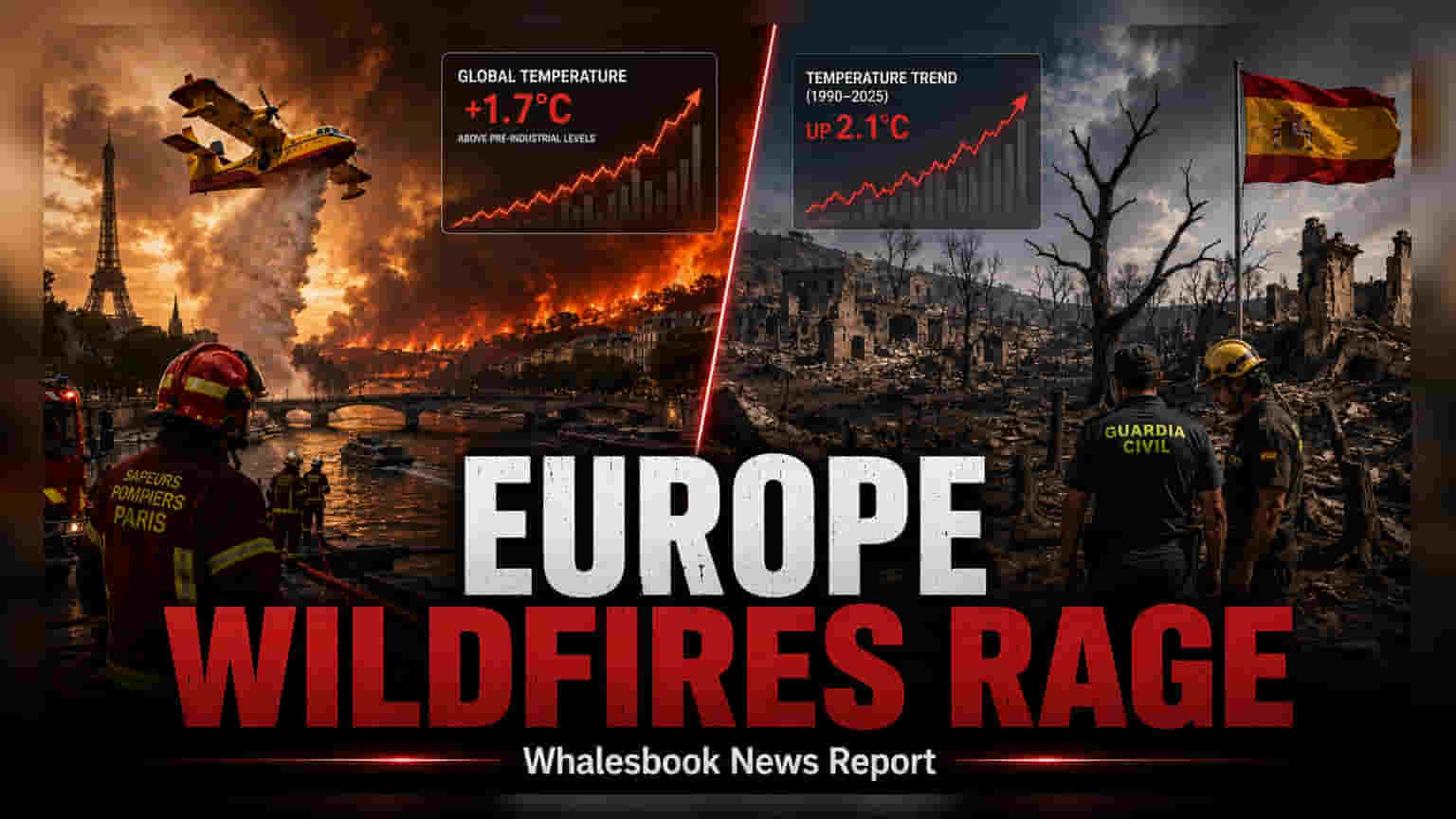
Extreme heatwaves have triggered severe wildfires across France and Spain, leading to mass evacuations near Paris and multiple fatalities in southern Spain. The fires have scorched thousands of hectares, highlighting the growing environmental and infrastructure risks posed by rising temperatures in the region.
Extreme weather conditions have triggered a series of devastating wildfires across France and Spain as both nations grapple with persistent heatwaves. In France, authorities deployed aerial firefighting teams to the Fontainebleau forest, located south of Paris, to contain two massive blazes. These fires have consumed approximately 2,000 hectares of land, resulting in the emergency evacuation of nearly 1,000 residents. The deployment of water-dropping aircraft to siphon from the Seine River marks a significant operational shift for firefighting efforts in the Paris region, underscoring the severity of the threat to the densely populated area.
French law enforcement officials have confirmed the arrest of two individuals linked to the Fontainebleau fires, alongside two additional arrests related to separate blazes in other parts of the country. While the national heatwave, which is the third to strike France this year, is expected to moderate by mid-week, authorities maintain that the risk remains high due to unstable weather patterns and lingering dry conditions.
In southern Spain, the situation has turned tragic with judicial authorities confirming that 13 people have died in the Los Gallardos fire. Officials have identified 10 of the victims, who include nationals from Britain, Belgium, France, and Spain. The fire has destroyed approximately 70 square kilometers of forest and farmland, fueled by strong winds and a lack of recent rainfall. The incident highlights the vulnerability of remote communities, with several individuals still reported as missing in the aftermath of the blaze.
Environmental data indicates that Europe is currently the fastest-warming continent globally, with temperatures rising at double the world average. These events demonstrate the increasing physical risks climate change poses to infrastructure, property, and public safety in Western Europe. As regional authorities work to secure affected areas and assess the damage, the focus remains on long-term management of fire-prone landscapes and the strengthening of emergency response capabilities to mitigate the impact of future extreme heat events.