 Whalesbook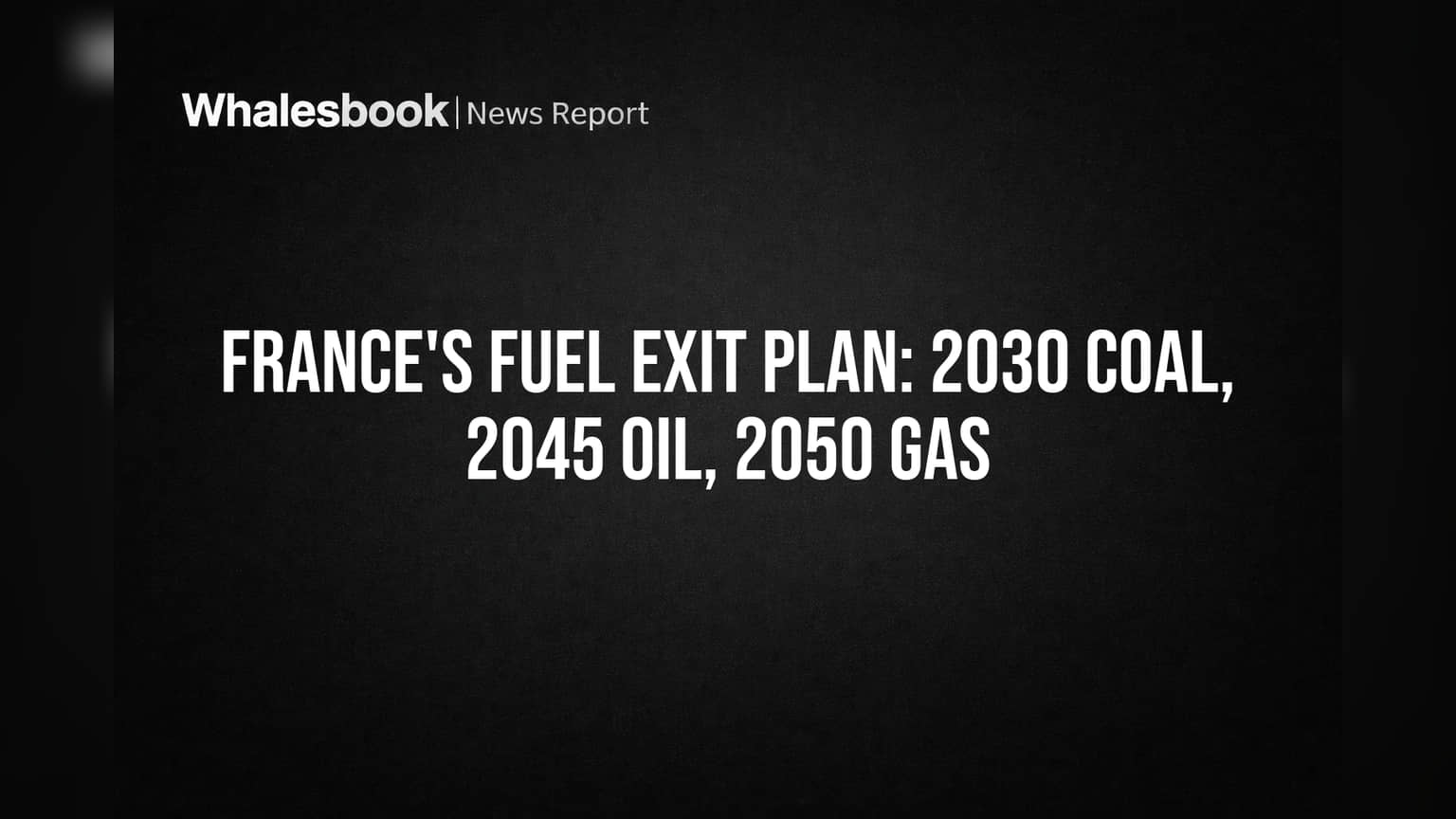


France has consolidated its climate policies into a single, actionable roadmap. Unveiled on April 28, 2026, at the Santa Marta conference on fossil fuel transition, the roadmap aims to give markets, industry, and investors a clearer planning horizon. This comes after COP30 did not reach an agreement on a global phase-out plan. Analysts note this clarity enables better tracking of real-world progress, unlike broad Net Zero pledges that often rely on offsets.
Sectoral Timelines
The roadmap translates broad Net Zero goals into specific timelines for different sectors. It aligns with existing targets to cut greenhouse gas emissions by 5% each year and achieve carbon neutrality by 2050. Unlike vague long-term goals, clear deadlines for each major fossil fuel allow progress to be assessed in real-time. Benoit Faraco, France's envoy, noted the originality of setting clear deadlines for all fossil fuel energy uses across the economy, likely the second-largest in Europe.
Market Clarity and Concerns
These fuel-specific deadlines make planning easier for regulators, utilities, automakers, builders, and financiers. However, some experts, including Vibhuti Garg from the Institute for Energy Economics and Financial Analysis, argue France should accelerate these timelines to meet its fair share of global climate responsibility. Garg stressed that accelerating implementation is crucial. She added that relying on fossil fuels is not only environmentally unsustainable but also economically costly and volatile.
Policy Framework and Implementation
The roadmap aligns with France's National Low-Carbon Strategy (SNBC) and the Multiannual Energy Programme (PPE3). However, analysts warn that the PPE3 seems to mostly extend previous goals without enough adjustment for recent climate and geopolitical shifts. A planned revision clause in 2027 could reopen the framework after elections, potentially reducing long-term certainty for investors and industry. These groups seek policy stability as much as ambitious goals.
Economic Rationale
The announcement arrives amid war-related supply disruptions and high fuel prices, strengthening the economic argument for cutting fossil fuel dependence. France, heavily reliant on imported hydrocarbons—with oil making up 38% and gas 19% of final energy use in 2024—faces significant energy trade deficits. Andreas Sieber noted that firm fossil fuel exit dates help shield economies from supply shocks, geopolitical volatility, and imported inflation.
Specific Energy Targets
France aims to reduce fossil fuels' share of final energy consumption from approximately 60% in 2023 to 40% by 2030 and 30% by 2035. Key actions include shutting down the last two coal-fired power plants by 2027, accelerating transport electrification, replacing gas and oil boilers with heat pumps (aiming for one million annually by 2030), cutting gas use by 85 TWh by 2030, and making sure two out of three new cars sold are electric by 2030. Power supply plans involve new EPR2 nuclear reactors, offshore wind, and expanded solar and hydropower.
Global Context and Future Outlook
France's existing low-carbon electricity supply, 95% from nuclear and renewables, provides an advantage for electrification. The roadmap is seen as a positive step, especially as some developed nations slow their climate commitments. However, concerns persist about its alignment with global climate goals and the pace of implementation. France's true test now shifts from announcing deadlines to delivering faster implementation, stable regulation, sufficient funding, and a socially fair transition.