

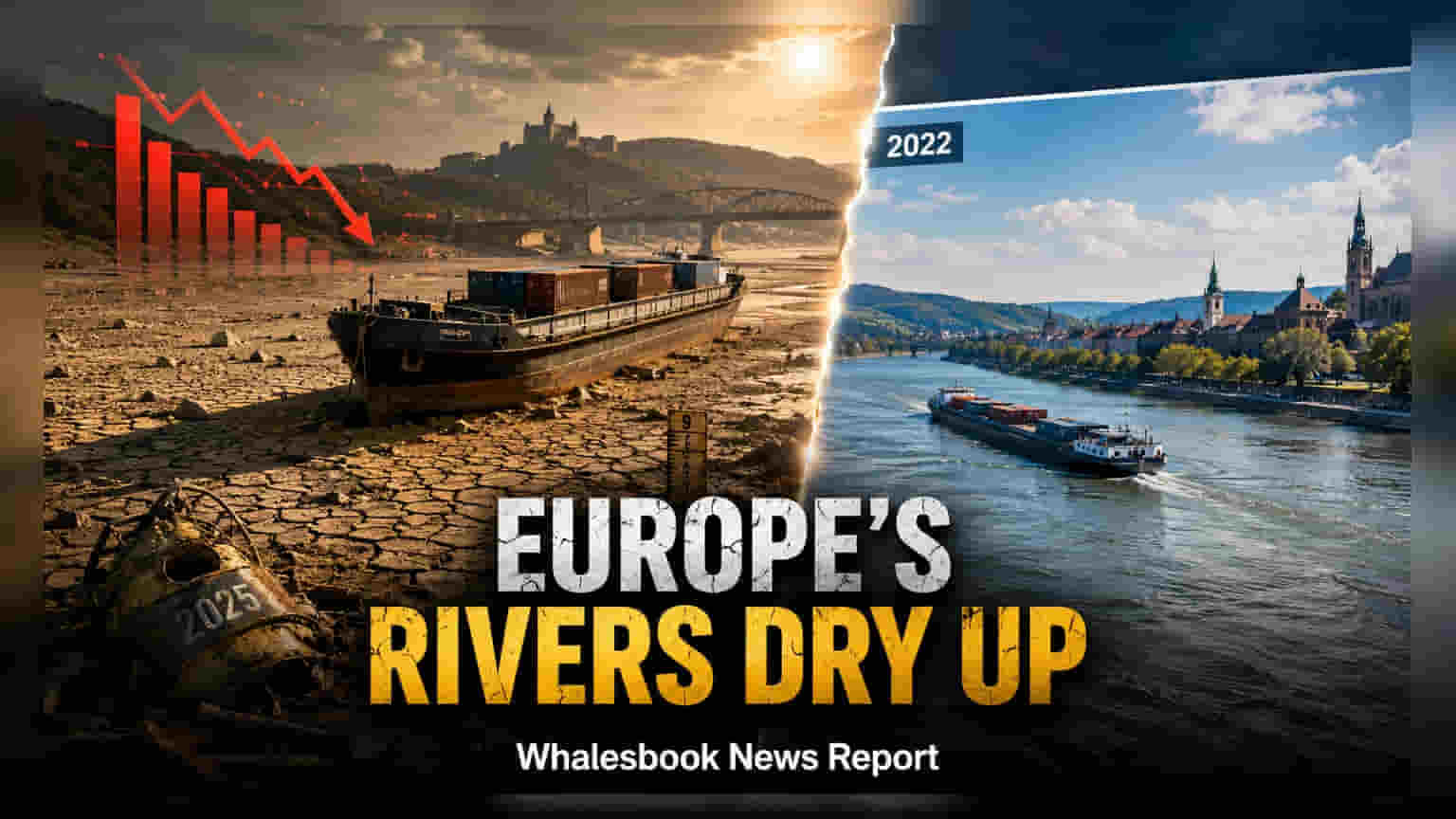
Record low water levels in the Rhine and Danube rivers are forcing cargo ships to operate at reduced capacity. This drought is increasing transport costs for essential commodities like grain, coal, and minerals across Europe. Investors should monitor whether these logistics disruptions lead to higher industrial input costs or potential supply chain delays in the coming weeks.
Detailed Coverage
The ongoing heatwave across Europe has caused a significant drop in water levels across several key rivers, including the Rhine, Danube, Elbe, and Loire. These waterways are essential arteries for industrial transport, and their reduced capacity is creating logistical challenges for the movement of raw materials and goods.
Impact on Rhine and Danube Trade
The Rhine River, a critical route for transporting coal, minerals, ores, and oil products, saw water levels at the Kaub gauge fall to between 80 and 90 centimeters recently. When water levels drop this low, cargo vessels are forced to limit their load to avoid running aground, which significantly increases the cost per ton of transported goods. While some recent rainfall in southern Germany provided a minor, short-term increase in capacity, the situation remains difficult for companies relying on river freight.
In Eastern Europe, the Danube has hit its lowest point in thirty years in Romania. Data from the Romanian Waters agency indicated that flow rates near the Bulgarian border recently dropped to roughly 1,700 cubic meters per second, which is significantly lower than the historical July average of 4,700 cubic meters per second. This reduction has already led to the suspension of ferry services and the idling of grain barges, potentially delaying exports and affecting commodity pricing in the region.
Logistics and Industrial Consequences
Beyond shipping, the drying of rivers like the Loire in France has affected water availability for local industries and recreational activities. For investors, the primary concern is not just the immediate disruption, but the potential for sustained cost pressure on industries that depend on low-cost barge transportation. When shipping companies cannot fill vessels to capacity, freight rates typically rise, which can eat into the profit margins of industrial companies or force them to pass higher costs on to customers. Furthermore, if power plants or factories depend on these rivers for cooling water or transport of fuel, production could be impacted if the heat persists.
While some relief is anticipated in certain regions through localized rainfall, the long-term trend of water scarcity remains a monitorable issue. Investors in companies with heavy industrial operations in Europe, or those involved in the European logistics and commodity sectors, should track upcoming updates regarding water levels and transport capacity. The key monitorable will be whether these logistical constraints persist long enough to negatively influence quarterly production figures or operating margins for energy and manufacturing firms exposed to these trade routes.