

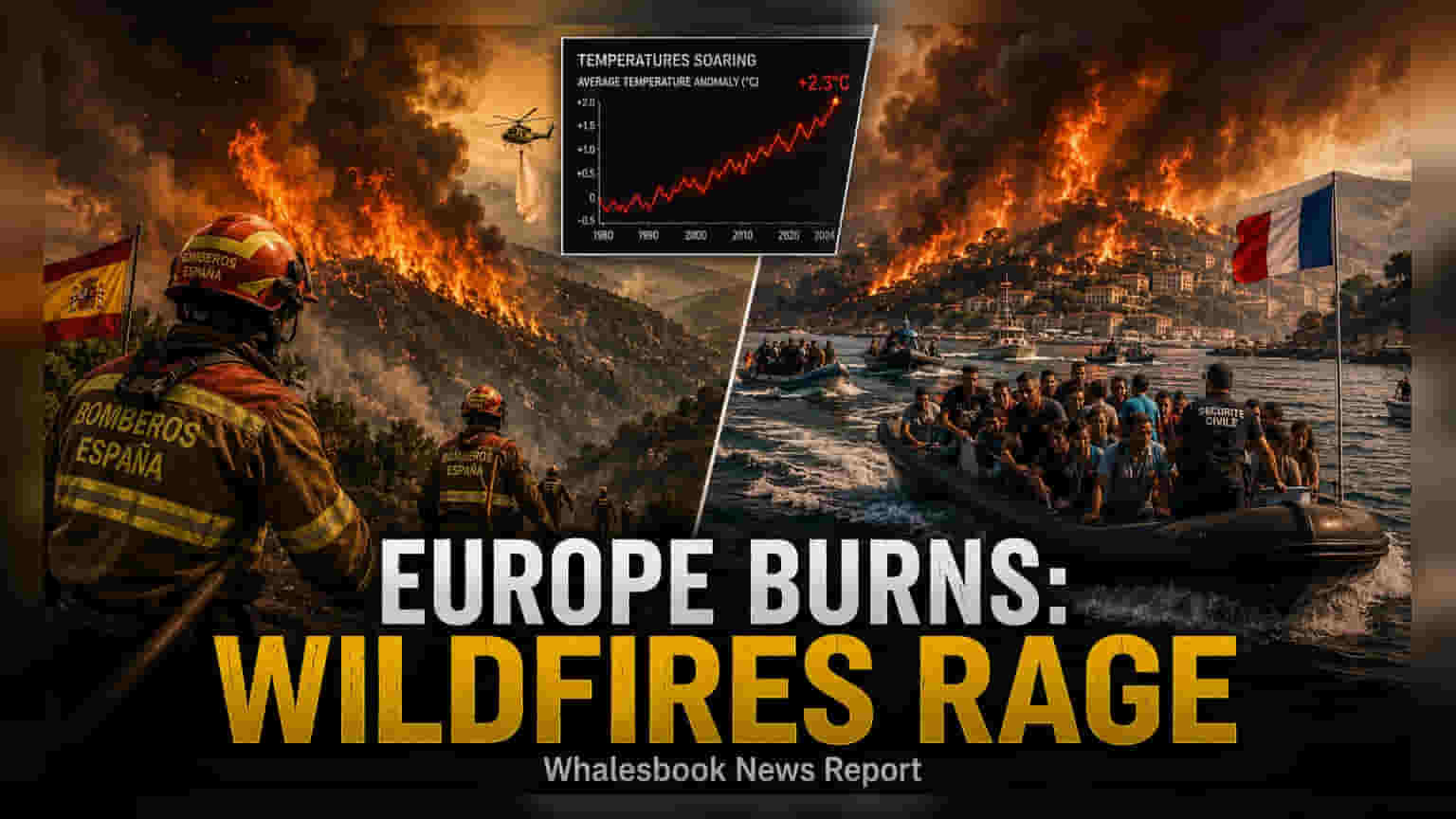
Extreme heat in Europe has triggered emergency wildfire responses in Spain and France, leading to thousands of evacuations. For investors, the crisis creates potential pressure on France’s nuclear energy production and agricultural yields, as high temperatures restrict reactor cooling and damage crucial maize crops.
Detailed Coverage
A severe heatwave across Europe has forced emergency measures in Spain and France, with significant implications for local infrastructure and the broader energy and agricultural sectors. Spain has declared a national emergency for the first time due to wildfires, allowing the government to coordinate resources more effectively as fires threaten populated mountain regions near Madrid.
French Energy And Agricultural Risks
In France, the crisis has extended beyond wildfire evacuations on the Atlantic coast to impact core industrial and food production. The prolonged high temperatures have created operational challenges for the nation's nuclear power sector. Nuclear power plants rely on river water for cooling; when river temperatures rise too high, operators are often forced to reduce output or shut down reactors to comply with environmental regulations and prevent damage to aquatic ecosystems.
Notably, the Golfech 2 nuclear reactor has been offline since July 7 due to these heat-related constraints. Investors tracking European energy markets often monitor these shutdowns, as reduced nuclear output can lead to higher electricity prices and increased reliance on other energy sources. Beyond energy, the heat is also affecting France’s agricultural output, specifically the maize crop, which is currently at risk due to the sustained lack of rainfall and extreme heat.
Impact Of Record Fire Seasons
Spain is currently facing its second consecutive year of intense fire damage, with over 29 major blazes reported so far in 2026. Data indicates that the area affected by these fires is five times larger than what was recorded at the same point in 2025, which was already a record-breaking year for fire-related losses. The rapid escalation of these fires, which have destroyed property and forced the mass relocation of thousands, highlights the increasing physical and economic risks associated with climate-related events in the region.
Monitoring Next Steps
For investors and market observers, the next important update will be the impact on regional energy prices and whether France needs to implement further output restrictions on other nuclear facilities. Additionally, updates regarding the recovery of the maize crop and the success of firefighting efforts supported by European Union aid will be essential to gauge the potential long-term economic damage. The severity of these conditions continues to test the resilience of regional supply chains and infrastructure, making the duration of this heatwave a critical factor to watch.