 Whalesbook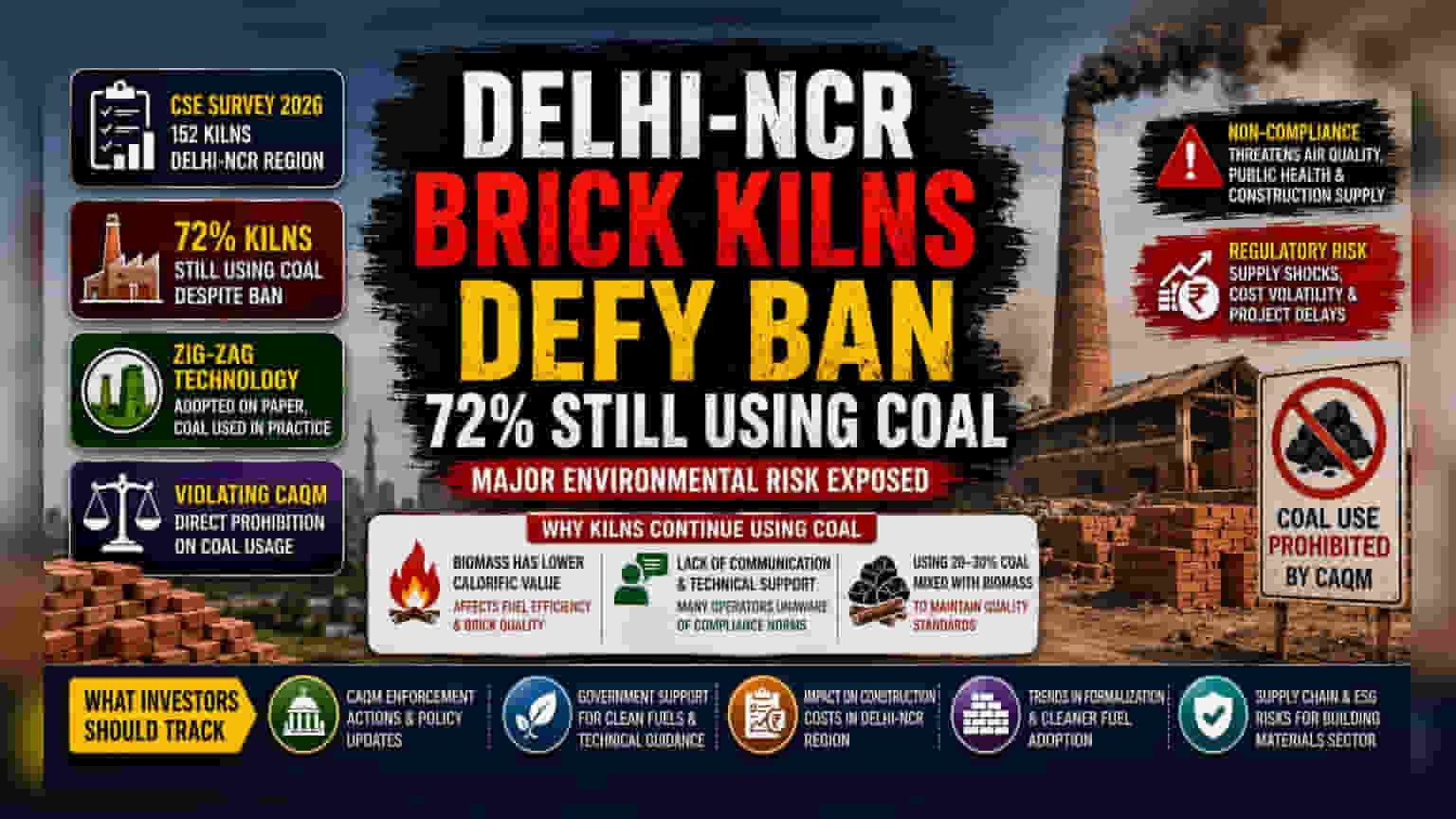


A new survey by the Centre for Science and Environment reveals that over 70% of Delhi-NCR brick kilns continue to use coal despite a government ban. This highlights persistent regulatory non-compliance in the unorganized building material supply chain. Investors in the construction and cement sectors should track potential supply disruptions and tightening enforcement, which often coincide with air quality management measures in North India.
What Happened
A recent survey conducted by the Centre for Science and Environment (CSE) has highlighted significant non-compliance among brick kilns in the Delhi-NCR region. Despite a direct prohibition on coal usage by the Commission for Air Quality Management (CAQM), the report found that 72% of the surveyed kilns continued to use coal during the 2026 season. While these kilns had formally adopted cleaner Zig-Zag technology, the reliance on coal as a fuel source remains prevalent. The study covered 152 kilns in 2026, building on previous data, and underscored that a majority of operators continue to operate in violation of official environmental directives.
Why This Matters For Investors
For investors following the Indian infrastructure and construction material space, this report points to an under-reported regulatory risk. While large, listed construction and cement companies are typically subject to strict ESG (Environmental, Social, and Governance) compliance, their supply chains often rely on unorganized sectors, such as local brick kilns. When these smaller players face regulatory crackdowns, it can lead to localized supply shortages and cost volatility for construction projects in the North India region. Understanding these compliance gaps is essential for assessing the broader operational risks within the construction ecosystem.
The Compliance Challenge
The core conflict identified by the report lies in the trade-off between fuel efficiency and product quality. Kiln owners argue that biomass—the mandated alternative—lacks the calorific value of coal, which is essential to meet brick quality standards. The report suggests that many operators use a mix of 20-30% coal with biomass to maintain standards. Furthermore, the survey identified a lack of formal communication and technical support from regulators, with many operators learning of compliance requirements only through informal channels. This creates a challenging environment where regulatory enforcement often clashes with the practical operational needs of the industry.
Regulatory Risk and Sector Pressure
The building materials sector in Delhi-NCR frequently faces pressure during the winter months, when the Graded Response Action Plan (GRAP) is implemented to manage air quality. Environmental regulations have historically led to the temporary shutdown of industrial units, including brick kilns, to curb pollution. The CSE report suggests that the lack of transition support, such as financial aid or standardized operating procedures, increases the likelihood of friction between the industry and regulators. Continued non-compliance increases the probability of sudden, strict enforcement actions or policy changes that could disrupt the supply of basic building materials.
What Investors Should Track
Investors monitoring this space should look for future announcements from the Commission for Air Quality Management regarding enforcement actions or revised policy mandates for the brick manufacturing sector. Key monitorables include any government-led initiatives to improve the availability of cleaner fuels or provide the necessary technical guidance to the industry. Additionally, market participants may observe whether construction cost estimates in the Delhi-NCR region account for potential supply chain disruptions linked to environmental compliance. The trend toward formalized, cleaner fuel usage, if supported by the government, would be a positive signal for long-term sustainability in the building materials sector, whereas continued defiance may lead to increased regulatory volatility.