

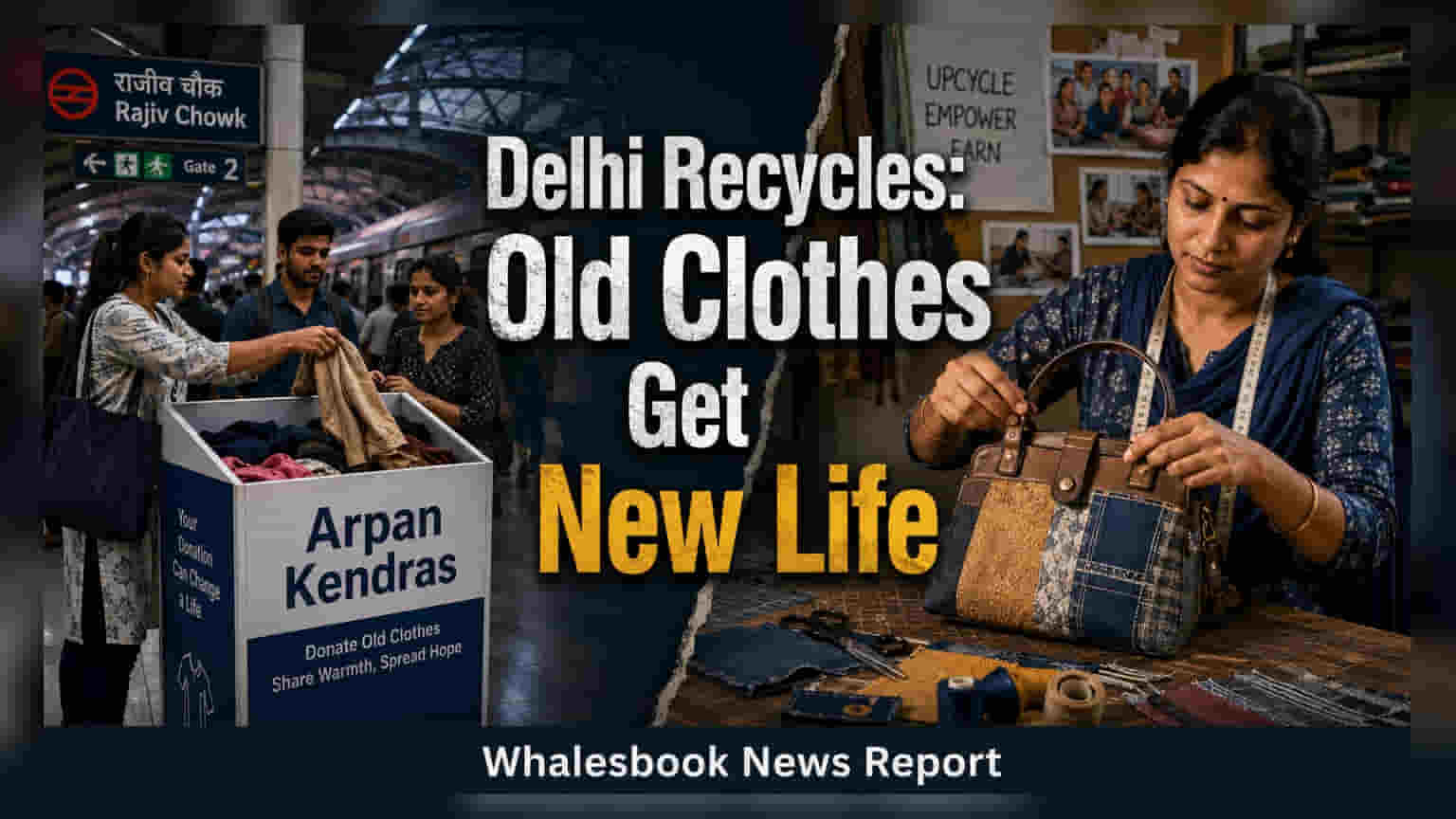
The Delhi government has opened 'Arpan Kendras' at 10 major Metro stations to collect and recycle old clothes into new products. Managed by local self-help groups, this initiative aims to reduce landfill waste while supporting women's employment. Citizens can track their donations digitally at these centers.
The Delhi government has officially launched a textile recycling initiative by setting up 'Arpan Kendras' at ten major Delhi Metro stations. These centers are designed to serve as collection hubs where residents can drop off unwanted garments, which will then be processed into items like bags, yarn, and new fabric. The project is a collaborative effort involving the Delhi Metro Rail Corporation (DMRC), the DMRC Ladies Welfare Organisation, the State Urban Livelihood Mission, and recycling partners Clothes Box Foundation and Respun.
Project Locations and Operations
The designated collection centers are located at Shahdara, Dr. Baba Saheb Ambedkar Hospital, Malviya Nagar, Hauz Khas, Dwarka, Mohan Estate, Lajpat Nagar, Mayur Vihar Phase-1, Punjabi Bagh West, and Shalimar Bagh. These points are open to the public daily from 7 am to 7 pm. By placing these centers within the Metro network, the government aims to improve accessibility for commuters and encourage the diversion of textile waste from city landfills.
Economic and Social Impact
A core component of this initiative is the focus on women’s empowerment. The centers are managed by women associated with self-help groups under the State Urban Livelihood Mission. These participants receive training in textile segregation and upcycling, providing them with technical skills. Furthermore, the project incorporates a digital tracking system where donors can scan a QR code at the center to register their contribution. This generates a digital certificate and feeds data into a centralized dashboard to track collection volumes and operational transparency.
Future Outlook and Environmental Goals
This project reflects a broader push toward circular economy practices in urban waste management. The government has indicated that it intends to scale this model to additional locations across the city based on the outcomes of this initial phase. For stakeholders and residents, the initiative represents a move toward formalized textile recycling processes, which could reduce the volume of waste sent to landfills. The success of the project will depend on public participation rates, the efficiency of the logistics chain between collection points and recycling partners, and the ability of the self-help groups to maintain consistent upcycling output.