

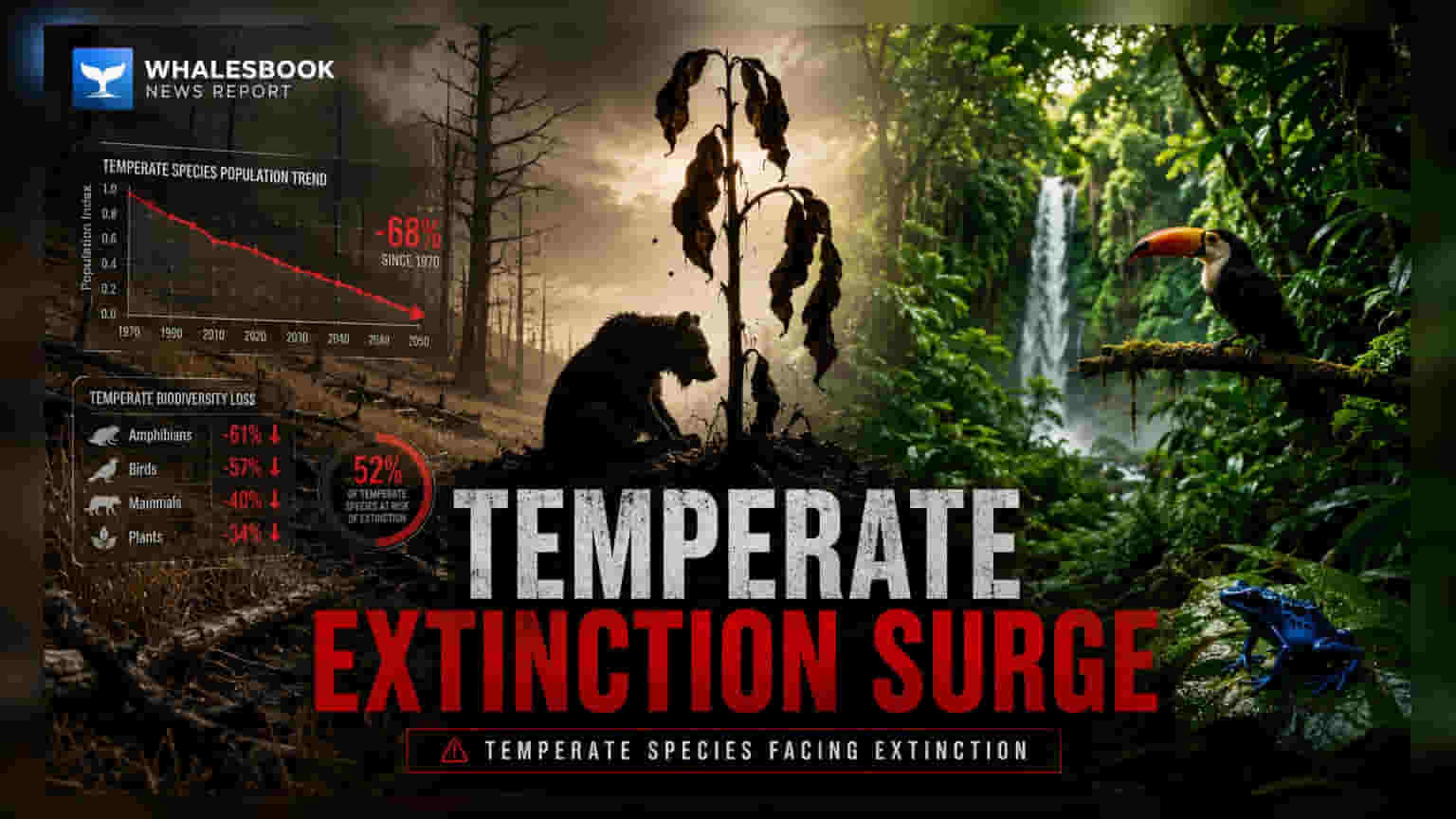
A global study shows 49% of temperate species are facing local extinction, significantly higher than the 33% rate in tropical regions. This data challenges earlier assumptions about climate vulnerability and indicates that temperate species often lack the necessary temperature refuges to survive rapid warming.
A comprehensive global study published in June 2026 has revealed a significant shift in our understanding of climate change impacts on biodiversity. Researchers analyzing data from over 5,000 plant and animal species across nearly 40,000 sites worldwide found that temperate regions are experiencing higher rates of local extinction than previously assumed.
Temperate Species Versus Tropical Vulnerability
The data indicates that 49% of the surveyed temperate species have suffered local extinctions, notably higher than the 33% rate recorded for tropical species. These results contradict long-held scientific theories that suggested tropical organisms would be most at risk from rising global temperatures. The study highlights that many temperate species are struggling to adapt to changing conditions and often lack accessible, cooler areas to migrate toward, which limits their chances of survival during extreme weather events.
Habitat and Species-Specific Risks
When looking at specific environments, the research found that marine species are currently under the most pressure, with a 56% local extinction rate. Terrestrial plants in temperate zones also face a high risk, with a 45% extinction rate compared to only 18% for their tropical counterparts. Across the board, animal species showed higher vulnerability than plant life, with 54% of animal species experiencing local extinctions, while plants followed at 39%.
Temperature and Rainfall Correlation
The study identified a clear link between environmental changes and survival rates. For terrestrial species, every 1 degree Celsius increase in mean annual temperature was associated with an 85% higher probability of local extinction. This risk rose even more significantly for marine species, where the same temperature increase boosted extinction odds by 139%. Additionally, freshwater species are particularly sensitive to water scarcity, with a 100-millimeter drop in annual rainfall correlating with a 60% increase in extinction risk.
Why Temperate Regions Are More Sensitive
According to Gopal Murali, an evolutionary ecologist at the Indian Institute of Science in Bengaluru and lead author of the study, the difference in vulnerability may lie in physiological thermal-safety margins. Tropical regions often feature mountainous terrain that provides a variety of microclimates over short distances, allowing species to find cooler pockets as temperatures rise. Temperate zones, however, may not offer these same refuge options, causing the negative effects of climate change to spread more uniformly across the species' entire natural range. Investors and environmental researchers will continue to track how these shifting biodiversity patterns impact ecosystem services, such as agriculture and natural resource management, in temperate-climate nations.