

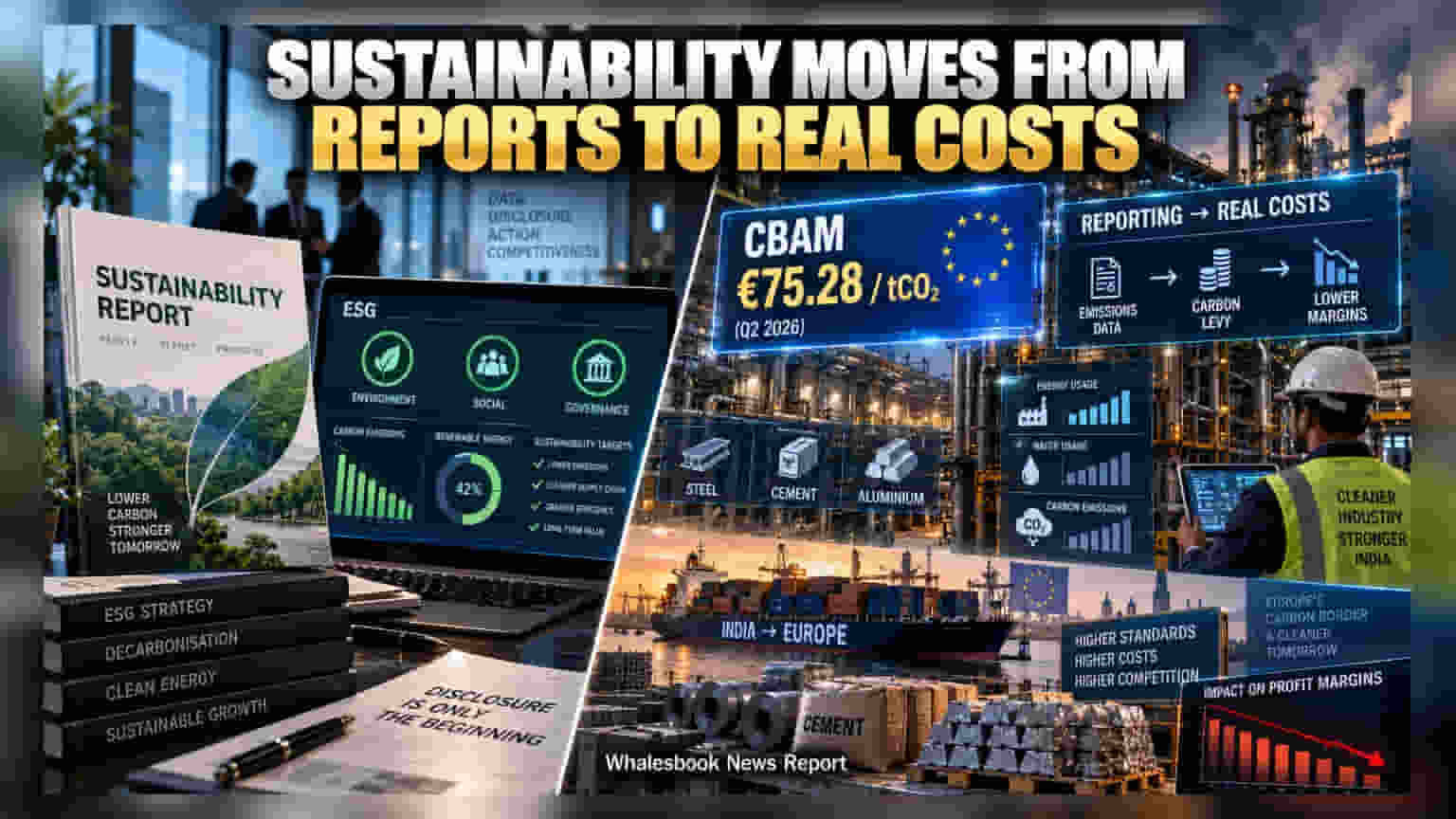
The European Union's carbon tax, CBAM, is now directly impacting the profit margins of Indian companies in iron, steel, aluminium, and cement. With carbon costs at over €75 per tonne in 2026, investors must look beyond sustainability disclosures to see if companies are actually reducing emissions to protect their export competitiveness.
For Indian exporters, sustainability is no longer just a boardroom topic for annual reports. It has become a direct factor in operating costs and profit margins. With the European Union’s Carbon Border Adjustment Mechanism (CBAM) entering its definitive phase in 2026, many Indian industrial companies are facing a new reality where carbon emissions are taxed at the border.
Why Carbon Costs Affect Profits
The CBAM applies to key export sectors, including iron and steel, aluminium, cement, fertilisers, and hydrogen. The system essentially imposes a levy on the carbon footprint of these products when they enter the European market. For the second quarter of 2026, the cost of a CBAM carbon certificate stood at €75.28 per tonne of carbon dioxide. This price directly increases the cost of doing business for Indian companies that rely heavily on traditional, high-emission manufacturing methods.
For investors, this means the 'sustainability' of a company is now tied to its ability to manage energy intensity. A company that fails to decarbonize its manufacturing process will find its goods becoming more expensive for European buyers compared to competitors who have invested in renewable energy or cleaner technology. This could lead to a loss of market share or the need to absorb costs, which would put pressure on operating margins.
Moving From Disclosure to Strategy
India's Business Responsibility and Sustainability Reporting (BRSR) framework requires the top 1,000 listed companies to disclose their environmental and social impact. While these reports provide better transparency, they do not automatically improve efficiency. A company might have a good ESG score, but if its plants are still consuming excessive power or using outdated technology, it remains vulnerable to carbon-related financial risks.
Recent data shows that for a large sample of 982 major listed companies in FY2025, Scope 1 and Scope 2 emissions actually rose by 4.29% year-on-year. This suggests that despite mandatory reporting, many firms are still struggling to translate data into actual operational savings. For the average investor, this indicates that disclosure quality is only the first step. The true test of a company's financial health in this new era will be whether its sustainability data drives actual changes in procurement, energy sourcing, and capital allocation.
What Investors Should Monitor
Investors should look beyond traditional earnings metrics and keep an eye on several specific indicators. First, track the energy intensity of a company’s production process. High power consumption in an age of rising carbon costs is a potential liability. Second, monitor capital spending on renewable energy projects or carbon-capture technologies. These investments may seem expensive today, but they are essential to maintaining long-term competitiveness in export markets.
Finally, pay attention to the company’s export mix. Firms with a heavy reliance on the European market for products like steel or aluminium are more exposed to CBAM risks than those with a domestic-focused or non-EU export strategy. The ability of management to align their operational strategy with these environmental costs will likely be a key differentiator for long-term value creation.