

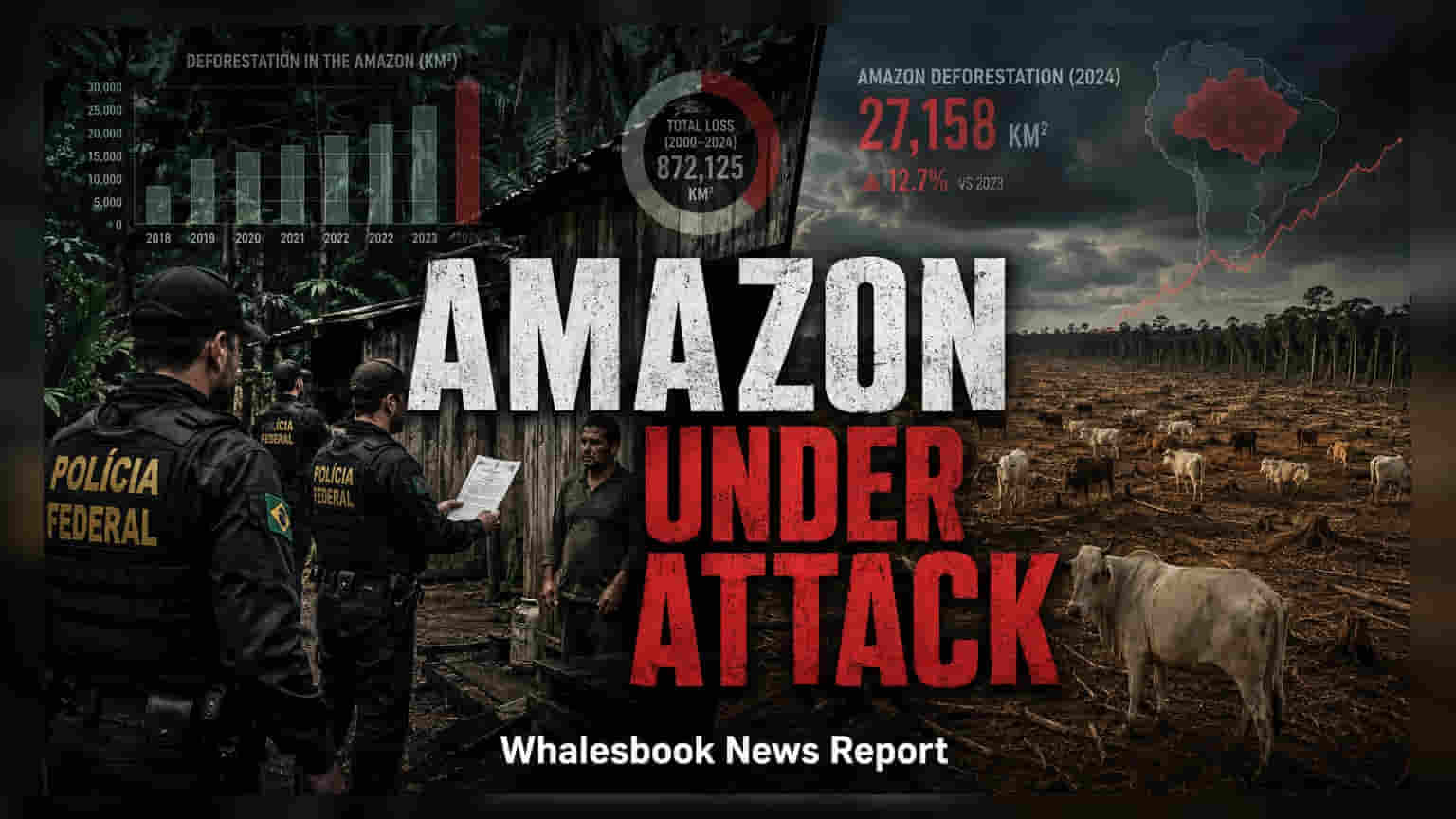
Brazilian authorities are investigating a group accused of using toxic chemicals to clear 10,180 hectares of Amazon rainforest for cattle pasture. For global investors, this operation highlights the growing regulatory and environmental compliance pressure on the agricultural sector, which could influence commodity supply chains and long-term pricing trends.
Brazilian federal police have launched an operation in the state of Pará targeting an illegal land-clearing scheme in the Amazon rainforest. The investigation, which began on Tuesday, focuses on the alleged use of toxic chemical agents to weaken native vegetation, allowing for easier clearing of land for commercial cattle grazing. Authorities reported that approximately 10,180 hectares of forest have been impacted by these activities.
Police have executed 13 search warrants and imposed three precautionary measures to halt further environmental damage. While no specific companies have been identified in this immediate investigation, the event underscores the intensifying focus of Brazilian authorities on illegal deforestation. Potential charges for those involved include environmental destruction, illicit use of toxic substances, and criminal conspiracy.
For investors, particularly those following global agricultural commodities and international supply chains, this news highlights the rising risks in the beef and livestock sector. Cattle ranching is the primary driver of deforestation in the Amazon, and global markets are increasingly sensitive to the environmental credentials of agricultural products. As governments and international regulators enforce stricter environmental laws, the cost of compliance for large-scale ranching operations is likely to increase. This could lead to shifts in the global beef supply chain, as buyers increasingly demand traceability and proof that products are not sourced from deforested land.
While this incident does not directly target any specific publicly traded company, it serves as a reminder of the material risk that environmental, social, and governance (ESG) factors pose to the sector. Companies operating in the global meat and agricultural processing space often face reputational and legal risks if their supply chains are linked to prohibited land use. Investors should keep an eye on how these regulatory crackdowns affect local cattle supply and whether they lead to broader pricing volatility for agricultural commodities in the coming quarters.
Monitoring these developments is important for understanding the stability of global agricultural supply chains. Future updates from Brazilian environmental authorities regarding the extent of the damage, the potential for fines or asset seizures, and the broader impact on local ranching output will be the key developments to track.