 Whalesbook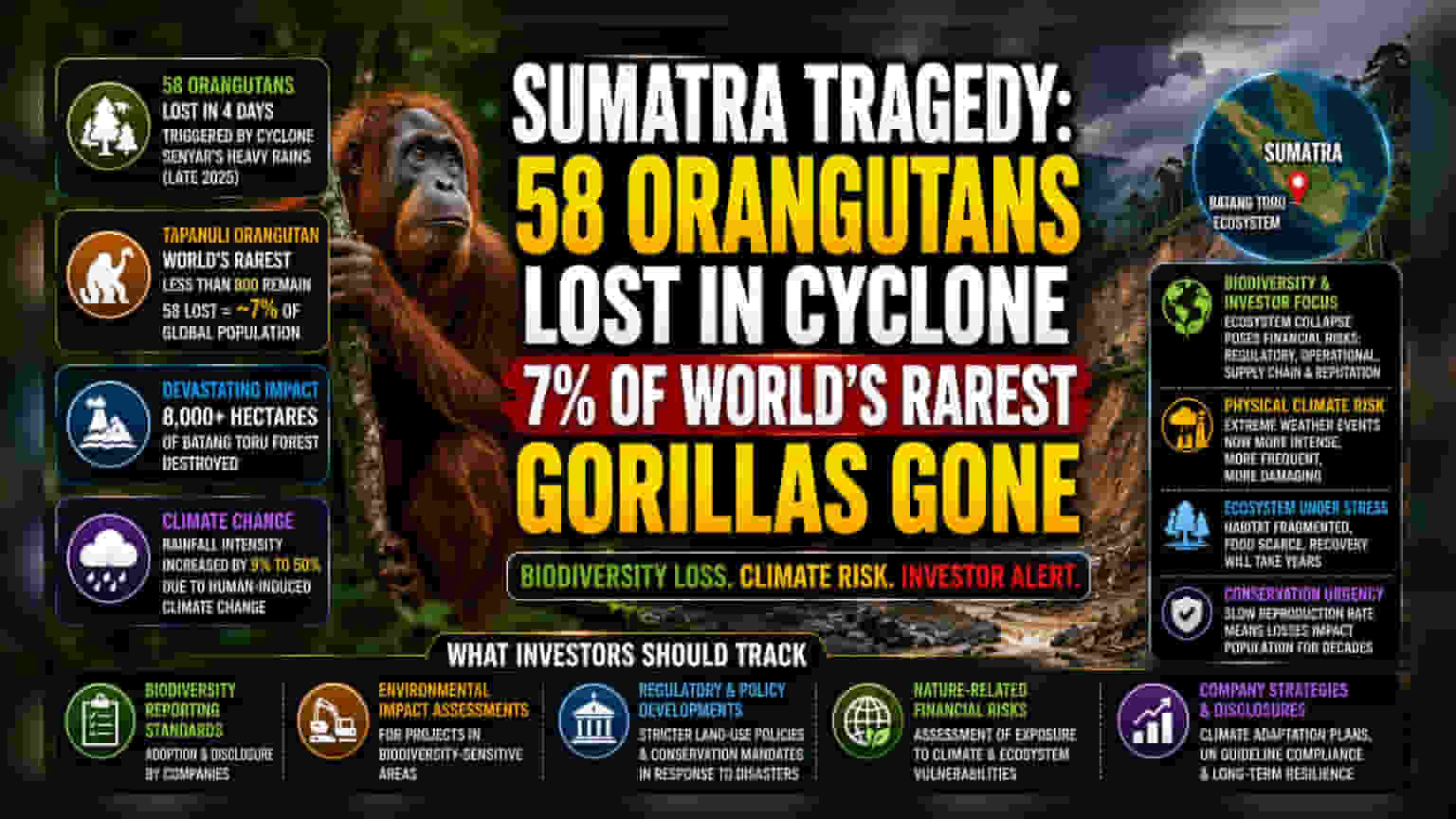


A study links Cyclone Senyar to the death of 58 critically endangered Tapanuli orangutans, representing 7% of their remaining population. This event highlights the growing intersection of climate change, biodiversity, and material environmental risks that increasingly concern global investors and ESG frameworks.
What Happened
A recent scientific study has revealed a significant environmental loss in Sumatra, Indonesia, where 58 Tapanuli orangutans, the world’s rarest great ape species, perished in late 2025. This tragedy, occurring over just four days, was triggered by intense rainfall and landslides caused by Cyclone Senyar. With fewer than 800 individuals of this species estimated to remain in the wild, the loss of these 58 apes represents approximately 7% of the total global population. The Batang Toru ecosystem, which serves as the only habitat for these primates, suffered substantial damage, including the loss of over 8,000 hectares of forest cover.
The Growing Investor Focus on Biodiversity
For investors and asset managers, biodiversity loss is moving from a niche topic to a core component of ESG (Environmental, Social, and Governance) analysis. While the loss of a specific species is an ecological catastrophe, it also signals broader risks for companies and projects operating in sensitive environmental regions. Investors are increasingly looking at biodiversity footprints because ecosystem collapse can lead to regulatory crackdowns, project delays, supply chain disruptions, and significant reputational damage. The recognition of nature-related financial risks is growing, with frameworks now emerging to help capital markets quantify how much economic value relies on healthy, functioning ecosystems.
Climate Change as a Physical Risk
The findings in this study provide a clear example of physical climate risk. An attribution analysis indicated that human-induced climate change increased the intensity of Cyclone Senyar’s rainfall by 9% to 50%. This illustrates how climate change acts as a force multiplier for natural disasters. For long-term capital allocators, these findings demonstrate the reality of extreme weather threats. When regional climate patterns become more volatile, assets, infrastructure, and local economies in those areas face heightened operational risks. This event serves as a case study for why climate-resilient planning and environmental due diligence are essential for any business or development located in or near vulnerable biomes.
Impact on Ecosystem Stability
The destruction caused by the landslides extends beyond the immediate loss of animal life. The Batang Toru ecosystem has lost significant forest cover, leaving the remaining orangutans to compete for food in fragmented, higher-elevation areas. Because Tapanuli orangutans have a very slow reproductive rate, with females giving birth only once every six to nine years, the loss of these 58 individuals will be felt for over a decade. The stripping away of topsoil and the destruction of vegetation mean that even the food supply for surviving animals will take years to recover. This long-term degradation complicates recovery efforts and increases the likelihood of future population declines.
What Investors Should Track
Investors are now keeping a closer eye on how companies disclose their impact on natural capital and their exposure to biodiversity-sensitive areas. Key monitorables include the adoption of biodiversity reporting standards and the results of environmental impact assessments for any projects in high-risk zones. Additionally, markets will track whether regulatory bodies introduce stricter land-use policies in response to such disasters. The ability of companies to manage environmental risks—such as their strategy for climate adaptation and their compliance with international conservation guidelines—is becoming a standard metric for assessing long-term operational viability and governance quality.