

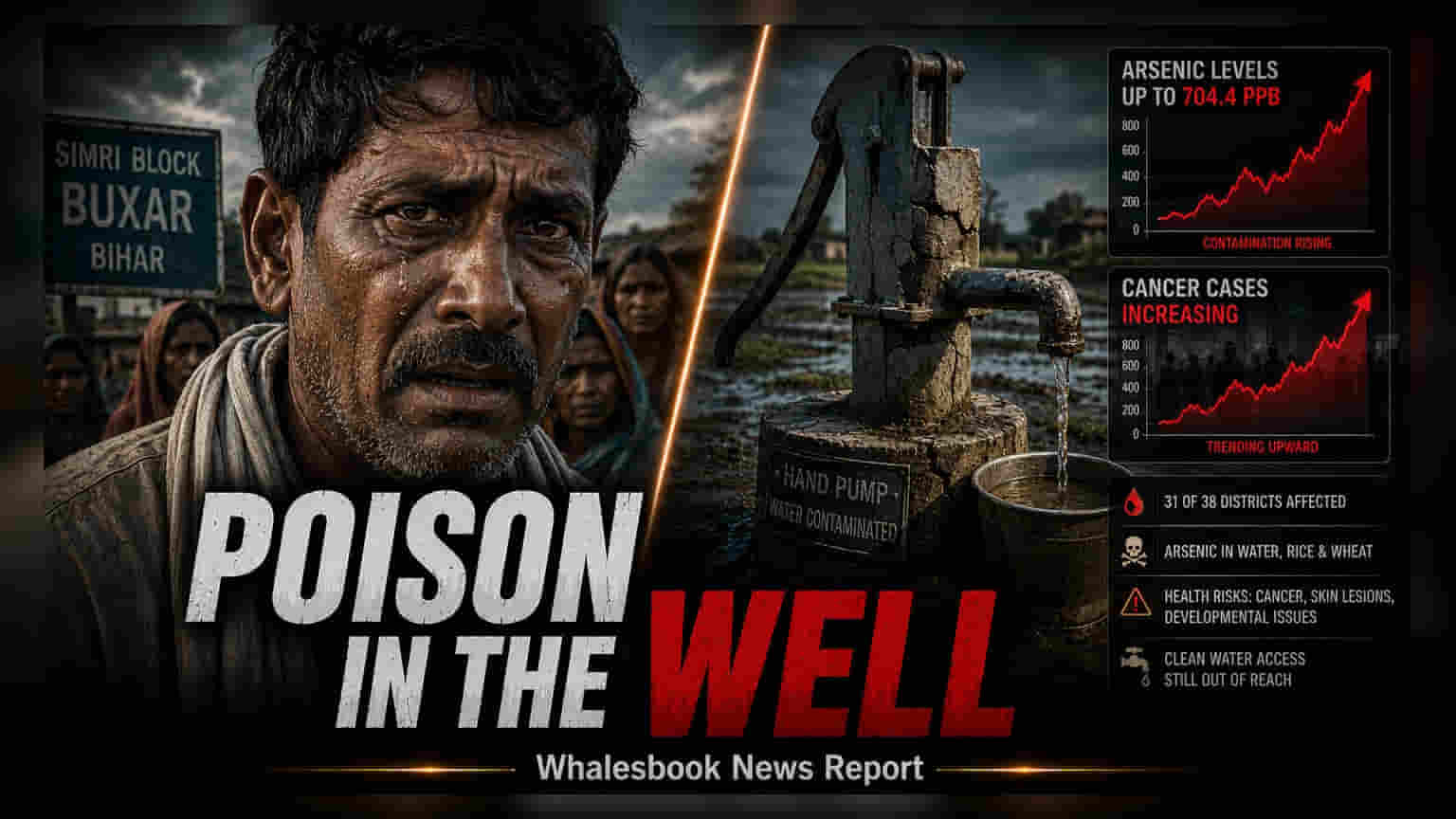
Residents in Bihar's Simri block face severe arsenic contamination in drinking water, with levels recorded as high as 704.4 ppb. This ongoing public health crisis across 31 districts highlights significant gaps in water infrastructure implementation, impacting regional health and highlighting the need for efficient government water projects.
A public health challenge is intensifying in Bihar’s Buxar district, where residents of the Simri block are reporting high levels of arsenic in their primary water source. Recent assessments have revealed alarming contamination levels reaching up to 704.4 parts per billion (ppb). This significantly exceeds safe limits, presenting a direct health risk to local populations who continue to rely on hand pumps for their daily needs.
Widespread Groundwater Contamination
The issue is not isolated to Buxar. Groundwater contamination in Bihar remains a critical concern, with 31 out of the state’s 38 districts struggling with arsenic, fluoride, and iron pollution. This contamination has long-term health consequences, ranging from chronic arsenicosis to internal cancers and developmental issues in children. Recent studies have also indicated that the problem extends into the food chain, with arsenic accumulating in staple crops like rice and wheat that are irrigated using the contaminated groundwater.
Infrastructure and Governance Gaps
While state-led initiatives like the 'Har Ghar Jal' scheme aim to provide safe tap water to every household, the on-ground execution faces significant hurdles. Investigations and regulatory interventions, including directives from the National Green Tribunal (NGT), have pointed to lapses in the effective placement of water remediation units. In many areas, filters were installed in locations where contamination was already manageable, leaving high-risk zones without proper purification systems. This mismatch in resource allocation continues to be a central point of concern for health officials and policy planners.
Economic and Infrastructure Implications
The persistence of water quality issues in Bihar has direct implications for the regional economy and infrastructure development. The high disease burden on rural populations creates long-term economic strain on households. For infrastructure and utility companies, this environment highlights the complexity of executing large-scale water projects. Successful rollouts depend not just on the construction of pipelines, but on the precise deployment of water treatment technology that can handle specific regional contaminants.
Risks and Monitorables
The primary risks in this sector include the potential for project delays and cost overruns when implementation is hindered by poor survey data or geographic challenges. Additionally, ongoing environmental factors, such as groundwater depletion and the overuse of fertilizers, threaten to worsen water quality over time. For investors and observers, the key monitorables will be the efficiency of government water-infrastructure spending, the success of technological solutions in removing heavy metals at scale, and the ability of state agencies to fix the placement of remediation infrastructure in the most affected districts.