

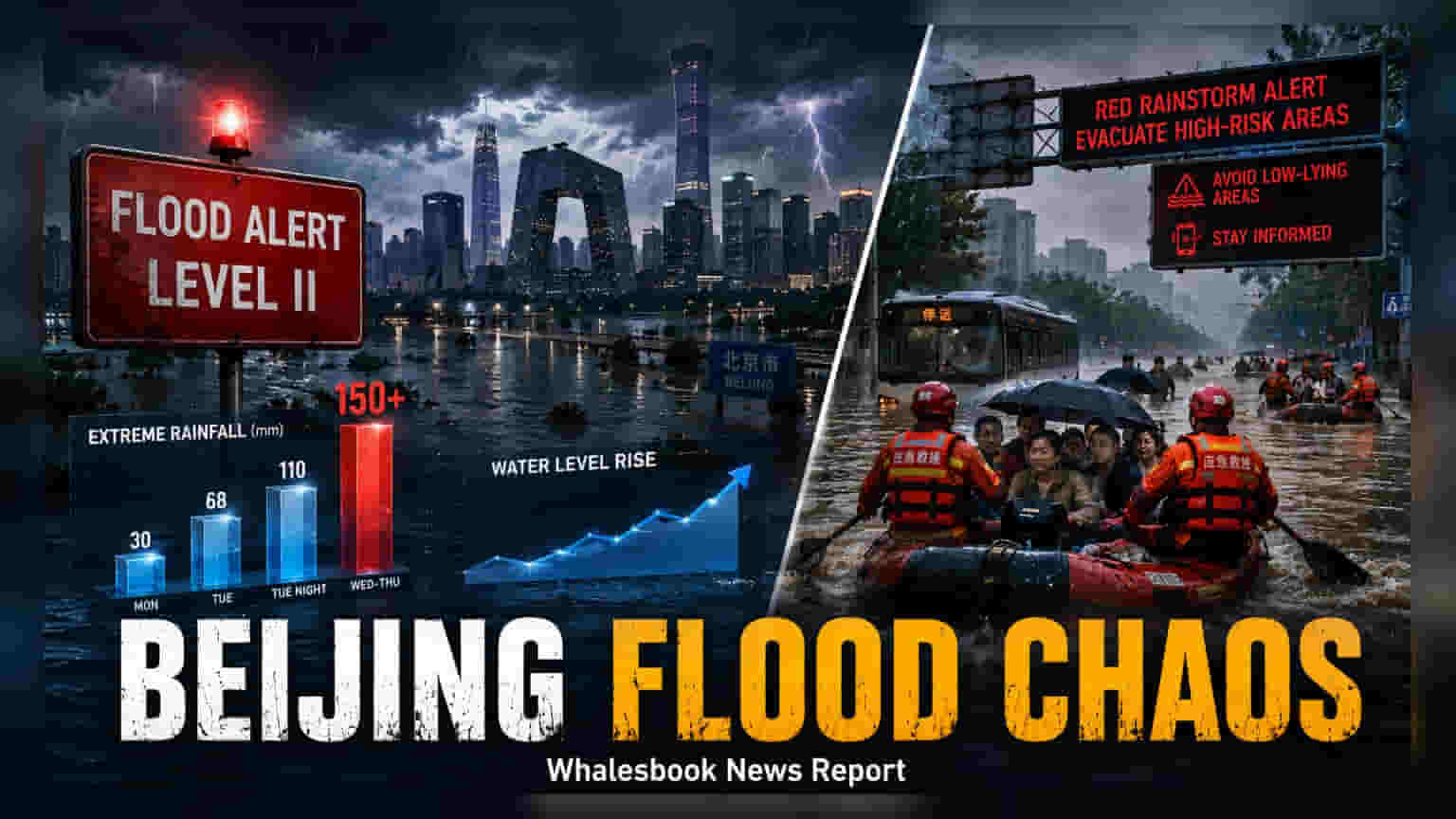
Beijing has activated a Level II emergency flood response following red rainstorm alerts, causing mass evacuations and business suspensions. As the city prepares for heavy rainfall from the remnants of Typhoon Dolphin, global supply chains may face temporary logistics disruptions, which remains a watch-point for Indian sectors reliant on Chinese imports.
Beijing has intensified its flood-control measures, activating a Level II emergency response—the second-highest tier—amidst red rainstorm alerts covering several districts. The Chinese capital is bracing for significant rainfall, with forecasts predicting over 150 mm of precipitation between Tuesday evening and Thursday. This precautionary move follows the inland movement of Typhoon Dolphin, which made landfall in Zhejiang province on August 9, 2026, causing widespread flooding and infrastructure strain across eastern and central China.
Authorities have taken immediate steps to mitigate potential damage, including mass evacuations from high-risk zones, the suspension of all construction activities, and the closure of tourist areas and campsites. With drainage teams and emergency supplies positioned at critical infrastructure points like subway stations, hospitals, and elderly care facilities, the city aims to minimize the risk of urban waterlogging and landslides that often accompany such intense weather events.
The situation is relevant to Indian investors primarily through the lens of global supply chain stability. As a major global manufacturing and logistics hub, significant disruptions in Chinese metropolitan areas can cause ripple effects in international trade. Indian industries such as electronics, chemicals, and pharmaceuticals, which often rely on raw materials and intermediate goods sourced from China, may face logistical delays or localized production bottlenecks if the weather event leads to prolonged transport restrictions or factory shutdowns.
While there is no direct impact on Indian stock exchanges or specific listed companies, the situation underscores the importance of monitoring global logistics for companies with high import dependence. Any extended disruption in Chinese freight movement or port operations can impact the delivery timelines and cost structures of Indian manufacturers. Investors may track official updates regarding port operations, freight movement, and any extended business closures in the affected regions to understand if this weather event could create temporary pressure on specific supply chains.