

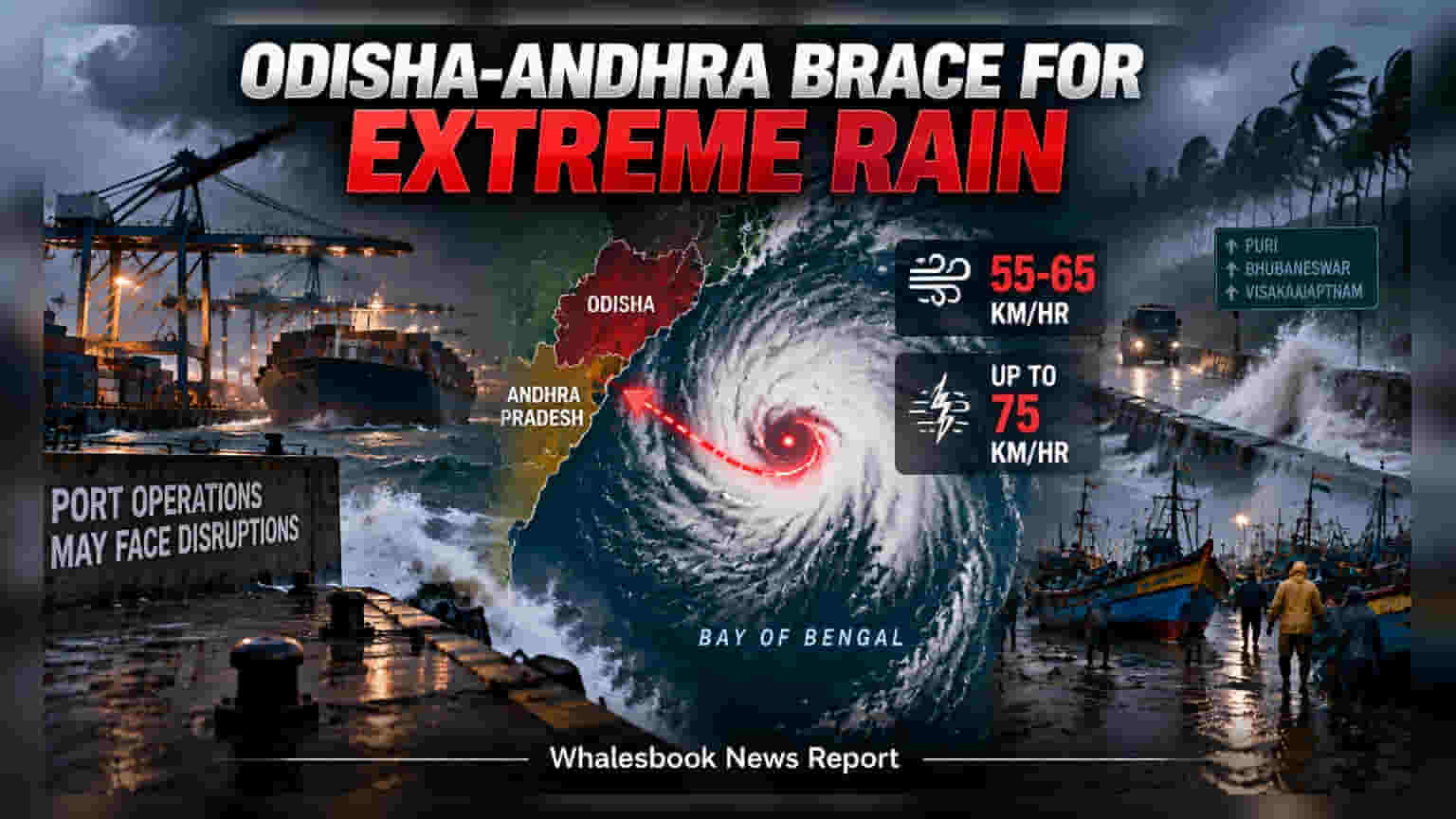
A low-pressure system in the Bay of Bengal is expected to strengthen into a deep depression, bringing heavy rain and high winds to the Andhra Pradesh and Odisha coast by Wednesday. Investors should track potential disruptions to port operations, shipping, and coastal logistics in these regions as the system moves toward the coast.
The India Meteorological Department (IMD) has issued a weather warning as a low-pressure system in the Bay of Bengal is set to intensify into a deep depression. This system is currently moving west-northwest and is projected to reach the coastal regions of north Andhra Pradesh and south Odisha by Wednesday. Investors watching companies with significant footprints in these coastal states should monitor updates on the storm's path, as weather disruptions can lead to short-term operational challenges for infrastructure and logistics firms.
The IMD forecast highlights the risk of squally winds reaching speeds of 55-65 km/hr, with gusts up to 75 km/hr, alongside heavy to very heavy rainfall. For businesses operating along this coastline, the primary concerns are potential delays in port activities and cargo handling. Ports located in this region, such as Visakhapatnam, Paradip, and Dhamra, serve as vital hubs for industrial commodities including iron ore, coal, and steel. Disruptions to sea conditions could lead to temporary vessel movement restrictions, impacting both domestic shipping and international trade flows through these terminals.
Logistics networks, which rely heavily on road and rail connectivity in coastal Odisha and Andhra Pradesh, may also face challenges. Intense rainfall often leads to localized waterlogging, which can slow down transport operations or cause delivery delays for companies with supply chains concentrated in these areas. While modern ports are generally equipped to handle weather-related volatility, prolonged heavy rain and flooding can still affect the speed of turnaround times for vessels and the efficiency of loading and unloading processes.
Beyond port and logistics operations, the coastal economy—including fishing and small-scale manufacturing—could experience temporary halts. The impact on these sectors will ultimately depend on the system's intensity and its exact landfall location. If the system stays offshore or moves quickly, the economic disruption may be limited. However, if the weather pattern lingers or crosses the coast at a high-intensity stage, it could increase the duration and severity of the operational strain.
The broader sector context remains one of resilience, as the monsoon season continues despite withdrawal patterns in north-west India. For market participants, the focus should remain on company announcements and port authority updates regarding operational status. Investors may look for information on whether port schedules are altered, if any specific cargo movement is halted, or if logistics companies report any significant transport bottlenecks as the week progresses. Tracking official IMD guidance on the storm's track and landfall zone will be the most reliable way to gauge whether the event remains a localized weather disturbance or translates into a wider supply-chain interruption.